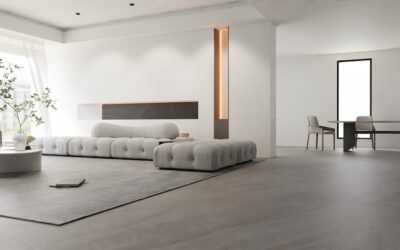
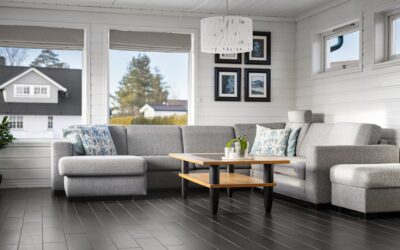
Walk down any flooring aisle and the acronyms start flying — LVP, LVT, SPC, WPC — until you wonder if everyone is just making them up. The actual WPC flooring meaning is “wood plastic composite,” a luxury vinyl plank category with a foamed core that combines polyvinyl chloride, recycled wood flour, and a foaming agent. The result feels softer underfoot than its rigid SPC cousin and quiets a room measurably. Understanding how WPC differs from the alternatives helps you avoid paying for a feature you do not need or skipping one you actually want.
The Layer Construction Explained
WPC is a four- or five-layer plank built around a foamed core that is roughly 4 to 8 mm thick. From bottom to top: an attached pad (cork or IXPE foam), the foamed WPC core, a printed vinyl image layer, a clear PVC wear layer, and a UV-cured topcoat.
The foamed core is the defining feature. By aerating the composite during extrusion, manufacturers create a plank that absorbs impact, dampens sound, and bridges minor subfloor imperfections. The trade-off is reduced density compared to SPC, which can mean slightly more dent risk under heavy point loads.
WPC vs SPC: What Actually Matters
- Core density — SPC is dense and rigid, WPC is foamed and slightly compressible
- Sound — WPC dampens footfall noise; SPC sounds harder and louder
- Comfort — WPC feels warmer and softer underfoot; SPC feels closer to ceramic tile
- Subfloor tolerance — WPC bridges 3/16-inch imperfections; SPC needs 1/8-inch flatness
- Indentation resistance — SPC handles heavier furniture and rolling chairs better
- Price — SPC is typically $0.50 to $1 per sq ft cheaper than equivalent WPC
Pros of WPC Flooring
Comfort is the standout benefit. WPC is the only luxury vinyl that feels remotely warm to bare feet, an advantage that matters in bedrooms, kitchens, and family rooms where you spend long hours standing. The attached pad eliminates the need for a separate underlayment in most cases.
- 100 percent waterproof with welded core construction
- Dimensional stability across humidity swings
- Click-lock floating installation, DIY-friendly
- Quieter footfall than SPC, tile, or laminate
- Easier on the legs over long standing periods
- Compatible with radiant floor heating systems below 85°F
Cons to Weigh
- Indents under heavy furniture without floor protectors
- Costs $1 to $2 more per square foot than SPC
- Lower-end products may show edges on bevels after a few years
- Not as scratch-resistant as commercial-grade vinyl tile
- Phasing out at some retailers as SPC takes more shelf space
Top WPC Brands and Pricing
COREtec Plus
The brand that defined WPC. COREtec Plus runs $4 to $7 per square foot with a 20-mil wear layer on premium lines. Excellent dimensional stability, attached cork pad, and lifetime residential warranty.
Shaw Floorte Pro Endura
Shaw’s WPC entries cost $3 to $5 per square foot. Decent wear layers around 12 mil, click-lock joinery, and reliable retail availability through Lowe’s and independent dealers.
Mohawk SolidTech Plus
Priced around $4 to $6 per square foot. Wider plank options up to 9 inches and embossed-in-register textures that look closer to real wood than budget alternatives.
Mannington Adura Max
Mid-premium WPC at $5 to $7 per square foot. Strong moisture warranty, bigger plank dimensions, and detailed visuals. Made in the USA, which matters for some buyers.
Where WPC Makes Sense
Bedrooms, living rooms, hallways, and kitchens are ideal. The combination of waterproof core and softer underfoot feel works for everyday family living. Basements with proper moisture control work as well, since WPC handles humidity swings better than engineered hardwood.
Bathrooms are acceptable but not the best fit. The attached pad can hold moisture if water pools long enough to wick through expansion gaps. SPC outperforms WPC in full bathrooms because the denser core blocks moisture migration more effectively.
Where to Skip It
Commercial settings with rolling carts, heavy office chairs, or restaurant traffic should look at commercial-grade SPC or sheet vinyl instead. WPC’s softer core indents over time under repeated point loads. Sunrooms with direct south-facing exposure can also push past WPC’s heat tolerance, causing edge gapping.
Garages, screened porches, and any space below 50°F or above 90°F are off the list. Vinyl in any form is a temperature-controlled product, and the WPC foam core amplifies the issue.
Installation Notes
WPC installs as a floating floor over almost any existing hard surface — concrete, plywood, ceramic tile, even old vinyl. Subfloor flatness should be within 3/16 inch over 10 feet. Uneven concrete needs a self-leveling compound first.
Acclimate planks 48 hours in the room. Maintain a 1/4-inch expansion gap at all walls. Use the long edge tap-block included with most kits — never the short end — to avoid damaging the click profile. Cuts go on the saw face down to minimize chipping. Most homeowners install 200 square feet in a weekend.
Maintenance and Longevity
Sweep or dry-mop weekly. Damp-mop with a pH-neutral cleaner; vinegar will dull the wear layer over time. Avoid steam mops — heat can soften the click-lock joints and the foam core simultaneously.
Use felt pads under all furniture legs, replacing annually. Area rugs in entryways trap grit that scratches the wear layer. With normal care, a quality WPC floor lasts 15 to 25 years before showing wear at high-traffic edges. Knowing the WPC flooring meaning and how to care for it pays back in a floor that holds up under real family use, not just showroom conditions.
Prefer to explore on your own?
See how new flooring looks in your actual room in seconds — free, no signup.
Try the free Floor Studio →