Bold, cheerful, and full of personality, yellow floor tile is making a comeback in kitchens, bathrooms, sunrooms, and entryways where homeowners want warmth and character instead of another beige floor. From soft buttery cream to vivid mustard and rich ochre, yellow brings a sunny energy that few other flooring colors can match, and the right shade reads as sophisticated and grounded rather than loud. Whether you are drawn to vintage charm or a modern statement floor, this guide covers the shades, materials, best rooms, and design pairings that make yellow tile work beautifully.
Why Choose Yellow Floor Tile
The instant appeal of yellow floor tile is the warmth it radiates. Yellow is the color of sunlight, and a yellow floor brings that glow into a room, making even a north-facing or windowless space feel brighter and more welcoming. In its muted, earthy tones, yellow behaves almost like a warm neutral, pairing effortlessly with wood, white, and natural materials while adding a depth that plain tan or gray floors lack.
Yellow also carries a rich design history. Terracotta and ochre tiles have paved Mediterranean and Spanish-style homes for centuries, and cheerful yellow ceramics defined mid-century and retro kitchens. Choosing a yellow floor connects your space to that timeless, sun-washed tradition while still feeling fresh, which is why designers keep returning to it for rooms that need a lift of energy and warmth.
Choosing the Right Shade
Yellow spans a wide range, and the shade determines whether the floor feels earthy and grounded or bright and playful.
- Pale butter and cream yellows are soft and versatile, adding warmth without dominating, and pair with almost any palette.
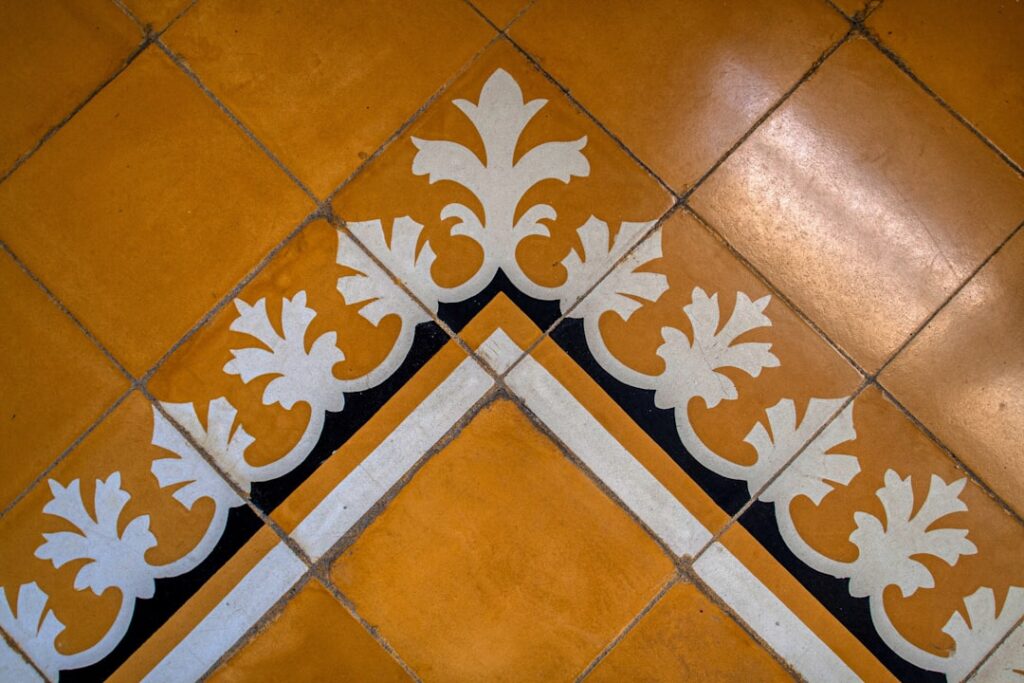
- Mustard and ochre lean earthy and sophisticated, gorgeous in vintage, boho, and Mediterranean interiors.
- Terracotta-leaning golden yellows bring rustic warmth that suits farmhouse and Spanish styles.
- Bright, saturated yellows make a bold statement best used in small rooms, powder baths, or as an accent within a patterned floor.
For a floor you will live with for years, the muted, earthy shades tend to have the most staying power because they function as warm neutrals. A vivid lemon yellow makes a striking statement but ties the room to a specific look, so it is often smartest in smaller doses or in a space you are happy to keep playful.
Materials and Tile Styles
Yellow floor tile comes in several materials, each with its own character. Glazed ceramic and porcelain are the most practical and widely available, offering durable, water-resistant surfaces in every yellow shade and finish from glossy to matte. Terracotta and saltillo tiles deliver authentic earthy golden tones with rustic, handmade texture, though they need sealing to resist stains.
Encaustic and patterned cement tiles let you introduce yellow within a bold geometric or Moroccan-inspired design, ideal for a statement entryway or powder room. Natural stone such as yellow limestone and travertine brings organic, subtle warmth for those who prefer understatement. Consider the finish carefully: a matte porcelain in mustard reads modern and grounded, while a glossy vintage yellow ceramic leans cheerful and retro. Match the durability and slip rating to the room, choosing a textured or matte finish for wet and high-traffic areas.
Best Rooms for Yellow Tile
Yellow’s warmth pays off in specific spaces. Kitchens are a natural home, where a golden or buttery floor complements wood cabinets and evokes classic country and Mediterranean style. Bathrooms and powder rooms can carry a bolder yellow beautifully, since their smaller footprint lets you take a design risk that would overwhelm a larger room.
Sunrooms and entryways benefit enormously, with yellow tile amplifying natural light and setting a cheerful, welcoming tone the moment you walk in. Mudrooms and laundry rooms are great candidates for a durable patterned yellow tile that hides dirt while lifting an otherwise utilitarian space. In each case, yellow shines brightest where you want energy and warmth rather than cool minimalism, so reserve it for the rooms you want to feel alive.
Design Pairings That Work
Yellow floors look their best when the surrounding palette is chosen to support them. Crisp white walls and cabinetry keep a yellow floor feeling clean and let the color glow without competition. Natural wood tones, from light oak to walnut, wrap earthy yellows in cozy, organic harmony that feels timeless and grounded.
For contrast and drama, pair a mustard or ochre floor with deep blue, forest green, or charcoal walls, a combination that reads as rich and intentional. Warm metals like brass and gold amplify yellow’s sunny quality, while black accents provide crisp definition. Keep larger surfaces relatively neutral so the floor remains the star, and repeat the yellow subtly elsewhere, perhaps in a textile or accessory, so the color feels woven through the room rather than isolated on the floor.
Is Yellow Floor Tile Right for You
Layout, Grout, and Installation Tips
How you install yellow tile shapes the final impression as much as the shade you pick. Grout color is the first big lever: a matched or tonal grout in a soft cream or sandy hue lets a yellow floor read as one warm, seamless expanse, while a contrasting gray or charcoal grout emphasizes each tile and turns the floor into a graphic grid, a look that suits geometric and encaustic patterns. For a bold patterned cement tile, laying it in a simple room lets the floor be the star, whereas a solid yellow can be laid in a herringbone or basketweave pattern to add subtle interest without introducing another color. Because yellow, especially in glossy finishes, shows dust and footprints, a matte finish and a slightly textured surface keep everyday maintenance realistic in a busy kitchen or entry. Always dry-lay a section first to check how the yellow reads under your actual lighting, since warm and cool bulbs shift the tone noticeably, and buy 10 to 15 percent extra so you can match the batch for future repairs, as a discontinued yellow can be impossible to source later.
It also helps to think about how the yellow will age with your decor. Because you will likely live with a tile floor for many years, choosing a shade that works as a warm neutral gives you the freedom to change wall colors, cabinetry, and textiles around it without the floor ever fighting the room. A soft ochre or golden tone quietly supports whatever palette you layer on top, from crisp coastal blues to moody charcoals to natural woods, whereas a highly saturated yellow commits the room to a specific, energetic identity. If you love that energy, embrace it; if you want flexibility, let the tile lean earthy and let your accessories carry the bolder color, since pillows, rugs, and art are far cheaper and easier to swap than a whole floor.
Yellow floor tile is a confident, joyful choice for homeowners tired of neutral floors and ready to embrace warmth and character. Lean toward muted, earthy shades for lasting versatility, choose a durable material and appropriate finish for the room, and reserve bolder yellows for smaller spaces where they can shine. Pair the floor with white, wood, and thoughtful contrast, and yellow tile will fill your kitchen, bath, or sunroom with the kind of sunny, welcoming energy that makes a house feel like a home.
Prefer to explore on your own?
See how new flooring looks in your actual room in seconds — free, no signup.
Try the free Floor Studio →