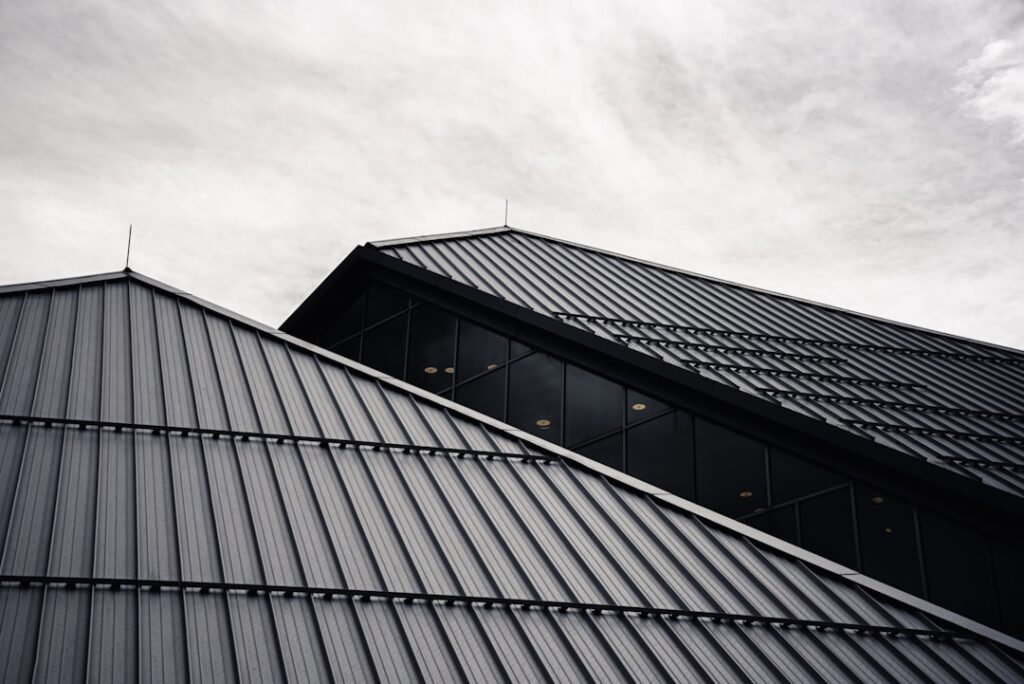
Cleaning moss off a roof is a recurring chore; stopping it from coming back is a hardware problem. Zinc strips for roof moss prevention are thin metal bands installed near the ridge that slowly release zinc ions every time it rains, poisoning moss, algae, and lichen before they can establish. The concept is sound — it is the same chemistry behind the clean streaks you see below metal chimney flashing on otherwise green roofs. But zinc strips are also oversold, and their real protection zone is shorter than the packaging implies. Here is how they work, how to install them correctly, and an honest account of what they can and cannot do.
How Zinc Ion Release Works
Zinc is toxic to primitive plants at remarkably low concentrations. When rainwater — mildly acidic at pH 5.0 to 5.6 — flows over bare zinc, it dissolves a microscopic amount of the metal into zinc carbonate and zinc ions, which wash down the roof surface. Moss, algae (including Gloeocapsa magma, the organism behind black streaks), and lichen absorb water directly through their surfaces rather than through roots, so they take up the zinc immediately. It disrupts their enzyme systems and prevents spores from germinating. Higher plants are far less sensitive, which is why runoff from a zinc strip does not kill your foundation plantings, though prolonged concentrated runoff can stress pond fish — divert downspouts if you keep koi.
The evidence for the mechanism is on ten million roofs already: look at any mossy roof with a galvanized chimney cap, plumbing vent, or satellite mount, and you will see a clean fan-shaped streak running downslope from the metal. Zinc strips simply industrialize that accident across the full ridge line.
Strips vs Zinc-Impregnated Shingles
Two ways to get zinc onto a roof:
- Retrofit strips — rolls of 99%+ zinc alloy, typically 2.5 to 3.5 inches wide and 0.02 inches thick, sold in 50-foot rolls for $25 to $60 (Z-Stop by ZappBug-era brands, Zinc Shield, and generic rolls at Home Depot and Amazon). Installed under the ridge cap or a course of shingles with an inch or two exposed.
- Algae-resistant (AR) shingles — the factory solution: 3M Copper Roofing Granules or similar copper/zinc-bearing granules blended into the shingle surface at manufacture (marketed as StreakGuard, Scotchgard Protector, StainGuard). Because the metal is distributed across the entire field, protection is uniform — but AR shingles primarily target algae staining, and their granule loading is calibrated against Gloeocapsa, not heavy Pacific Northwest moss mats. Warranties run 10 to 25 years against algae streaking specifically.
If you are reroofing, buy AR shingles — the upgrade is often $0 to $10 per square. Strips are the retrofit play for an existing roof with 10+ years of life left.
Install Placement and Technique
Placement rules determine most of the outcome:
- Mount just below the ridge cap. Slide the strip’s upper edge 1 to 1.5 inches under the ridge cap shingles (or under the top course), leaving 1 to 2.5 inches of zinc exposed to rain. The higher the strip, the longer the treated wash path.
- Fasten under cover, not through the field. Nail through the concealed upper edge with roofing nails or, better, lift the cap and secure with the existing nailing. Face-nailing through exposed strip and shingle field creates leak points — dab any exposed fastener with polyurethane sealant.
- Overlap segments 1 inch at splices and run the strip continuously along every ridge and hip that drains a slope you want protected.
- Add a second strip mid-slope on tall roofs. Effective ion coverage runs roughly 10 to 15 feet downslope from the strip. A rafter run of 20+ feet needs a second band roughly halfway down, tucked under a shingle course, or the lower third of the roof stays unprotected.
- Do not install over dead valleys or against copper/steel contact points without checking galvanic compatibility — zinc touching bare copper corrodes sacrificially and shortens strip life.
Timing matters: install strips on a clean roof. Zinc prevents establishment; it kills existing thick moss mats very slowly, over one to three years, and often only the fringe within a few feet of the strip. Remove or treat existing growth first — our seasonal moss-removal and roof-washing guides cover that side — then let the strips hold the ground you cleared.
Honest Effectiveness Assessment
Here is the part the packaging soft-pedals. Independent testing (including Oregon State University extension work and roofing-industry trials in the Pacific Northwest) and long field experience converge on this picture:
- Good spore suppression near the strip. The first 8 to 15 feet below a fresh zinc strip stays visibly cleaner, with 60 to 90% less new moss establishment in the treated band.
- Protection decays with distance. Ion concentration dilutes as water spreads downslope; below about 15 feet, the effect fades toward zero. Shaded lower slopes under tree canopy — precisely where moss pressure is worst — are often outside the protected zone.
- Rain-dependent dosing. The mechanism needs rainfall regularly and gently. In a Northwest drizzle climate, dosing is steady and results are best-case; where rain arrives in rare violent bursts, coverage is spottier.
- Slow-motion effect. Expect visible results over 6 to 18 months, not weeks. Zinc is a preventive program, not a treatment event.
- Lifespan of the strip: 5 to 10 years. The zinc is sacrificial and literally washes away; strips dull, thin, and eventually stop dosing. White crust and visibly thinning metal mean replacement time.
The fair verdict: on a moderately shaded roof in a wet climate, strips meaningfully extend the interval between cleanings — turning a scrub-every-3-years roof into a scrub-every-6-to-8-years roof — but they will not keep a heavily tree-shaded north slope moss-free by themselves, and nothing bolted to the ridge substitutes for trimming back overhanging limbs and letting sun hit the shingles.
Copper vs Zinc
Copper is the stronger biocide — roughly twice as effective per exposed inch against moss and algae — and copper strips last 20+ years versus zinc’s 5 to 10. The trade-offs: copper costs two to three times more ($60 to $150 per 50-foot roll), its runoff green-stains light shingles, gutters, and painted surfaces, and it is more toxic to aquatic life, which matters if your downspouts feed a stream or pond. Galvanic rules also apply — copper runoff must never flow over galvanized steel or aluminum flashing, or it will corrode them. On a dark roof with standard aluminum gutters, zinc is the safer default; on a high-value slate or cedar roof where longevity justifies it, copper earns its premium. Cedar deserves a note of its own: zinc or copper strips are traditional on shake roofs and work well, but never pair them with chemical moss killers containing zinc sulfate at the same time — you will overdose the runoff zone plantings.
Costs and When Strips Beat Repeated Cleaning
The math is friendly. A typical 40-foot ridge needs one 50-foot roll ($25 to $60) plus an hour of careful ladder work — call it $75 DIY, or $200 to $400 installed by a handyman or roofer, more if mid-slope bands are added. Compare that to professional moss removal and soft-wash treatment at $300 to $800 per visit, repeated every 2 to 4 years in moss country. If strips stretch two cleaning cycles into one, they pay for themselves several times over across a roof’s life. They make the most sense on newer roofs (15+ years of remaining life to protect), partially shaded exposures, and for owners who have just paid for a cleaning and want to defend the investment. Skip them on a roof due for replacement within five years — put the money toward AR shingles on the new roof instead — and skip them entirely on slopes so shaded and damp that only canopy trimming will change the outcome.