Buying a large area rug is exciting; remembering the pad underneath rarely is. Yet a 10×14 rug pad is the quiet workhorse that determines whether your investment lies flat, grips the floor, and survives a decade of foot traffic. Skip it and you invite curled corners, slipping edges, scratched hardwood, and a rug that wears out in half the time.
This guide covers what a pad actually does at this size, the materials worth your money, how to size it correctly, and how to match the pad to your specific flooring. A 10-by-14 rug is a serious purchase, often anchoring a living room or large bedroom, so the foundation beneath it deserves real thought.
What a Rug Pad Actually Does
A good pad performs four jobs at once. It grips, so the rug stays put when you walk or vacuum. It cushions, adding underfoot comfort and absorbing the impact that grinds fibers down. It protects the floor below from scratches, dye transfer, and trapped grit. And it extends the rug’s life by keeping the backing from rubbing directly against a hard surface.
At 10 by 14 feet you are covering roughly 140 square feet, often with a heavy wool or synthetic rug on top. That weight is exactly why a pad matters more, not less, on large rugs. Without one, the center sits while the edges migrate, creating ripples that become trip hazards and crush points.
The Main Rug Pad Materials
Pads fall into a few core categories, and the right one depends on your floor and how much cushion you want:
- Natural rubber: The gold standard for grip on hard floors. Solid, dense, and safe for hardwood when it is genuine rubber rather than a synthetic blend with adhesives that can off-gas or stick.
- Felt: Recycled or virgin wool felt that delivers plush cushion and sound absorption. Best for large, heavy rugs that already stay put under their own weight.
- Felt-and-rubber combination: The most popular all-around choice. Felt provides comfort and a buffer; a rubber underside grips the floor. Ideal for a 10×14 in a busy room.
- PVC or vinyl mesh: The inexpensive open-weave pads sold everywhere. They grip lightly but break down fast and can react with floor finishes over time.
For a rug this large in a primary living space, a felt-and-rubber pad around 3/8 inch thick is the sweet spot. You get real cushion without raising the rug so high that doors catch or the edge becomes a trip lip.
Choosing the Right Thickness
Thickness is a comfort-versus-clearance tradeoff. Thin pads of about 1/8 inch are best under low-pile rugs where you mainly want grip and floor protection. A 1/4-inch pad balances cushion and a low profile. A 3/8-inch felt-and-rubber pad gives a luxurious, sink-in feel that suits living rooms and bedrooms.
Go thicker than 1/2 inch and you risk problems: doors that no longer clear the rug, an exposed edge that catches toes, and reduced stability under heavy furniture legs. For most homeowners, 1/4 to 3/8 inch hits the right note under a 10-by-14 rug.
How to Size and Cut the Pad
The rule is simple: a pad should be about one inch smaller than the rug on every side, so it disappears underneath and never peeks out. For a 10×14 rug that means a pad cut to roughly 9 feet 10 inches by 13 feet 10 inches, or 118 by 166 inches.
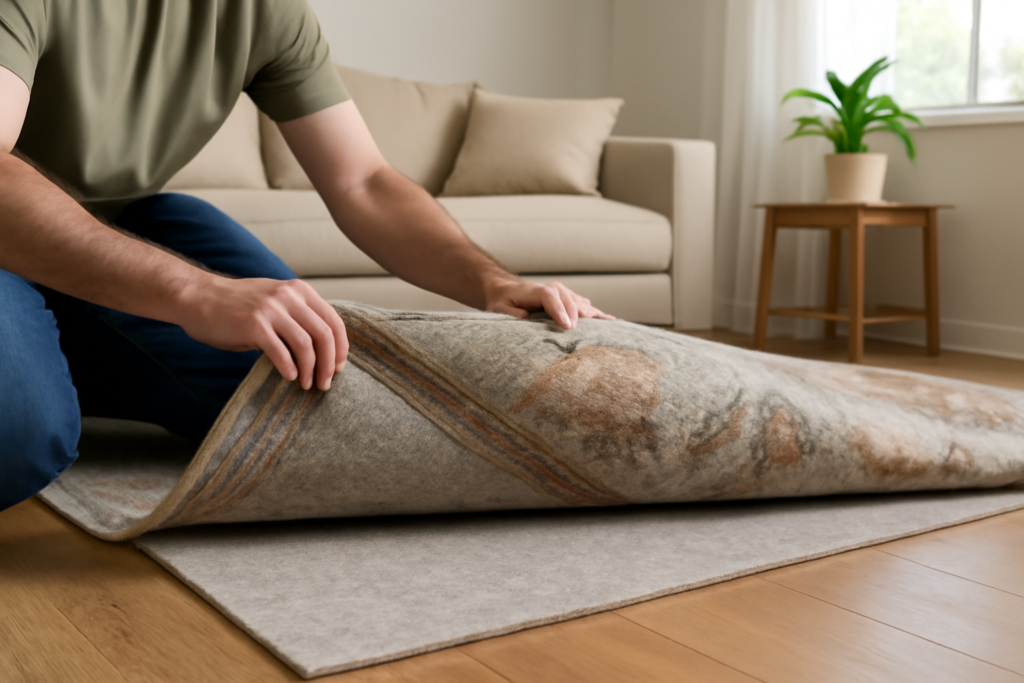
Many pads ship slightly oversized so you can trim them to fit your exact rug, since rugs vary by an inch or two from their labeled size. Felt and rubber cut easily with sharp household scissors or a utility knife and straightedge. Lay the rug face down, set the pad on top, mark an inch in from each edge, and cut. Always measure your actual rug rather than trusting the tag.
Matching the Pad to Your Floor
Hardwood and luxury vinyl deserve caution. Use a pad explicitly labeled safe for hardwood, ideally natural rubber or felt-and-natural-rubber. Cheap PVC and adhesive-coated pads can react with polyurethane finishes, leaving a cloudy haze or sticky residue that is brutal to remove.
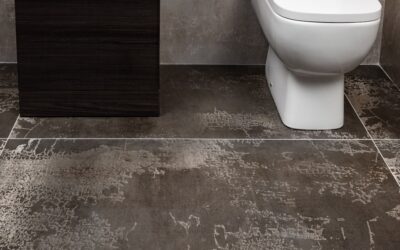
On tile and stone, grip is the priority because hard, smooth surfaces let rugs slide freely; a rubber-backed pad solves it. Over wall-to-wall carpet, you actually want a firmer, denser pad designed for carpet to stop the rug from creeping and bunching. Standard cushioned pads are too soft on carpet and let the rug wander.
Installation and Care Tips
Installing is straightforward, but a few habits help the pad and rug perform:
- Vacuum and clean the bare floor first so no grit gets trapped between the pad and finish.
- Lay the pad rubber-side down, centered in the rug’s intended position.
- Set the rug on top and smooth it from the center outward to release any air or ripples.
- Lift the rug and pad every few months to vacuum underneath and let the floor breathe.
Expect a quality felt-and-rubber pad to last 8 to 10 years. Cheap mesh pads often crumble or yellow within two or three. If you ever notice residue on the floor or the grip failing, replace the pad promptly rather than risk finish damage.
What to Budget
Price tracks material and thickness. A basic PVC mesh pad for a 10×14 might run $30 to $50, but it is a short-term fix. A quality felt-and-rubber pad in this size typically lands between $90 and $180, and premium natural-rubber or thick felt options can exceed $200. Given that the rug above it may cost ten times that, the pad is one of the best-value purchases in the room.
The Bottom Line
A 10×14 rug pad is not an upsell to ignore; it is the difference between a rug that looks great for a decade and one that curls, slides, and wears thin. Choose felt-and-rubber around 1/4 to 3/8 inch for most living spaces, size it one inch smaller than the rug on each side, and confirm it is rated safe for your specific floor. Get those three things right and you will barely think about the pad again, which is exactly the point.