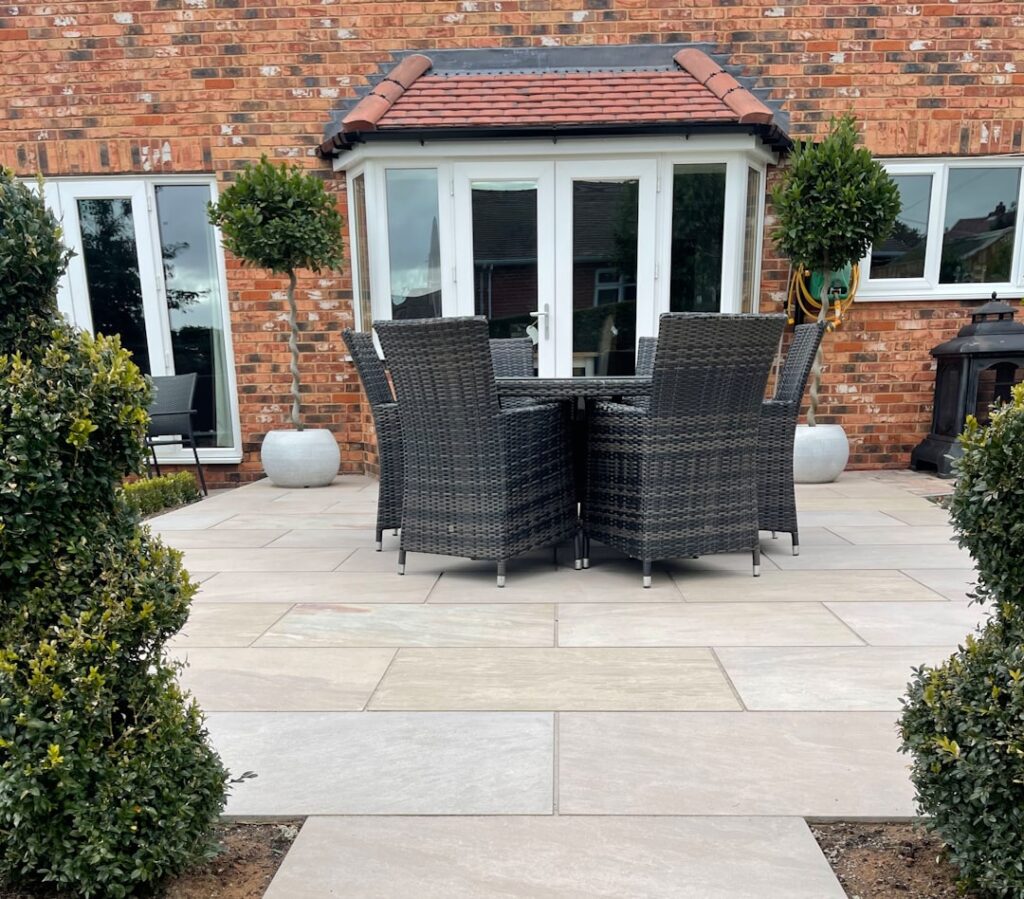
A dining table with six chairs needs about 12 feet of clearance to pull every seat out onto the rug, and that single fact is why so many patios call for a 10×20 outdoor rug instead of the 8×10 most people reach for first. Ten feet wide by twenty feet long is a serious footprint, 200 square feet of coverage, and it is built for the spaces standard rugs leave stranded: long covered porches, oversized decks, poolside lounges, and the kind of open-air dining setups where a smaller rug turns into a tripping ledge every time someone scoots back from the table.
What a 10×20 Outdoor Rug Covers
At 120 inches by 240 inches, a 10×20 is roughly two and a half times the area of a 10×8 and reads as a defined outdoor room rather than an accent. That length is unusual, which is the point: it suits rectangular spaces like a 12-by-24 covered patio or a long deck running the back of a house. Before you buy, remember these are large, heavy pieces. A polypropylene 10×20 can weigh 30 to 45 pounds rolled, so plan for two people to lay it flat and expect it to ship in an oversized box or on a small pallet.
Where a 10×20 Outdoor Rug Belongs
The best use is under a full outdoor dining set. Position the table so that when every chair is pulled out for someone to sit, all four legs of each chair stay on the rug. For a table seating six to eight, that is exactly why you need the extra length. A 10×20 outdoor rug also shines under a long sectional-and-coffee-table lounge arrangement, defining a conversation zone on an otherwise vast deck. Poolside, it warms up concrete or pavers and gives a soft landing between loungers, though you will want a quick-drying material near splashing water.
On a covered porch that runs the length of a house, a 10×20 unifies separate zones, say a swing at one end and a pair of rockers at the other, into one cohesive outdoor room. Just confirm the space is genuinely rectangular; this size looks awkward crammed into a square or L-shaped patio where the ends have nowhere to go.
Placement Rules for Large Outdoor Rugs
Scale changes the geometry, so use these targets:
- Dining clearance: leave at least 24 inches of rug beyond the table edge on every side, and up to 36 inches on the ends, so chairs pull out without catching the border.
- Furniture legs: under a lounge grouping, get the front legs of every sofa and chair onto the rug at minimum; on a rug this large you can usually fit all legs.
- Perimeter reveal: keep 12 to 18 inches of hardscape showing between the rug edge and any railing, step, or wall so the rug looks placed, not wall-to-wall.
- Walkways: preserve a 24-inch-plus path to doors, stairs, and grill areas so nobody catches a toe on the edge.
Because outdoor rugs sit on hard surfaces, edge lift is the enemy. Corners that curl in the sun become trip hazards fast on a rug this big, which is where the pad comes in.
Materials That Survive the Elements
Outdoor rugs live in UV, rain, and humidity, so material choice is everything. The two workhorses:
- Polypropylene (olefin): the standard for flat-woven outdoor rugs. It resists moisture, mildew, and fading, sheds water, and costs less. It can get hot underfoot in direct sun, so it is better under cover or in dappled shade.
- PET (recycled polyester): softer than polypropylene with a slightly plusher hand, made from recycled bottles, and strongly stain and fade resistant. A good pick where comfort matters, like a lounge area.
Look for a UV-stabilized label; untreated synthetics can fade noticeably in a single hot summer. Avoid natural fibers like jute or sisal outdoors unless the space is fully covered and dry, because they absorb water, grow mildew, and rot. A tight flatweave sheds debris and dries faster than a high-pile shag, which traps water and takes days to dry after a storm.
Use a Non-Slip Outdoor Rug Pad
A rug this large acts like a sail in wind and will migrate across a deck without help. Buy a pad made specifically for outdoor use, typically an open-weave PVC or rubber design that lets water pass through and dry rather than trapping it against the deck. Cut it one inch smaller than the rug on all sides. The open weave matters: a solid pad traps moisture and can stain wood decking or promote mildew on the rug’s underside. In genuinely windy spots, add rug weights or landscape anchor stakes at the corners.
Cleaning and Care
The great advantage of a synthetic outdoor rug is that you clean it with a hose. For routine care, shake or sweep off debris, then spray it down with a garden hose. For deeper cleaning, mix a little mild dish soap in a bucket, scrub with a soft-bristle brush, rinse thoroughly, and, most important, hang or prop the rug to dry completely before laying it back down. Trapped moisture underneath is what breeds mildew, so never leave a wet rug flat on the deck.
A few seasonal habits extend its life:
- Lift the rug after heavy rain to let the surface beneath dry, then relay it.
- Rotate it 180 degrees at midseason so the sun fades it evenly.
- Roll and store it indoors over winter in freezing climates; it saves the fibers and the pad.
- Treat mildew spots promptly with a diluted vinegar solution or a mildew-specific cleaner, then rinse.
10×20 vs Other Large Outdoor Sizes
The 10×20 is one of the biggest common outdoor rug sizes, so it helps to know how it compares to the alternatives before you commit to that footprint:
- vs 9×12 or 10×14: those cover a standard patio dining set for four to six, but a 10×20 adds the length needed for a longer table seating eight or more, or for pairing dining and lounge zones on one rug.
- vs two smaller rugs: using a single 10×20 instead of two 8x10s gives a cleaner, unified look with no gap or misaligned edges down the middle of a long deck.
- vs a custom or oversized square: a 10×20 is a stock rectangle many outdoor brands carry, so it is easier to source and cheaper than a custom-cut piece, provided your space is genuinely rectangular.
If your patio is closer to square, step down to a 12×12 or 12×15; the 10×20’s real advantage is length, and it only pays off in a long, rectangular space.
Style and Color for Outdoor Rugs
On a rug this large, color and pattern set the tone for the entire outdoor room. Darker fields and multi-tone patterns hide the dust, pollen, and leaf litter that inevitably land outside, which keeps a big rug looking clean between hose-downs. Lighter solids look crisp in photos but show every bit of debris and every muddy paw print. A subtle geometric, a faded medallion, or an indoor-outdoor stripe are all forgiving choices at this scale. Because the rug covers so much ground, treat it as the foundation and let it either quietly ground bolder furniture or serve as the one pattern in an otherwise neutral setup.
Buying Checklist
Measure your patio and tape out the 120-by-240-inch footprint before ordering; a rug this size is expensive to return. Confirm the rug is labeled UV-stabilized and mildew resistant, choose a flatweave for fast drying, and budget for a matching outdoor pad rather than skipping it. A quality 10×20 outdoor rug is one of the highest-impact upgrades a large patio or deck can get: it defines the space, protects your feet from hot pavers, and, cared for correctly, holds its color and grip for many seasons of outdoor living.