Shoppers see a bigger number on the box and assume more is better, but thickness is the most misunderstood spec in vinyl. When people search for 12mm LVP flooring, they usually want to know whether the extra millimeters justify the price over a 5mm or 8mm plank. The honest answer: thickness improves feel, sound, and forgiveness over rough subfloors, but it tells you almost nothing about how long the floor will resist scratches. That job belongs to the wear layer, a separate number entirely. Here is how to read both and spend wisely.
What 12mm Actually Measures
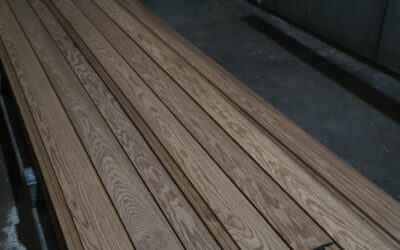
The 12mm figure is the total plank thickness, including the rigid SPC or WPC core and any attached underlayment pad. Most luxury vinyl plank sold today runs 4mm to 8mm, so a true 12mm product sits at the premium end and is often a hybrid laminate-vinyl construction or a thick WPC plank with foam backing.
That bulk does real work. It bridges minor subfloor dips, deadens the hollow click underfoot, and gives the floor a more solid, hardwood-like step. But none of it determines scratch resistance. A 12mm plank with a thin 6-mil wear layer will scuff faster than a 5mm plank wearing 20 mils of protection.
Thickness Versus Wear Layer
Keep these two numbers straight and you will never overpay:
- Overall thickness (mm): Comfort, sound, and how well the floor hides subfloor flaws. 12mm is plush and quiet.
- Wear layer (mil): Scratch and dent resistance. 12 mil suits bedrooms, 20 mil handles busy households and pets, 28 mil enters light-commercial territory.
Buy thickness for feel and wear layer for durability. The best 12mm planks pair the heavy core with a 20-mil or thicker wear layer; that combination is the one worth the premium.
What 12mm LVP Flooring Costs
Expect to pay $3.50 to $7 per square foot for the material on a genuine 12mm rigid-core plank, versus $2 to $4 for a standard 5mm board. Professional installation adds $2 to $4 per square foot. For a 300-square-foot living room, the material premium for going thick typically runs $450 to $900 over a thin floor.
That premium buys a quieter, warmer, more substantial floor, not a longer lifespan on its own. Weigh it accordingly.
Where Thicker Planks Shine
A 12mm plank earns its keep in specific situations. Over an uneven or older subfloor, the extra rigidity spans imperfections that would telegraph through a thin board. On a concrete slab in a basement or condo, the mass and attached pad cut impact noise, which matters for HOA sound ratings. And underfoot, the thicker plank simply feels closer to real hardwood, with less of the tinny resonance budget vinyl can have.
If you are installing over plywood subfloor in good shape and noise is not a concern, a quality 8mm plank with a strong wear layer often delivers 90 percent of the experience for less money.
Installation Considerations
Thicker planks are heavier and stiffer, which affects how they install. The locking joints are robust and snap together solidly, but the added rigidity means you must still flatten the subfloor to within 3/16 inch over 10 feet; rigid cores do not flex to follow waves. Acclimate boxes 48 hours in the room and leave a 1/4-inch expansion gap at all walls.
Watch your transitions and door undercuts too. A 12mm floor plus underlayment can reach 13mm or more, so confirm doors swing clear and that transition strips match the height to adjoining rooms.
Sound and Comfort Benefits
One underrated advantage of going thick is acoustics. The dense core and bonded foam pad lower both the click of footsteps and sound transmission to rooms below. In multi-level homes and apartments, that translates to a measurably quieter space and fewer complaints from downstairs neighbors. The thicker plank also feels warmer to bare feet than thin vinyl over cold concrete.
12mm Versus Thinner Planks: A Direct Comparison
Set the options side by side and the tradeoffs become clear. A standard 5mm plank costs the least, installs easily, and performs fine over a flat plywood subfloor, but it feels and sounds thinner underfoot. A 7mm to 8mm plank is the volume seller, balancing comfort, cost, and forgiveness for most homes. A 12mm plank tops the range for feel and sound while carrying the highest price.
- 5mm: budget-friendly, best over flat subfloors, lightest step.
- 8mm: the practical sweet spot for most rooms.
- 12mm: premium comfort and quiet, ideal over imperfect or noisy subfloors.
Remember that none of these numbers describe scratch resistance; that is the wear layer’s job entirely.
Maintenance and Longevity
Whatever thickness you choose, the care routine is the same: sweep or vacuum regularly, damp-mop with a pH-neutral cleaner, and skip steam mops that can force moisture into the seams. Felt pads under furniture and a walk-off mat at entries do more to preserve the finish than any thickness ever could. With a 20-mil wear layer and basic care, a quality 12mm plank should hold its looks for 15 to 25 years.
One real advantage of the thicker plank shows up over time: its rigid core resists the dents that heavy furniture and appliances press into thinner floors, so it tends to stay flatter and more uniform across its life. That dimensional stability, combined with the quiet step, is what buyers are really paying the premium for.
Should You Buy 12mm LVP Flooring?
Choose 12mm LVP flooring when you want premium comfort, quiet, and forgiveness over an imperfect subfloor, and pair it with a 20-mil or thicker wear layer so durability matches the price. If your subfloor is flat, your traffic moderate, and your budget tight, a well-specified 8mm plank is the smarter buy. Read both numbers on every box, and let the wear layer, not the thickness, decide how long your floor stays beautiful.
Prefer to explore on your own?
See how new flooring looks in your actual room in seconds — free, no signup.
Try the free Floor Studio →