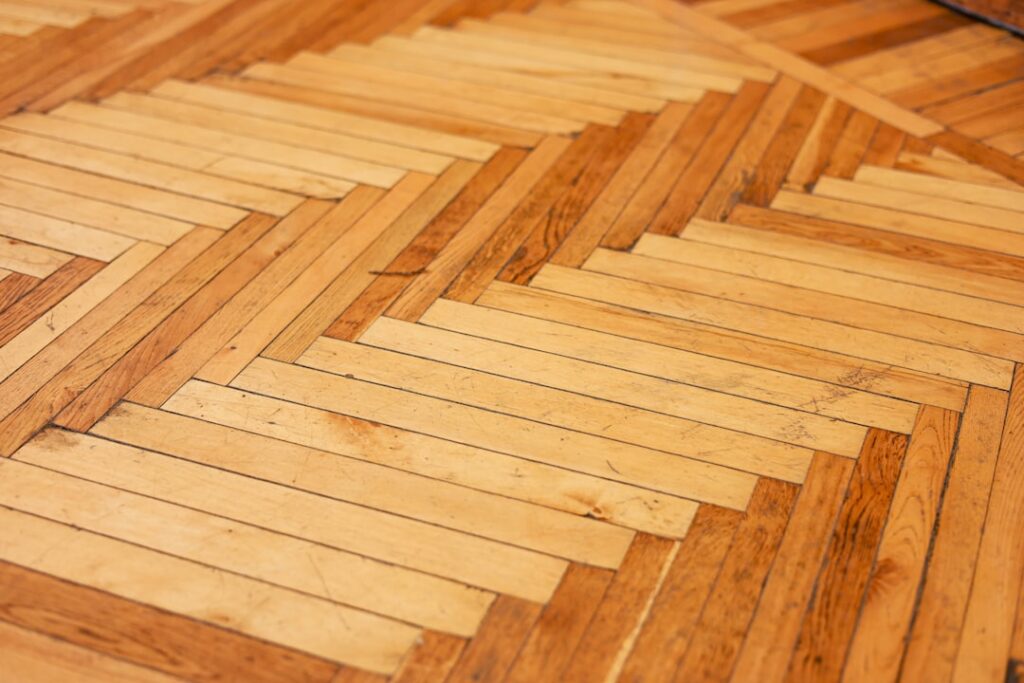
12×12 parquet wood flooring is having a genuine comeback, and if you grew up in a mid-century home you already know the look: small wood slats arranged into 12-inch squares, laid in a checkerboard or basketweave pattern that catches light differently in every direction. For decades these tiles were dismissed as dated, but designers have rediscovered the warmth and craft they bring to a room. Before you order a few cartons, though, it pays to understand what you are actually buying, because “parquet” covers everything from glue-down solid wood to peel-and-stick veneer, and they do not perform alike.
The 12-by-12-inch tile is the most common parquet format in North America. Each tile is made of narrow wood fingers, or slats, bonded together and often mounted on a mesh or paper backing so the whole square installs as a unit. Laid across a room, the alternating grain direction of each tile creates that signature geometric shimmer.
What 12×12 Parquet Tiles Actually Are
The classic version is solid hardwood: real oak, walnut, or maple slats about 5/16 to 3/4 inch thick, factory-assembled into 12-inch squares. These are typically glued down to a plywood or concrete subfloor rather than nailed, because their small pieces do not lend themselves to face nailing. Because the tiles are solid wood, higher-quality versions can be sanded and refinished, giving them a long service life.
Alongside the solid tiles you will find engineered parquet, which puts a real wood veneer over a stable core, and budget peel-and-stick parquet, which is often a thin wood veneer or even a printed vinyl imitation on an adhesive backing. The engineered and solid versions are the ones that read as genuine heirloom flooring; the peel-and-stick vinyl look-alikes are a quick cosmetic fix, not a lifetime floor.
The Appeal of Parquet
Character is the first reason to choose it. A basketweave or herringbone-within-a-square pattern gives a room instant architectural interest that plain strip flooring cannot match, and it pairs beautifully with both traditional and modern furniture. In a dining room or entry, that geometry becomes a design feature in its own right.
The 12-inch tile format also makes layout surprisingly manageable. Because you work in a modular grid rather than fitting long random-length boards, planning is intuitive and waste is low, often under 5 percent for a simple square room. For glue-down installs, the tiles butt together with tongue-and-groove edges or simply sit tight on the adhesive, and there is no long-board bowing to fight.
Solid parquet shares hardwood’s best trait: it can be refinished. Scuffs and worn spots that would end the life of a laminate or thin vinyl can be sanded away and re-coated, so a quality parquet floor can look new again decades later.
The Drawbacks to Weigh
Installation precision is the biggest challenge. Because the pattern is geometric, any error in your layout lines compounds across the room and shows up as a visibly crooked grid. Getting the starting square dead center and square to the room is fussier than snapping a chalk line for strip flooring, and glue-down work is messier and less forgiving than click-lock floating floors.
Sanding parquet is also harder than sanding straight boards. Because adjacent slats run in opposing grain directions, a drum sander will tear grain in one direction no matter how you approach it, so refinishing usually requires an orbital sander and more patience. Many pros charge a premium to refinish parquet for exactly this reason.
Moisture is another concern. Solid parquet expands and contracts with humidity like any wood floor, and the many small glue joints can telegraph movement or lift in damp basements. If your subfloor is a slab prone to moisture, an engineered parquet or a proper moisture barrier is essential.
What It Costs
Prices swing based on whether the tile is solid, engineered, or a vinyl imitation:
- Peel-and-stick vinyl parquet: $1 to $3 per square foot, a cosmetic, short-term option.
- Engineered wood parquet: $4 to $8 per square foot, stable and refinishable once or twice.
- Solid hardwood parquet: $5 to $12+ per square foot depending on species and pattern.
Professional glue-down installation typically adds $3 to $7 per square foot, and refinishing an existing parquet floor runs $3 to $6 per square foot because of the extra labor the crossed grain demands. For a 200-square-foot dining room in solid oak parquet, professionally installed, plan on roughly $2,000 to $3,500 all in.
Buying and Installation Tips
Decide first whether you want a lifetime floor or a look. If you want the former, buy solid or thick-veneer engineered tiles and plan to glue them down over a flat, dry, clean subfloor. If you only want the aesthetic in a rental or a quick refresh, peel-and-stick tiles will get you there for a fraction of the price and effort, with the understanding that they will not last decades.
Dry-lay a section before committing to adhesive. Snap perpendicular chalk lines through the exact center of the room, set your first four tiles at that intersection, and confirm the pattern lands cleanly at the walls before you spread glue. Acclimate solid wood tiles in the room for several days first, use the trowel and adhesive the manufacturer specifies, and weight or roll the tiles as you go so they bond flat.
Done thoughtfully, 12×12 parquet wood flooring rewards you with a floor that looks custom and ages gracefully. It asks for more care during installation than a floating floor, but that geometric warmth underfoot is exactly why parquet keeps coming back into style, one restored dining room at a time.
Caring for a Parquet Floor
Once installed, parquet is maintained much like any wood floor, with one extra consideration: the many small glue joints mean you should be even more careful about standing water. Wipe spills promptly, use a barely damp microfiber mop with a pH-neutral wood cleaner, and never let water pool in the seams where it could work into the joints and lift a slat. Grit is the other enemy, so keep entry mats down and sweep or vacuum regularly, because sand acts like sandpaper on the finish.
Sunlight will slowly change the color of a natural parquet floor, especially with warm-toned species like oak and cherry. Rotating rugs and furniture occasionally lets the floor age evenly rather than leaving pale rectangles where a rug once sat. With this basic care, a solid parquet floor can look beautiful for generations, and when the finish finally dulls, an orbital refinish restores it rather than forcing a replacement.
Frequently Asked Questions
Is parquet flooring outdated?
Not anymore. After decades out of fashion, parquet has returned as a sought-after designer look, particularly in dining rooms, entries, and studies where its geometric pattern adds character. Modern installations in oak and walnut read as timeless craft rather than dated, especially with today’s matte and natural finishes.
Can you install parquet tiles over concrete?
Yes, glue-down parquet is well suited to a clean, flat, dry concrete slab, which is one reason it was so popular in slab-built mid-century homes. Just confirm the slab is fully cured and use a moisture barrier or moisture-tested adhesive, because solid wood parquet is still sensitive to slab moisture.
Prefer to explore on your own?
See how new flooring looks in your actual room in seconds — free, no signup.
Try the free Floor Studio →