Walk into any house built or remodeled between 2001 and 2009 and you can date the kitchen within two years just by the backsplash. The 2000s kitchen had a very specific visual signature: warm Tuscan browns, granite slab countertops in busy earth-toned patterns, raised breakfast bars at the island, tumbled travertine or mosaic medallion backsplashes, and either honey oak or dark cherry cabinets. If you own one of these homes, you are looking at a kitchen that still functions fine but reads as distinctly dated to any 2026 buyer — and there are smart ways to update without a full gut job.
The Signature Color Palette
The 2000s embraced warm Old World Mediterranean tones almost universally. Walls in Sherwin-Williams Blonde, Behr Toasted Almond, or Benjamin Moore Shaker Beige. Cabinets in honey oak, golden maple, or rich “cherry” finishes (often actually cherry-stained maple). Granite counters in Baltic Brown, Tropic Brown, Uba Tuba, or Santa Cecilia. Bronze and oil-rubbed bronze hardware everywhere.
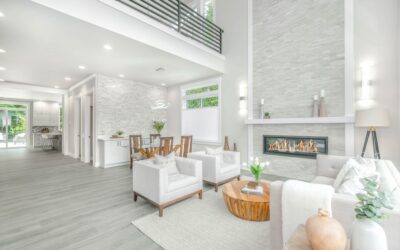
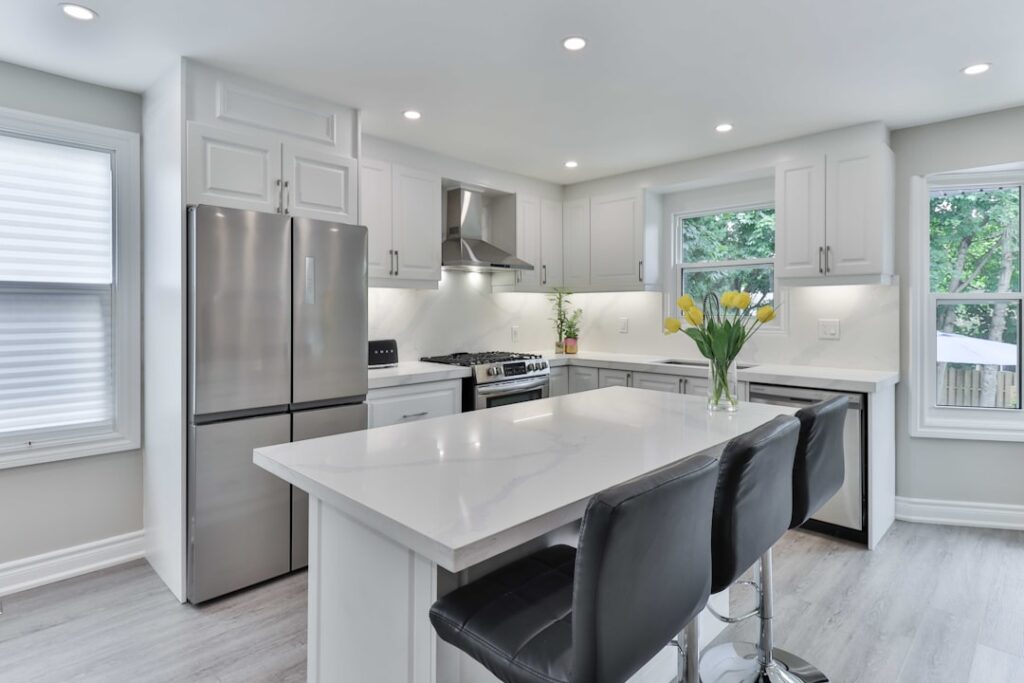
The combined look is warm, heavy, and visually busy. It contrasts sharply with the cool whites, charcoal grays, and matte blacks that have dominated since 2015, which is why even well-preserved 2000s kitchens read as outdated.
Hallmark Design Elements
Beyond color, the decade had distinct architectural details that show up in nearly every builder-grade kitchen from the period.
- Raised breakfast bar: A two-tier island with the cooking counter at 36 inches and a raised 42-inch bar top separated by a short wall or corbels.
- Granite tile countertops: 12×12 or 18×18 granite tile instead of slab, with thick grout lines. The budget version of the Tuscan slab look.
- Tumbled travertine backsplash: 4×4 tumbled stone with a diagonal mosaic medallion behind the range.
- Under-cabinet valance lighting: Fluorescent puck or tube lights hidden behind a decorative wood valance.
- Corbels everywhere: Ornate carved wood brackets under countertops, range hoods, and upper cabinet crown.
- Desk niche: A dedicated built-in “message center” with a lowered countertop for a corded phone and family calendar.
Why the Look Fell Out of Favor
Three cultural shifts killed the 2000s aesthetic. Open-concept floor plans made dark cabinets feel heavy in adjoining living rooms. Stainless and matte-black appliances replaced black and almond. And HGTV’s post-2012 obsession with bright white modern-farmhouse drove buyers to demand light, airy, minimalist kitchens rather than warm cluttered ones.
By 2018, Tuscan-style kitchens were appraising 3 to 6 percent below comparable updated kitchens in the same zip code, and the gap has widened every year since.
Partial Updates That Make the Biggest Difference
A full gut remodel runs $35,000 to $80,000 in most markets. For a fraction of that, you can modernize a 2000s kitchen enough to recover most of the comp-value gap.
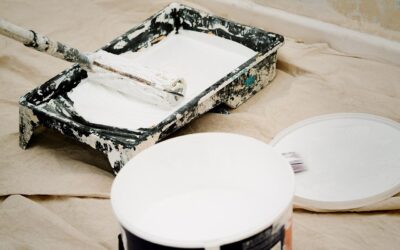
Paint or refinish the cabinets. A professional cabinet refinish in a warm white, soft gray, or deep navy costs $3,500 to $6,500 for a typical 30-linear-foot kitchen and visually takes the room from 2005 to 2026 overnight. Homeowners doing it themselves should plan on a weekend per set of 10 doors using a quality cabinet paint like Benjamin Moore Advance or Sherwin-Williams Emerald Urethane Trim Enamel.
Replace the hardware. Swap ornate bronze pulls for clean brushed-nickel, matte black, or brushed gold bar pulls and knobs. Budget $5 per piece at Amazon, around $200 for a whole kitchen.
Remove the raised bar. Cutting down the two-tier island to a single 36-inch waterfall or slab countertop is the highest-impact change short of replacing the cabinets. Expect $1,800 to $3,500 including a new stone top.
The Granite Dilemma
Busy earth-tone granite is the hardest element to work with. Ripping out functioning stone feels wasteful, but the material defines the entire room. Three approaches work:
- Keep it and modernize around it. Paint cabinets in a deep color like Iron Mountain or Hale Navy that lets the stone become a neutral background.
- Paint or re-coat the granite. Products like Giani Countertop Paint or Daich SpreadStone cover in a solid tone for $150-$300 and 2 days of work. Not as durable as stone, but buys 5 years.
- Replace with quartz. White, gray, or soft veined quartz in slabs runs $70-$120 per square foot installed. The surest path to a modern look.
Backsplash Modernization
The tumbled travertine backsplash with the diagonal medallion is the single most dated element. Replacing 30 square feet with white subway tile, elongated hexagon, or soft zellige runs $600-$1,500 installed and transforms the sightlines. If the travertine itself is still tight, some homeowners simply paint it with a kitchen-grade enamel — a temporary fix that reads as clean white for 2-3 years.
Lighting Changes That Punch Above Their Weight
Replace the 2000s-era wrought iron chandelier over the island with a trio of matte black or brass pendants. Swap flush-mount ceiling fixtures for slim LED disk lights on a dimmer. Replace under-cabinet fluorescents with LED strip lighting in warm 2700K to 3000K for the cleanest modern look.
What to Keep
Not everything from a 2000s kitchen needs to go. The real solid-wood cabinet boxes built in the era are often higher quality than today’s particle-board big-box replacements. Soft-close hinges can be retrofitted for under $200. If the layout functions well, investing in cosmetic updates often returns more than a full gut.
2000s kitchens age, but they rarely break. A thoughtful $12,000 facelift typically recovers itself at sale, while a $60,000 full remodel recoups 50-70 percent in most markets.