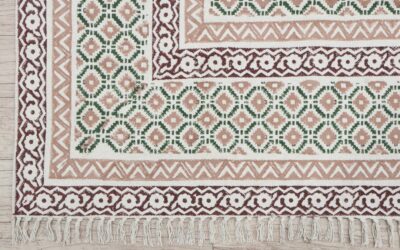
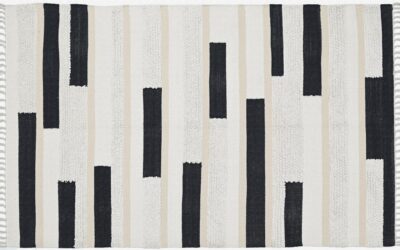
Pattern is the secret ingredient most rooms are missing, and a brown geometric rug delivers it without tipping into visual chaos. Because brown reads as a grounded neutral, the repeating shapes, whether diamonds, trellis, chevron, or Moroccan lattice, add movement and interest while still playing well with the rest of your furniture. That balance of energy and restraint is exactly why designers reach for these rugs when a room feels flat but a bold color would be too much. This guide walks through the popular patterns, the materials behind them, and how to pair the rug so it looks pulled together.
Popular Geometric Patterns Explained
Not all geometry hits the same note, and the pattern you choose sets the room’s mood. A tight, small-scale print feels busy and casual, while a large, open motif reads as calm and modern.
- Moroccan trellis: Interlocking lattice or diamond shapes with a slightly bohemian, hand-drawn feel.
- Chevron and herringbone: Directional zigzags that add energy and make a narrow room feel longer.
- Diamond and lattice: Crisp repeating diamonds for a tailored, structured look.
- Abstract and mosaic: Irregular blocks and tiles for an artistic, contemporary vibe.
Scale matters as much as shape. In a small room, keep the motif modest so it does not overwhelm; in a large open space, an oversized pattern holds its own where a tiny print would disappear.
Materials Behind the Pattern
Unlike a natural cowhide, a geometric rug is woven or tufted, so the fiber determines how it feels and wears. Machine-woven synthetics dominate this category because they render crisp patterns affordably and stand up to traffic.
Polypropylene is the value leader, running roughly $60 to $200 for an 8×10 and resisting stains and fading well. Wool costs more, often $300 and up for the same size, but brings a soft, resilient pile and richer color depth. Flat-weave and hand-loomed cotton rugs sit in between, offering a low-profile option that shows fine geometric detail and washes more easily. For a busy family room, a stain-resistant synthetic makes the most sense; for a formal living room, wool rewards the higher price.
Why Brown Anchors a Pattern So Well
Brown does quiet, heavy lifting in a patterned rug. As an earthy neutral, it grounds the geometry so the shapes register as texture rather than noise, which is why a brown-and-cream trellis feels soothing while the same pattern in bright red would feel loud.
The specific brown matters too. Warm tan and camel lean cozy and traditional, chocolate and espresso feel rich and contemporary, and a greige brown bridges warm and cool palettes so it works with almost anything. Because brown is a low-contrast base, you can enjoy a bold motif without the rug fighting your sofa, art, or drapes for attention.
Color Pairings That Work
The fastest way to make a geometric rug look intentional is to pull one of its secondary colors into the room. Most brown geometric rugs mix in a second tone, and echoing it in a throw pillow, a vase, or a lampshade ties the whole scheme together.
- Brown and cream: Timeless and soft; pair with linen upholstery and natural wood.
- Brown and navy: Crisp and modern; add brass accents for a tailored look.
- Brown and rust or mustard: Warm and boho; layer with terracotta pottery and leather.
- Brown and gray: Cool and contemporary; works with charcoal sofas and matte black metal.
Keep the surrounding walls fairly neutral so the rug stays the patterned star of the floor.
Room-by-Room Placement
Where the rug goes changes which pattern and size make sense. In a living room, choose an 8×10 or 9×12 so the front legs of the sofa and chairs sit on the rug and the pattern spreads across the seating zone. A large-scale geometric works here because there is room to see the full repeat.
In a bedroom, a patterned rug under the lower two-thirds of the bed frames the space, or a pair of runners along each side gives softness underfoot. For hallways and entries, a narrow geometric runner adds rhythm to a long stretch of floor and hides everyday dirt between the pattern lines, a practical bonus in high-traffic paths.
Mixing a Geometric Rug With Other Patterns
Combining patterns intimidates people, but geometry is one of the easiest to layer because its lines are so structured. The trick is varying the scale: pair a large-scale rug motif with small-scale pillow or curtain prints so they complement rather than compete. Stick to a shared color family, letting the rug’s browns and secondary tone guide the other fabrics.
Balance a busy geometric floor with at least one solid element nearby, such as a plain sofa or unadorned drapes, to give the eye a place to rest. When every surface fights for attention, the room feels cluttered; a solid anchor lets the pattern shine.
Choosing Pile Height and Construction
How a geometric rug is built affects both how the pattern shows and how it lives day to day. Low-pile and flat-weave rugs render crisp, precise lines and are the easiest to vacuum and to slide chairs across, which makes them ideal for dining rooms and high-traffic paths. A pile under 1/4 inch keeps the geometry sharp and dirt-shedding.
High-pile and shag geometric rugs blur the edges of the pattern into something softer and cozier, better suited to a bedroom or a low-traffic lounge where comfort underfoot matters more than crisp detail. Hand-tufted rugs sit in the middle, offering a plush feel with reasonably defined motifs. Match the construction to the room’s job: sharp and durable where people walk, soft and forgiving where they relax.
Budgeting for a Geometric Rug
Price tracks closely with material and size, so set expectations before you shop. A machine-woven polypropylene 5×8 often runs $60 to $150, making it an easy way to test a bold pattern without much risk. Step up to an 8×10 in the same fiber and you are typically looking at $120 to $250.
Wool and hand-loomed options cost considerably more, frequently $400 to $900 for an 8×10, but they reward the investment with better color depth, resilience, and a longer life. If you rearrange often or have young kids, a budget synthetic you can replace in a few years may be smarter than a premium wool. Decide how long you want the rug to last, then buy the best fiber your budget allows at that horizon.
Care and Longevity
A woven rug asks for simple, regular upkeep. Vacuum weekly to lift grit that grinds down fibers, and rotate the rug 180 degrees every few months so foot traffic and sunlight wear it evenly rather than fading one side. Blot spills promptly with a clean cloth and a little mild soap; most synthetics release stains readily.
Add a quality rug pad underneath to cushion the pile, prevent slipping, and preserve the crisp lines of the design. With that basic routine, a well-made brown geometric rug holds its pattern and color for a decade or more, making it one of the most cost-effective ways to give a room lasting personality.
One last habit protects your investment: use a spray-on fabric protector on synthetic and wool rugs when they are new, then reapply once a year. It slows staining in high-use rooms and buys you extra time to blot spills before they set. Trim any stray pulls with scissors rather than yanking them, which can unravel a woven edge, and address a fraying border promptly with a dab of fabric glue so the geometry stays crisp all the way to the edge.