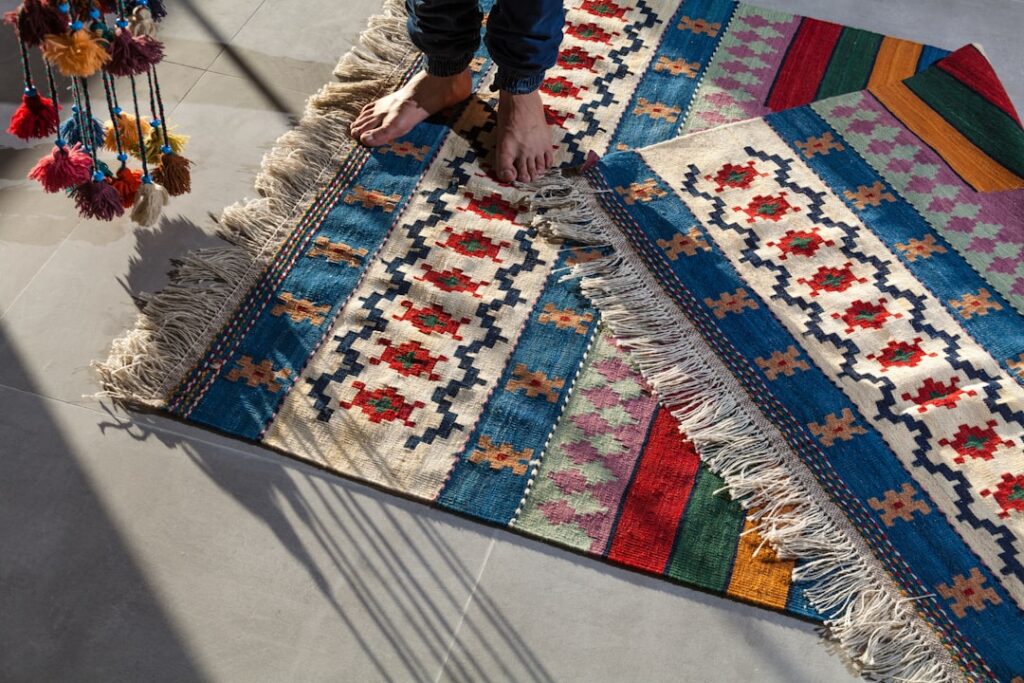
A good woven rug is one of the hardest-working pieces in any home, adding texture, warmth, and quiet style underfoot while standing up to years of foot traffic. Unlike tufted rugs that rely on glue to hold their pile, woven rugs are constructed by interlacing yarns, which generally makes them more durable and longer lasting. This guide explains the main weaving methods, the best fibers, and how to choose and care for one.
What Makes a Rug Woven
Weaving means the rug is created by interlacing warp and weft threads on a loom rather than punching yarn through a backing. This construction produces a stronger, more cohesive rug because the structure itself holds the fibers in place. Woven rugs often look good from both sides and tend to shed far less than glued or tufted alternatives.
Within the woven category there is a wide range of quality and price, from inexpensive machine-woven synthetics to museum-grade hand-knotted wool. Understanding the construction helps you judge whether a rug will last five years or fifty.
Flatweave Versus Hand-Knotted
The two most common woven styles serve very different purposes:
- Flatweave — thin, pile-free rugs like kilims and dhurries. They are lightweight, reversible, easy to clean, and ideal for high-traffic areas and layering.
- Hand-knotted — each knot is tied individually by hand, creating a dense, plush, and extremely durable rug. These are the heirloom pieces, with knot counts that take months to weave.
Flatweaves suit casual, busy spaces and budgets, while hand-knotted rugs are an investment that can last generations and even appreciate in value. Machine-woven rugs sit in between, offering decent durability at accessible prices.
Choosing the Right Fiber
Fiber drives comfort, durability, and price. Wool is the gold standard, naturally soft, resilient, and stain-resistant, which is why most quality woven rugs use it. Cotton is affordable and washable but less durable, making it a good fit for flatweaves and lower-traffic rooms. Jute and sisal bring an organic, textured look but feel rougher underfoot.
For outdoor or extremely high-traffic areas, polypropylene and other synthetics resist moisture, fading, and stains while keeping costs low. Match the fiber to the room: wool for the living room, a synthetic for the porch, and a washable cotton flatweave for a kitchen or entryway.
Getting the Size Right
Choosing the correct size makes or breaks a room. In a living room, aim for the front legs of your seating to rest on the rug, which usually calls for at least an 8-by-10-foot piece. Under a dining table, the rug should extend far enough that chairs stay on it when pulled out, generally 24 inches beyond every edge.
In bedrooms, a large rug under the bottom two-thirds of the bed gives a soft landing each morning, while runners work well in hallways and beside beds. When you are torn between two sizes, the larger one almost always looks more polished.
Cost Ranges to Expect
Price spans an enormous range with this category. Machine-woven synthetic and cotton rugs in a mid size often run $50 to $250, while quality wool flatweaves land in the $200 to $600 range. Hand-knotted wool rugs start in the hundreds and can climb into the thousands depending on knot count, size, and origin. The higher price of a hand-knotted piece reflects the months of labor and the decades of life it offers.
Machine-Woven Versus Handmade
Beyond flatweave and hand-knotted, it helps to understand the broader split between machine-woven and handmade rugs. Machine-woven rugs are produced quickly on power looms, which makes them affordable and consistent, and modern machines can reproduce intricate patterns convincingly. They are an excellent value for high-traffic rooms and homes with kids or pets where you do not want to worry about an expensive piece. Handmade rugs, whether hand-knotted or hand-woven, carry the irregularities and character of human craftsmanship, last far longer, and often hold or increase their value. The trade-off is cost and time, since a fine hand-knotted rug can take months to complete. Decide based on your budget, how long you want the rug to last, and whether you value the artistry of a handmade piece or the practicality of a machine-made one.
How to Judge Quality
Knowing what to look for helps you spot a well-made woven rug. For hand-knotted pieces, a higher knot count generally means a finer, more durable rug, and you can check by flipping the rug to see how tight and even the knots are on the back. A genuine hand-knotted rug shows the pattern clearly on the reverse side. For flatweaves, look for tight, even weaving with no gaps, and inspect the edges and fringe to make sure they are securely finished rather than fraying.
Run your hand over the surface to feel the density and check for shedding, since quality wool rugs shed minimally after a short break-in period. A rug that sheds heavily or feels thin and loose is likely a lower-grade product that will not hold up to regular use.
Styling a Woven Rug
Woven rugs add texture that softens hard floors and ties a room together. A neutral flatweave or jute rug provides a calm foundation you can layer other pieces over, while a colorful kilim or patterned wool rug becomes the focal point of the room. Layering a smaller patterned rug over a larger natural-fiber base is a popular designer move that adds depth and warmth. Keep surrounding furniture in complementary tones so the rug reads as intentional rather than busy.
Cleaning and Care
Vacuum regularly to keep grit from cutting the fibers, and avoid the beater bar on delicate flatweaves and hand-knotted rugs. Rotate the rug every few months so it wears and fades evenly, especially in sunny rooms. Blot spills immediately with a clean cloth instead of rubbing, which only drives stains deeper.
Always use a rug pad to prevent slipping, cushion the fibers, and protect your floors. Spot clean with mild soap and water as needed, and schedule professional cleaning every year or two for valuable wool pieces. With basic care, a quality woven rug will reward you with many years of service and good looks.