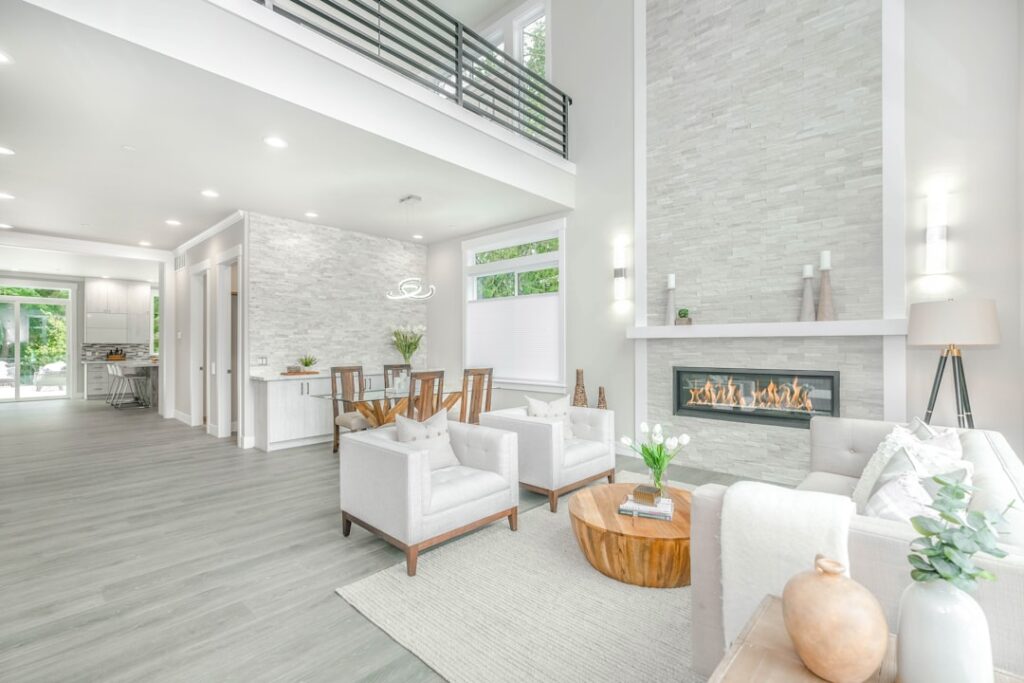
Few decorating choices change a room as fast as the rug underfoot. The right pattern anchors your furniture, warms up a cold floor, and pulls a color scheme together in one move. Understanding the main area rug styles before you shop saves you from expensive mistakes and returns. After fitting thousands of square feet of flooring over the years, I’ve watched homeowners fall in love with a rug online only to find it fights the room once it lands. This guide walks you through the styles that matter, what each is made of, and where each one shines.
- Traditional and Persian Styles
- Modern and Contemporary Styles
- Natural Fiber Styles
- Shag and High-Pile Styles
- Flatweave and Kilim Styles
- Transitional and Vintage-Wash Styles
- How to Match a Style to Your Room
- Layering and Mixing Styles
- Color and Pattern Considerations
- Final Thoughts on Choosing a Style
Traditional and Persian Styles
Rooted in centuries of weaving from Iran, Turkey, and India, traditional rugs feature intricate medallions, floral borders, and rich jewel tones like deep red, navy, and gold. They read as formal and timeless, which makes them a natural fit for dining rooms, libraries, and entryways where you want a sense of permanence.
Authentic hand-knotted wool versions run anywhere from $800 for a 5×8 up to several thousand dollars for a 9×12, and they can last 50 years or more. If that stretches the budget, power-loomed polypropylene reproductions capture the look for $150 to $400 in the same sizes. My advice: buy the real wool for a room you’ll keep forever, and save the synthetic for high-traffic or kid-heavy spaces.
Modern and Contemporary Styles
Clean lines, bold geometry, and abstract color-blocking define this category. A contemporary rug might be a single muted gray field, a splash of asymmetric color, or a crisp black-and-white grid. These pieces work beautifully in open-concept living rooms, home offices, and anywhere the architecture already carries visual weight.
Because the patterns are simple, quality shows in the material and pile. Look for dense wool or a plush polyester with a pile height around 0.5 inch for softness underfoot. Expect to pay $200 to $600 for an 8×10 in this category, with designer collaborations climbing well past that.
Natural Fiber Styles
When homeowners tell me they want texture without a busy pattern, I point them toward natural fibers. Jute, sisal, and seagrass bring an organic, earthy layer that complements coastal, farmhouse, and Scandinavian interiors.
- Jute — soft and pliable, with a warm tan tone. Best for living rooms and bedrooms, not wet areas.
- Sisal — the most durable natural fiber, ideal for hallways and stairs, though it feels coarser barefoot.
- Seagrass — nearly stain-proof and slightly water-resistant, with a subtle green cast when new.
A 5×8 jute rug typically runs $100 to $250. Keep these away from bathrooms and covered patios, because moisture causes them to swell, discolor, and eventually rot.
Shag and High-Pile Styles
Nothing feels quite like sinking your feet into a deep shag. With pile heights from 1 to 2 inches, these rugs deliver maximum coziness and sound absorption, which is why they land so often in bedrooms, nurseries, and reading nooks. The tradeoff is maintenance. Long fibers trap crumbs and dust, so plan on a vacuum without a beater bar and an occasional deep shake outdoors.
Polyester shags cost $150 to $350 for a 5×8 and resist stains well. Wool shags cost more but shed less over time and feel denser. Skip high-pile rugs in dining rooms, where chair legs snag the fibers and dropped food disappears into the depth.
Flatweave and Kilim Styles
Flatweave rugs have no pile at all, which makes them thin, reversible, and easy to clean. Kilims, the patterned cousins from Turkey and the Balkans, bring bold diamonds and stripes in warm terracotta and indigo. Because they lie so flat, they slide under doors and furniture without bunching and are perfect for kitchens, entryways, and layering over larger neutral rugs.
Cotton flatweaves are machine-washable and start around $60 for a 4×6, making them one of the most budget-friendly area rug styles you can buy. Wool kilims cost more, roughly $300 to $700 for an 8×10, and hold up to heavy foot traffic for decades.
Transitional and Vintage-Wash Styles
Sitting between traditional and modern, transitional rugs borrow classic motifs but soften them with muted, faded palettes. The wildly popular vintage-wash or distressed look falls here: think a worn Persian pattern in dusty rose, faded teal, or washed gray. These bridge design eras gracefully, so they suit almost any home and forgive the occasional spill because the mottled coloring hides wear.
Machine-made vintage-wash rugs in polypropylene are a genuine value at $120 to $350 for an 8×10, and they’ve become my default recommendation for families who want style without babysitting the floor.
How to Match a Style to Your Room
Picking among the styles gets easier when you start with the room’s job rather than the rug’s looks. Use these guardrails:
- Living room — go large enough that the front legs of every seat rest on the rug; an 8×10 or 9×12 usually does it.
- Dining room — flatweave or low-pile, sized so chairs stay on the rug when pulled out, typically 24 inches of clearance beyond the table on all sides.
- Bedroom — shag or plush wool, either one big rug under the bed or two runners flanking it.
- Entry and hall — durable sisal, kilim, or synthetic that shrugs off dirt and moisture.
Whatever style you choose, always add a quality rug pad about 0.25 to 0.375 inch thick. It keeps the rug from creeping, adds cushion, and protects your finished floors from grit.
Layering and Mixing Styles
You don’t have to commit to a single style per room, and some of the most inviting spaces I’ve seen break that rule on purpose. Layering a small flatweave kilim over a large neutral jute rug adds pattern and warmth without overwhelming the floor. The trick is to vary scale and texture while sharing at least one color, so the two rugs read as a deliberate pair rather than an accident.
When mixing styles across an open floor plan, give each zone its own rug but keep a common thread, whether that’s a repeated color, a similar pile height, or a shared era. A vintage-wash rug in the living room and a coordinating flatweave in the adjoining dining nook, both carrying a dusty blue, will tie the whole space together without matching exactly.
Color and Pattern Considerations
Style is only half the decision; the color and scale of the pattern determine whether a rug calms a room or fights it. In a space with busy wallpaper or bold furniture, a solid or subtly textured rug gives the eye a place to rest. In a room full of neutrals, a patterned Persian or geometric modern rug becomes the star and injects personality.
As a practical rule, darker and mottled patterns hide dirt and wear, which is why I steer families toward vintage-wash and traditional medallion designs for high-traffic rooms. Light solids look stunning in photos but show every crumb and paw print, so reserve them for low-traffic, adults-only spaces where you can keep them pristine.
Final Thoughts on Choosing a Style
The best area rug styles for you come down to three honest questions: how much traffic the room gets, how the space should feel, and how much upkeep you’re willing to do. A wool Persian rewards a formal, low-traffic room with decades of beauty, while a washable flatweave earns its keep in a busy kitchen. Buy the largest size the room can carry, invest in a pad, and choose a material that fits your life, not just your Pinterest board. Get those fundamentals right and almost any style will look intentional and pulled together.