Natural-fiber rugs have taken over the design world, and a linen rug offers something the usual jute and sisal can’t: a softer hand and a quieter, more refined look. Woven from the same flax plant that gives us linen sheets and clothing, these rugs bring subtle texture and a muted, oatmeal-to-gray palette that plays well with almost any decor.
Before you buy one, though, it helps to understand where linen shines and where it struggles. It’s a beautiful fiber, but it’s not the bulletproof choice for a busy mudroom. Here’s what a decade of specifying floor coverings has taught me about living with them.
What a Linen Rug Actually Is
Linen comes from the stalk of the flax plant, spun into a yarn that’s smooth, cool to the touch, and naturally lustrous. Most rugs sold as linen are either 100 percent flax or, more commonly, a linen blend woven with cotton, wool, viscose, or a bit of jute for added body and durability. Pure linen rugs tend to be lightweight flatweaves rather than thick, plush constructions.
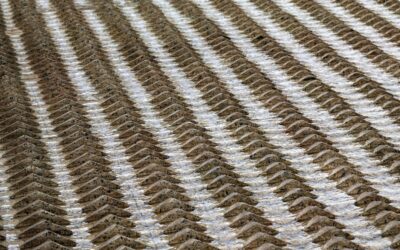
The look is understated. Where jute reads rustic and rope-like, linen reads soft and slightly refined, with a low sheen and a tighter weave. That makes it a favorite for layering over a larger jute or wool rug, or for rooms where you want texture without visual noise.
Flatweave Construction and Feel
Nearly every linen rug is a flatweave, meaning the yarns are woven flat on a loom with no pile or tufting. That gives you a thin, low-profile rug, usually under a quarter inch thick, that sits flush under doors and won’t trip anyone. Flatweaves are reversible on many patterns, so you can flip them to even out wear.
The trade-off is cushion. A flatweave linen rug doesn’t have the underfoot softness of a shag or a wool pile, so most people pair it with a separate rug pad for comfort, grip, and longevity. A good felt-and-rubber pad also keeps a lightweight linen rug from sliding and wrinkling.
Linen vs. Jute vs. Sisal
People shopping for natural fibers usually cross-compare these three, and they behave very differently:
- Linen — softest of the group, smoother texture, muted color, but the least abrasion-resistant. Best in low-traffic rooms.
- Jute — soft-ish and rustic with a rope-like look, moderately durable, but sheds and can brown when wet.
- Sisal — the toughest, with a coarse, scratchy hand that stands up to hallways and stairs but feels rough underfoot.
If your priority is a pleasant feel and a calm look, linen wins. If you need something to survive a high-traffic entry, sisal or a wool blend is the smarter buy. Many homeowners split the difference with a linen-jute blend that keeps some softness while gaining strength.
Durability and Where Linen Struggles
Let’s be honest about the weak spot. Linen fibers are less abrasion-resistant than sisal or wool, and pure linen can show wear paths and crushing in spots that get daily foot traffic. It also absorbs moisture readily, so spills that sit will wick into the fiber, and prolonged dampness can lead to mildew or watermarks.
None of that makes linen a bad rug; it just makes it a specific-use rug. Treat it like a nice pair of linen pants rather than work boots. In the right room, a quality linen rug easily lasts 8 to 12 years.
Best Rooms for a Linen Rug
Bedrooms are the sweet spot. Traffic is light, spills are rare, and the soft texture feels good on bare feet in the morning. Formal living rooms, home offices, and reading nooks are also great fits, especially layered over a larger neutral rug for depth.
Skip linen in kitchens, entryways, mudrooms, dining rooms under the table, and anywhere pets and kids create constant traffic and spills. Bathrooms are a hard no because of the moisture. Match the fiber to the room and you’ll avoid 90 percent of the disappointment people report with natural-fiber rugs.
Caring for and Cleaning Linen
Routine care is simple. Vacuum weekly with the beater bar turned off or on a low setting, since aggressive brushing can fuzz the flatweave. Rotate the rug 180 degrees every few months so sun exposure and foot traffic wear evenly.
For spills, act fast. Blot, don’t rub, with a clean white cloth, and work from the outside of the spill inward to avoid spreading it. Use as little water as possible, because over-wetting linen invites watermarks and mildew. For a deeper clean, dry-cleaning methods or a professional natural-fiber cleaner are safer than soaking. Always test any cleaner on a hidden corner first, and let the rug dry completely, ideally flat with airflow underneath.
What a Linen Rug Costs
Pricing spans a wide range depending on blend and origin. Machine-woven linen-blend rugs from mainstream retailers often run about $150 to $400 for a 5-by-8, while an 8-by-10 typically lands somewhere between $300 and $800. Handwoven or higher-flax-content pieces climb from there, and designer or antique European linen rugs can reach several thousand dollars.
When you compare quotes, read the fiber content closely. A rug marketed as linen might be only 30 or 40 percent flax blended with viscose or cotton, which changes both the feel and the price you should expect to pay. A higher flax percentage generally costs more and wears differently, so know what you’re actually buying rather than shopping on the word “linen” alone.
Budget for a rug pad too, usually $30 to $80 for common sizes. It’s a small add-on that meaningfully extends the life of a fiber that isn’t the most rugged to begin with.
Sizing and Layering a Linen Rug
Get the size right and even a plain linen rug anchors a room. In a bedroom, a common approach is a large rug that extends 18 to 24 inches beyond the sides and foot of the bed, or two smaller runners flanking the bed. In a living room, aim to get at least the front legs of your sofa and chairs onto the rug so the seating area reads as one grouped space rather than furniture floating on bare floor.
Layering is where linen truly earns its keep. Because it’s thin and calm in color, a linen rug makes an excellent base layer under a smaller patterned wool or vintage rug. The linen fills the floor and softens the room’s edges while the top rug delivers the pattern and color. It’s a designer trick that also lets you cover a large area for less than one enormous premium rug would cost.
Styling Tips and Final Take
Because linen’s colors are quiet and its texture subtle, it works as a foundation rather than a focal point. Let it ground a room full of pattern and color, or layer a smaller patterned rug on top of a large linen base. The neutral flax tones pair naturally with linen upholstery, wood tones, and a coastal or Scandinavian look.
A linen rug rewards the homeowner who wants a soft, elegant, natural-fiber floor covering and is willing to place it thoughtfully. Put it in a bedroom or a calm living space, add a good pad, blot spills quickly, and it’ll deliver years of understated good looks that few other fibers match.