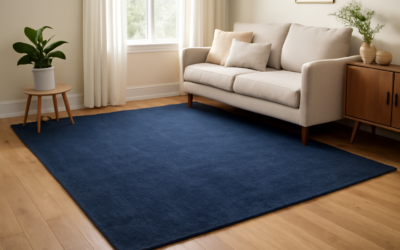
There is a reason a deep blue oriental rug turns up in everything from stately libraries to modern lofts: navy is one of the few colors that reads as both rich and neutral, grounding a room without shouting for attention. A navy oriental rug pairs that versatile base with intricate traditional patterns, giving you a piece that feels formal yet endlessly wearable. If you are drawn to the look but unsure how to choose or style one, this guide covers the design, materials, and practical details that matter.
What Makes a Rug “Oriental”
The term “oriental rug” refers to a family of patterned rugs rooted in traditional weaving styles from regions across Asia and the Middle East. They are known for detailed motifs, central medallions, and elaborate borders. True hand-knotted oriental rugs are woven knot by knot, while many affordable versions are machine-made reproductions that capture the same classic look at a fraction of the price.
When that traditional design comes in a dominant navy field, you get the best of both worlds. The deep blue background reads as a sophisticated neutral, while the woven pattern, often in ivory, red, gold, or lighter blue, provides the intricate detail these rugs are famous for.
Why Navy Works in Almost Any Room
Navy behaves like a neutral even though it is a strong color. It anchors a space the way a dark hardwood floor does, providing a stable foundation that lighter furniture and walls can float above. That is why a navy oriental rug slips comfortably into so many styles:
- Traditional and classic: The natural home for oriental patterns, pairing with wood furniture and warm lighting.
- Transitional: Navy bridges old and new, softening a formal pattern for a more current room.
- Coastal and nautical: Deep blue plays into seaside palettes alongside crisp whites.
- Modern and eclectic: A traditional rug under contemporary furniture creates a deliberate, collected tension that designers love.
Because navy hides dirt and everyday soil well, it is also a practical pick for busy rooms where a pale rug would show every footprint.
Colors That Pair Well With Navy
Building a room around a navy oriental rug is straightforward once you know which hues flatter deep blue. Reliable partners include:
- White and cream: Crisp contrast that keeps the room feeling fresh and open.
- Warm woods: Oak, walnut, and cherry furniture glow against navy.
- Gold and brass: Metallic accents in lighting and hardware add warmth and a touch of luxury.
- Blush, rust, or mustard: Warm accent colors pull energy out of an otherwise cool palette.
- Gray: A tonal, restful pairing for a calm, modern look.
Pull a secondary color from within the rug’s own pattern for pillows or curtains, and the room instantly looks coordinated because the palette already lives in the weave.
Materials and Construction
The fiber determines feel, durability, and price. Match it to your room’s traffic and your budget:
- Wool: The traditional and premium choice. Durable, naturally stain-resistant, and it holds deep dyes like navy beautifully with a soft, resilient pile.
- Polypropylene: An affordable synthetic that mimics the look, resists fading, and cleans easily, ideal for high-traffic and family rooms.
- Silk or viscose blends: Add a luminous sheen and finer detail, but they are delicate and best for low-traffic, formal spaces.
- Cotton flatweave: A lighter, washable option in smaller sizes for casual rooms.
For a rug you will walk on daily, wool or a quality polypropylene gives you the classic navy oriental appearance with the durability to back it up.
Choosing the Right Size
Scale makes or breaks the impact of a patterned rug. In a living room, aim for a rug large enough that at least the front legs of your sofa and chairs rest on it, which visually unites the seating area. Common sizes like 8-by-10 and 9-by-12 feet anchor most living and dining rooms.
Under a dining table, leave about 24 inches of rug beyond the table edge on all sides so chairs stay on the rug when pulled out. For entryways and hallways, a navy oriental runner or accent rug delivers a rich welcome while camouflaging tracked-in dirt.
Styling Tips to Show It Off
Because a navy oriental rug is detailed, let it be the anchor and keep competing patterns to a minimum. Solid or subtly textured upholstery lets the rug’s intricate design read clearly. Layering the rug over a natural jute or sisal base adds warmth and makes a smaller oriental rug feel more substantial in a large room.
Lighting also matters. Deep navy can absorb light, so pair the rug with warm, layered lighting and lighter walls to keep the room from feeling heavy. A few brass or gold accents bounce light and lift the whole scheme.
Care and Maintenance
A navy oriental rug is also remarkably forgiving between cleanings, since the deep blue field and busy pattern hide everyday soil and footprints that would show instantly on a pale rug. That practicality is part of why designers reach for navy so often in high-use rooms. Regular vacuuming keeps the pile clean and the pattern crisp, though you should avoid a hard beater bar on delicate wool or silk blends. Blot spills promptly rather than rubbing. Rotate the rug periodically so foot traffic and any sunlight wear it evenly, and use a quality rug pad underneath to reduce slipping and cushion the fibers. For fine wool or silk rugs, professional cleaning every couple of years protects both the fibers and the dyes.
Hand-Knotted vs. Machine-Made
One of the biggest decisions when buying a navy oriental rug is construction, which drives both price and character. Hand-knotted rugs are woven one knot at a time by skilled artisans, take months to complete, and can last generations, often becoming heirlooms that appreciate in value. They carry subtle irregularities that give each piece a one-of-a-kind soul.
Machine-made and power-loomed rugs reproduce the same traditional patterns at a fraction of the cost, typically in durable synthetics or wool blends. They are uniform, widely available, and easy to replace, making them the practical choice for busy family rooms where a costly hand-knotted rug would be at risk. Neither is wrong; the right pick depends on your budget, how the room is used, and whether you want an investment piece or an affordable, functional rug.
Spotting Quality in a Navy Oriental Rug
A few tells separate a well-made rug from a flimsy one. Flip the rug over and look at the back. On a quality piece, the pattern shows clearly on the reverse and the knots or weave look tight and dense. A higher knot count generally means finer detail and greater durability. Run your hand across the pile; it should feel dense and spring back rather than feeling thin and sparse.
Check the fringe too. On a genuine hand-knotted rug, the fringe is an extension of the foundation warp threads, not a decorative strip sewn on afterward. For wool rugs, a slight natural sheen and a springy, resilient pile signal good fiber quality. These small inspections help you avoid overpaying for a low-quality rug dressed up to look premium.
The Bottom Line
A navy oriental rug delivers the rare combination of a deep, versatile neutral and timeless woven pattern, making it one of the most adaptable rugs you can own. Choose a fiber suited to your traffic, size it generously so the pattern anchors the room, and surround it with warm woods, crisp whites, and a hint of brass. Cared for properly, it will ground your space with classic elegance for decades.