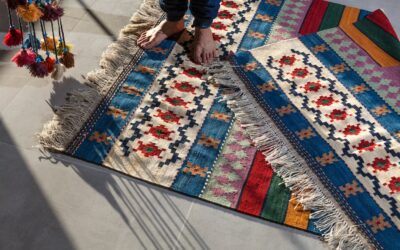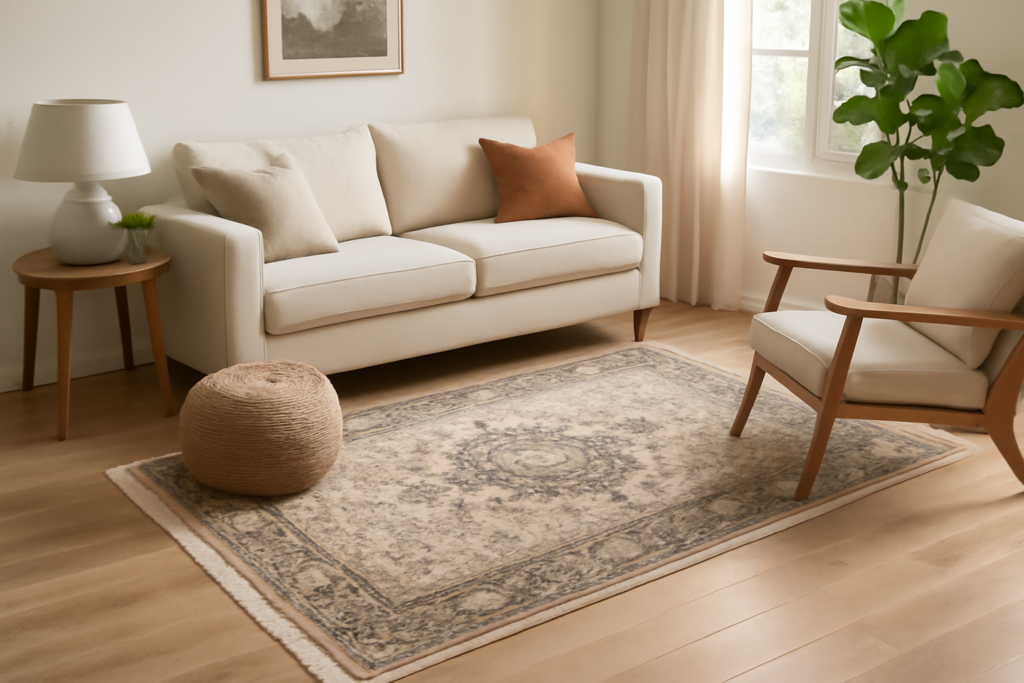
An accent rug is the easiest, lowest-commitment way to inject color, texture, and warmth into a room. Smaller than an area rug, it is meant to highlight a specific spot, the foot of a bed, a kitchen sink, an entryway, or a reading chair, rather than anchor an entire space. Because they are inexpensive and easy to swap, accent rugs are the design world’s quick-change artist, letting you refresh a room seasonally without repainting or rearranging. Here is how to choose and place them well.
What Makes a Rug an Accent Rug
The term refers to a small decorative rug used to define or enhance a particular area, typically ranging from about 2 by 3 feet up to roughly 4 by 6 feet. Runners, the long narrow rugs for hallways and kitchen galleys, are a type of accent rug too. The defining trait is purpose: an accent rug accents a spot rather than covering most of the floor.
Because they are small and affordable, accent rugs are where you can take more risk. A bold pattern or saturated color that would feel overwhelming as a giant area rug becomes a delightful pop in a small format.
Common Sizes and Where They Fit
- 2×3 feet: Doormats, in front of a sink, beside a bed, or under a small console.
- 3×5 feet: Entryways, in front of a vanity, or anchoring a single accent chair.
- 4×6 feet: A small living-room seating spot, a defined kitchen zone, or the foot of a bed.
- Runners (2-3 ft wide by 6-12 ft long): Hallways, kitchen galleys, and along the side of a bed.
Best Places to Use One
Entryways top the list, where an accent rug greets guests, catches dirt, and sets the tone for your decor. Kitchens are another natural home: a runner in front of the counter or a small rug at the sink adds comfort underfoot and color to a hard-surfaced room. Bathrooms use accent rugs for softness and safety on cold, slick floors.
In bedrooms, a small accent rug at the foot or sides of the bed feels warm underfoot first thing in the morning. And in any room, an accent rug under a single statement chair or beside a fireplace draws the eye exactly where you want it.
Material Choices by Location
Match the material to how the spot gets used, since accent rugs often land in high-spill, high-traffic zones.
- Cotton and washable rugs: Perfect for kitchens, bathrooms, and entries where spills and dirt happen, since you can toss many in the wash.
- Wool: Durable and naturally stain-resistant for living areas and bedrooms.
- Polypropylene: Affordable, fade-resistant, and great for entryways and indoor-outdoor use.
- Jute and natural fiber: Texture-forward for casual and coastal looks, best in low-spill areas.
Styling and Layering Tips
Use an accent rug to pull a color from elsewhere in the room, art, pillows, or a piece of furniture, so it feels connected rather than random. Layering is a favorite trick: place a small patterned accent rug on top of a larger neutral rug or even over carpet to add depth and a designer touch for very little money.
Since accent rugs are cheap to swap, they are ideal for seasonal refreshes, a warmer-toned rug in fall and winter, a lighter one in spring and summer. Mixing patterns works as long as you keep a common color thread between pieces.
Safety and Practical Notes
Small rugs slide easily and become trip hazards, especially on hard floors and in busy entries. Always use a non-slip rug pad or choose a rug with a rubber backing, particularly at doorways and on stairs landings. Keep edges flat and replace a rug that curls or bunches.
For washable rugs, check the care label and wash before the dirt sets in. In wet areas like bathrooms, a quick-drying, machine-washable rug stays fresher and avoids mildew.
Cost and Value
Accent rugs are among the most budget-friendly decor upgrades, with many in the $20 to $80 range and higher-end wool or designer pieces costing more. For that small outlay, you get color, warmth, comfort, and a focal point, and you can refresh the look anytime. Few purchases deliver as much visual change per dollar.
Choosing Patterns and Colors That Last
Because accent rugs are small and inexpensive, they are the perfect place to experiment, but a little restraint keeps them from looking dated quickly. Classic patterns like stripes, simple geometrics, and traditional motifs tend to stay relevant longer than ultra-trendy prints. If you want a bold trend, an accent rug is a low-cost way to try it, knowing you can swap it out cheaply when your taste shifts.
For color, pick a shade that already appears somewhere in the room so the rug feels intentional. A rug that introduces a brand-new color with no connection to the rest of the space can look like an afterthought. Pulling a hue from your art, throw pillows, or a piece of furniture instantly makes even a bold accent rug feel planned.
Runners: The Hardest-Working Accent Rugs
Runners deserve special mention because they live in the busiest parts of a home. In a hallway, a runner adds warmth, absorbs sound, and protects flooring along the most-traveled path. In a galley kitchen, a runner cushions the long stretch where you stand at the counter and sink. Beside a bed, a runner gives a soft landing without the cost of a large rug.
Size a runner to leave a few inches of bare floor on each side and at the ends, rather than running it wall to wall, so it reads as a deliberate accent. In high-traffic and spill-prone spots, a washable or low-pile runner with a non-slip backing or pad is the practical, safe choice.
Final Word
An accent rug is the simplest way to add personality and comfort to a specific spot without overhauling a room. Choose a size that fits the area, a material suited to the traffic and spills, and a color that ties into your existing palette, then secure it with a non-slip pad. Inexpensive and easy to change, accent rugs let you experiment freely and keep your home feeling fresh year-round.