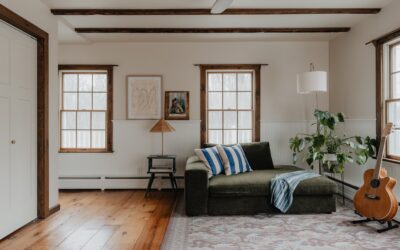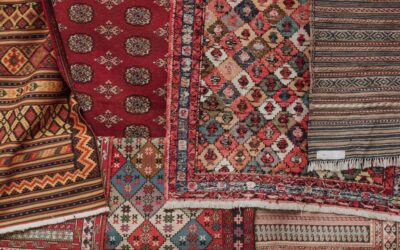
The single most common interior design mistake in American homes is the rug that is too small for the room. Rug rules exist precisely because most homeowners default to whatever size happens to be on sale, ending up with a 5×7 stranded under a sofa in a 14×16 living room — looking exactly like the discount sticker it came with. The right size, placement, and material make a room feel complete; the wrong choice undermines every other design decision.
This guide covers the size formulas that work for living rooms, dining rooms, and bedrooms, the placement guidelines that designers follow on jobs, and the material and pad considerations that determine whether your rug lasts 5 years or 25.
Living Room Sizing
The dominant rug rule for living rooms: the rug should sit underneath the front legs of all major seating pieces, at minimum. Larger rugs that fully sit under all furniture create an even more cohesive look. Three sizing approaches:
- All legs on: rug extends at least 6 inches beyond the seating arrangement on all sides. Requires 9×12 or 10×14 in most living rooms.
- Front legs on: rug starts 4 to 6 inches in front of the sofa, extending toward the coffee table. 8×10 works in average rooms.
- Floating: small rug sits between coffee table and sofa, no legs touching. The least cohesive look — avoid unless space is genuinely tiny.
For a 14×16 living room with a 96-inch sofa, two armchairs, and a coffee table, an 8×10 rug minimum, ideally a 9×12. Skip 5×7 and 6×9 rugs in any standard living room — they look like accessories rather than anchors.
Dining Room Sizing
Dining rugs follow a single rule: the rug must extend at least 24 inches beyond all four sides of the table, so chair legs stay on the rug when guests pull them out. Pulling a chair off the edge of a rug is an irritant that ruins formal dinners.
For a 60-inch round table, you need a minimum 8-foot diameter rug or 9×9 square. For a 6-foot rectangular dining table, a 9×12 rectangular rug minimum. For an 8-foot table seating eight, jump to 10×14.
Round dining tables look best on round rugs. Rectangular tables look best on rectangular rugs of similar proportions. Mismatching the shapes creates visual tension that most rooms cannot recover from.
Bedroom Placement
Bedroom rugs reward generous sizing more than any other room. Standard placement options for a queen or king bed:
- Under the bed, extending 18 to 24 inches on three sides: 8×10 for a queen, 9×12 for a king. The most cohesive look.
- Two-thirds under the bed, starting at the nightstand line: saves cost while still providing a soft landing for bare feet.
- Two long runners flanking the bed: 2.5×8 runners on each side, leaving the bed floor exposed. Works in older homes with character flooring.
Avoid the small rug at the foot of the bed — it floats awkwardly and provides no warmth where you actually step out of bed.
Hallway and Entry Runners
Runners need to leave at least 4 inches of floor exposed on each long side and 6 to 12 inches at each end. A 36-inch wide hallway looks best with a 24 to 28-inch wide runner. For length, the runner should stop 6 to 12 inches before any doorway.
Long hallways over 12 feet often look better with two coordinated runners and a transition zone between them, rather than one custom 14-foot runner that may not align with door positions.
Material Choices and Where Each Works
Rug material drives durability, feel, and price. The main categories:
- Wool: the gold standard. Naturally stain resistant, durable, soft. $4 to $20 per square foot.
- Cotton: casual, washable, less durable. $1 to $5 per square foot. Good for kitchens and entries.
- Jute and sisal: natural fiber, textured, durable. $2 to $6 per square foot. Avoid in dining rooms (stains permanently).
- Polypropylene: synthetic, stain resistant, washable. $1 to $4 per square foot. Best for outdoor and high-traffic indoor.
- Silk and viscose: luxurious sheen, fragile. $20 to $100+ per square foot. Bedrooms and formal living rooms only.
For a high-use family living room, hand-loomed wool from a brand like Loloi or Surya costs $400 to $1,500 in 8×10 size and lasts 20+ years with normal care.
Rug Pads Are Not Optional
A quality rug pad doubles the life of the rug, prevents sliding on hard floors, and adds significant comfort underfoot. Skip the cheap fabric pads — they bleed dye and break down. Use either:
- Felt and rubber blend: Mohawk, Rug Pad USA, NoTrax. $0.50 to $1 per square foot. Standard pick.
- Pure felt for large rugs over carpet: 1/4 to 1/2 inch thick, prevents bunching.
- Pure rubber for small rugs and runners: grips hard floors aggressively.
Pad sizing should be 1 inch smaller than the rug on each side, so the pad is invisible from above but supports the entire rug body.
Layering Rules
Layered rugs add texture and define zones in open floor plans. Successful layering follows these guidelines:
- Bottom layer should be larger and more neutral (jute, sisal, low-pile)
- Top layer should be smaller, smaller-scale pattern, or a contrast color
- Top layer offset slightly rather than centered
- Total height of stacked rugs under 1.5 inches to avoid trip hazard
Skip layering in dining rooms — chair legs catch on edges. Skip in bathrooms — moisture causes issues underneath.
Color and Pattern Decisions
Pattern density should relate to the rest of the room. Furniture-heavy room with bold upholstery: choose a quiet rug. Minimalist room with neutral furniture: a bold patterned rug becomes the focal point. The 60-30-10 color rule (60% dominant, 30% secondary, 10% accent) generally guides color picks. The rug typically anchors either the dominant or secondary color in the palette.
Take a swatch home before committing. Showroom lighting differs dramatically from residential lighting — a rug that reads warm gray under fluorescents may look brown in afternoon sun. Live with the swatch for a few days before placing the order on a 9×12 rug that costs four figures.