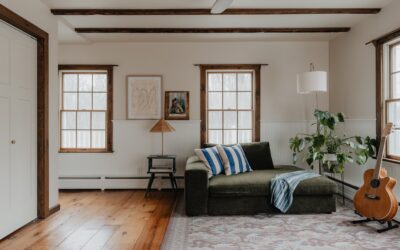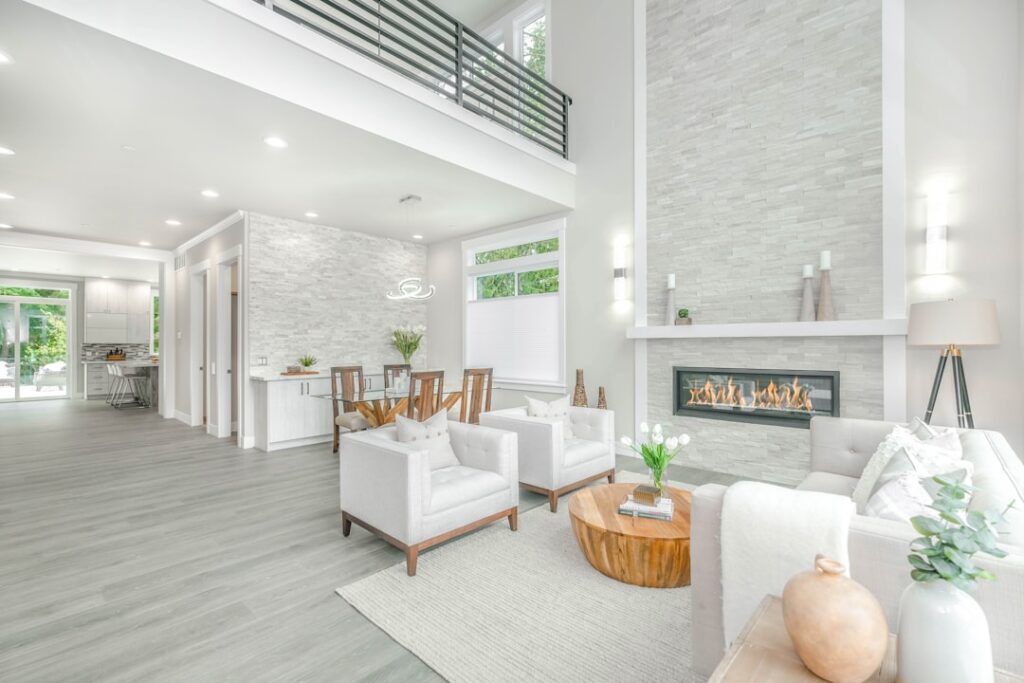
Furniture-store rugs come in a handful of “standard” sizes, and the 5×8 and 8×10 dominate the shelves. The result is a maddeningly common problem: a 5×8 looks like a postage stamp under your sofa, but an 8×10 crowds the walls. A 7 x 9 rug lives in exactly that gap, and for a surprising number of rooms it is the size that should have been the default. Understanding when this in-between dimension is the right call can save you from the two most expensive rug mistakes — buying too small, then buying again.
Where a 7 x 9 Rug Actually Fits Best
Think of 7×9 (roughly 63 square feet) as the answer for medium rooms that a 5×8 leaves looking bare. It shines in a 10×12 to 12×14 living room, a modest dining area, or a large bedroom where you want the rug to extend past the foot of the bed. In an apartment or condo, where an 8×10 can swallow the floor and make furniture feel jammed against the walls, a 7×9 gives you generous coverage while keeping a healthy border of exposed floor around the edges.
That exposed border is the design goal, not wasted space. Interior designers aim for 8 to 24 inches of bare floor between a rug’s edge and the wall. A 7×9 hits that sweet spot in rooms where 8×10 would leave almost no gap, which is why it photographs so well in real homes even though showrooms rarely stock it.
Living Room Furniture Placement
The way you arrange seating on a 7×9 changes how large the room feels. Three approaches work:
- Front legs on: the most common layout for a 7×9. The sofa and chairs sit with just their front legs on the rug, which visually ties the group together while letting the rug feel bigger than it is. Ideal for a standard three-piece seating set.
- Float in front of the sofa: place the rug centered on the coffee table with the sofa off the rug entirely. This works only in smaller rooms and reads more casual — keep the coffee table fully on the rug so it does not look stranded.
- All legs on: possible with a compact loveseat-and-chair arrangement, but a 7×9 is usually too tight to get every leg of a full sofa set on it. If you want all-legs-on, size up to 8×10 or 9×12.
Center the coffee table on the rug and leave 18 inches between the seating and the table for comfortable legroom. If your sofa is longer than 84 inches, a 7×9 may look slightly undersized — measure before you buy.
7 x 9 in the Dining Room
For dining, the rule is simple: the rug must be large enough that chairs stay on it even when pulled out to sit. Allow at least 24 inches of rug beyond every edge of the table. A 7×9 comfortably handles a table that seats four to six — roughly a 36×60 rectangle or a 48-inch round — with room to slide chairs back without catching a rear leg on the floor edge. For a table seating eight or a longer farmhouse style, step up to 8×10 or 9×12 instead.
Bedroom Applications
In the bedroom, a 7×9 works two ways. Under a queen bed placed lengthwise, position the rug so it starts just below the nightstands and extends past the footboard, giving you a soft landing when you step out of bed on either side. It is a clean, budget-friendly alternative to the larger 8×10 that many guides recommend for beds. Under a king, a 7×9 starts to look small — a king’s 76-inch width eats most of the rug’s 84-inch dimension — so reserve this size for queen and full beds, or run it perpendicular across the foot of a king as an accent.
Choosing Material for the Space
Because a 7×9 anchors a main living area, invest in a fiber that suits the traffic. Wool resists crushing and cleans up well in a living or dining room, and holds its shape under furniture legs. Polypropylene is the practical pick for households with kids and pets — spill-resistant and affordable, often $150 to $300 in this size. Natural jute suits a layered, textural look but wears in high-traffic dining zones. Whatever the fiber, add a quality rug pad sized about an inch smaller on each side; it cushions the pile, prevents slipping, and adds years to the rug’s life.
How to Confirm 7 x 9 Is Your Size
Do not guess — tape it out. Use painter’s tape to mark a 7-by-9-foot rectangle on your floor, then live with it for a day. Walk the traffic paths, pull out the dining chairs, sit on the sofa. This five-minute test reveals immediately whether the coverage feels right or whether the room wants an 8×10. Also measure your longest wall and your seating group; if the rug would land within 8 inches of a wall on any side, the room likely needs the smaller footprint a 7×9 provides rather than an 8×10.
- Living room 10×12 to 12×14: 7×9 is often ideal
- Dining table seating 4-6: 7×9 works; 8+ seats, size up
- Queen bed: 7×9 fits well; king bed: consider larger
- Apartment or condo great room: 7×9 prevents the crowded look of an 8×10
When to Skip the 7 x 9
This size is not a cure-all. Large open-concept living rooms, big primary suites with king beds, and dining rooms built for eight all want more coverage — forcing a 7×9 into those spaces recreates the very “too small” problem you were trying to avoid. And because 7×9 is a less-stocked size, your selection of patterns and colors will be narrower than the ubiquitous 5×8 and 8×10, sometimes pushing you toward custom-cut or special-order pricing.
How a 7 x 9 Compares to Neighboring Sizes
It helps to see the actual math. A 5×8 covers 40 square feet, a 7×9 covers 63, and an 8×10 covers 80. That means a 7×9 gives you roughly 58 percent more coverage than a 5×8 while adding only 21 percent to the footprint of an 8×10 — which is precisely why it fixes the “too small” problem without creating the “too big” one. In a room where an 8×10 would leave a cramped four-inch gap to the walls, dropping to a 7×9 restores the healthy border that makes a floor look framed rather than wall-to-wall.
Cost tracks with area. Expect a 7×9 to fall between its neighbors: often $120 to $350 for a synthetic and $400 to $900 for wool, depending on construction. Because the size is less common, though, comparison-shop across a few retailers — the same rug design can carry a noticeably different price in 7×9 versus the mass-produced 8×10.
Rug Pad and Longevity
Whatever fits, do not skip the pad. Buy a rug pad cut about an inch smaller than the rug on each side — so roughly 6 feet 10 inches by 8 feet 10 inches for a 7×9 — so it stays hidden beneath the edges. A quality felt-and-rubber pad cushions each step, keeps the rug from creeping on hardwood, reduces slippage, and cuts down the fiber crushing that shows up first in walk paths. On a rug you sized carefully to fit an in-between room, the pad is what protects that investment for the long haul.
For the many rooms that fall between the standard sizes, a 7 x 9 rug is the fit that finally looks proportioned — furniture grouped, floor framed, and not a wall crowded in sight. Tape it out, match the material to your traffic, and it will do more for the room than a rug two sizes off ever could.