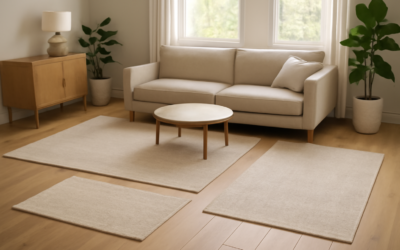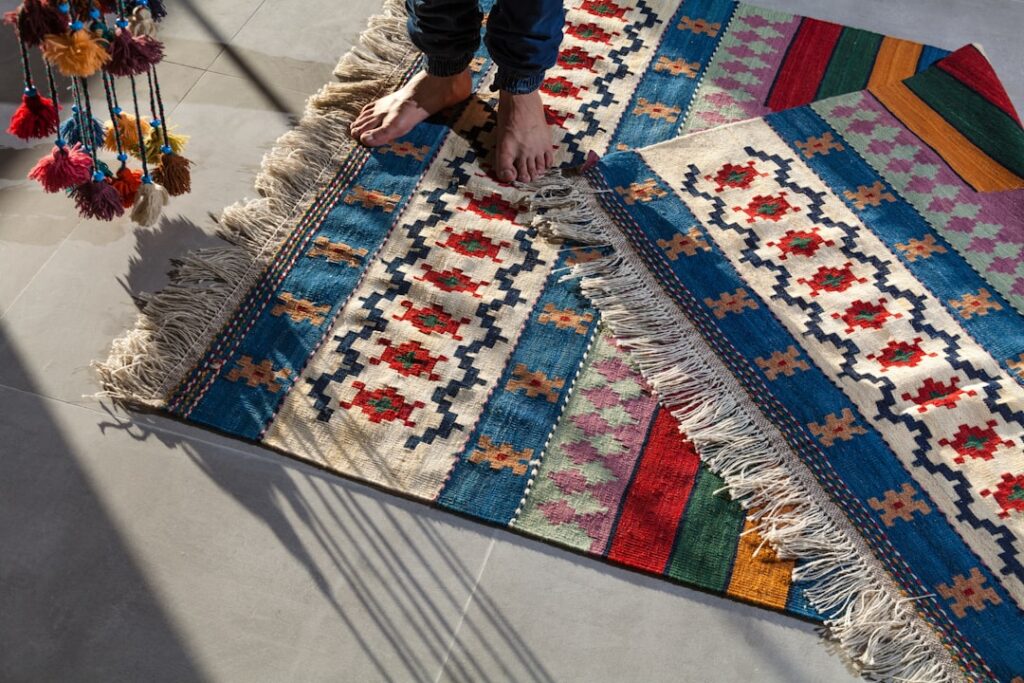
Buying the wrong-sized rug is one of the most common and expensive decorating mistakes people make. A standard rug comes in a handful of predictable dimensions, and once you know them you can match a rug to any room with confidence instead of guessing. This guide lays out every common size, translates the feet-based labels into real inches, and tells you exactly which size belongs in which room so you never end up with a rug that floats, buckles, or swallows your furniture.
Why Standard Rug Sizes Exist
Rug manufacturing settled on repeating dimensions because looms, backing rolls, and shipping formats are all built around them. That standardization works in your favor: it makes rugs cheaper to produce, easier to compare across brands, and simpler to match with off-the-shelf rug pads. When you know the standard sizes, you can shop by dimension rather than falling for a photo that hides scale, and you can order a pad that fits without custom cutting.
Standard Rug Sizes Chart
Here are the most common standard rug dimensions, listed in feet with the equivalent in inches. Manufacturing tolerances of an inch or so are normal, especially on handmade rugs.
- 2×3 ft (24 x 36 in): Accent and scatter rug.
- 3×5 ft (36 x 60 in): Small accent rug.
- 4×6 ft (48 x 72 in): Compact area rug.
- 5×8 ft (60 x 96 in): Small-room area rug.
- 6×9 ft (72 x 108 in): Medium area rug.
- 8×10 ft (96 x 120 in): Large area rug, the most popular size.
- 9×12 ft (108 x 144 in): Extra-large area rug.
- 10×14 ft (120 x 168 in): Oversized area rug for great rooms.
- Runner 2.5×8 ft (30 x 96 in): Hallway and kitchen runner.
Runners also come in 2×6, 2.5×10, and 2.5×12 for long hallways. Round rugs follow their own standards, typically 4, 6, and 8 feet in diameter. Beyond 10×14, you are usually into custom or “palace” sizes that cost significantly more.
Living Room Rug Sizes
The living room is where getting the size right matters most, because the rug has to unify a whole seating group. For most living rooms, an 8×10 is the safe default, and it is the best-selling standard rug size for good reason. In a large or open-concept space, step up to a 9×12 or 10×14 so the rug reaches under the front legs of all the seating.
- Small living room (up to 10 x 12 ft): 5×8 or 6×9.
- Average living room (12 x 15 ft): 8×10.
- Large or open-plan living room: 9×12 or 10×14.
The goal is to fit at least the front legs of the sofa and chairs onto the rug. When every leg sits on the rug, the room feels the most cohesive, but that requires a rug roughly 8 to 12 inches wider than your seating arrangement on all sides.
Bedroom Rug Sizes
In bedrooms, the rug frames the bed. As a rule, slide the rug under the lower two-thirds of the bed so it extends past the sides and foot, giving you soft footing when you get up. Match the size to the mattress:
- Twin bed: 5×8 placed under or a 3×5 beside.
- Full or queen bed: 8×10, which leaves about 18 to 24 inches of rug showing on the sides and foot.
- King bed: 9×12 to fully frame the bed and nightstands.
An alternative for any bed size is a pair of runners flanking the bed, or a small 3×5 accent at the foot, which saves money if a big rug is out of budget.
Dining Room Rug Sizes
Dining rugs follow one non-negotiable rule: the rug must extend at least 24 inches beyond every edge of the table so chairs stay on the rug when pushed back. Measure your table, add 48 inches to the length and width, and buy the closest standard size up.
- Table for 4 (up to 42 in square): 6×9.
- Table for 6 (60 to 72 in long): 8×10.
- Table for 8 (84 to 96 in long): 9×12.
- Round table (48 to 60 in): 8-ft round rug.
Hallways, Kitchens, and Entryways
Runners handle the narrow, high-traffic zones. In a hallway, choose a runner that leaves 3 to 5 inches of bare floor on each side and a few inches short of each end wall. A standard 2.5×8 covers most hallways; longer halls call for a 2.5×10 or 2.5×12. In kitchens, a runner in front of the sink and a small 3×5 or 2×3 by the range add comfort and catch spills. For entryways, a 3×5 or 4×6 works in most foyers, while a 2×3 suits a tight landing.
Round and Oval Rug Sizes
Round rugs follow their own set of standard diameters: 4, 6, and 8 feet are the common options, with 5-foot rounds available from many sellers. A 4-foot round suits an entry landing, a breakfast nook, or under a small round side table. A 6-foot round anchors a compact seating group or a round dining table for four. An 8-foot round works under a larger round dining table seating six or grounds a reading corner in a big room. Ovals mirror rectangular sizes and are a good pick under oval dining tables, where they echo the table’s shape and keep the 24-inch chair clearance intact.
How Rug Size Affects Room Feel
Size does more than fit furniture; it changes how large a room reads. A rug that is too small makes a space feel choppy and disconnected, because the eye registers several small zones instead of one unified floor. A generously sized rug that reaches under the furniture visually expands the room and pulls the layout together. When in doubt between two standard sizes, size up. Designers almost universally agree that the most common mistake is buying a rug that is one size too small, and going larger is the easiest way to make a room feel finished and intentional.
Matching Rug Size to Rug Pad
Every standard rug should sit on a pad cut about one inch smaller than the rug on all sides, so the pad stays hidden while still gripping the floor and protecting the rug’s backing. Rug pads come pre-cut in the same standard dimensions as rugs, which is another benefit of buying a standard size: a 8×10 rug pairs with a readily available 7-foot-10-inch by 9-foot-10-inch pad with no custom trimming. On hard floors a felt-and-rubber pad adds cushioning and grip, while on carpet a thin low-profile pad keeps the rug from creeping.
How to Measure Before You Buy
Before ordering any standard rug, tape out the dimensions on your floor with painter’s tape. This simple step reveals whether a size will crowd walkways or leave awkward gaps far better than eyeballing it. Leave 8 to 24 inches of exposed floor between the rug and the walls in most rooms; too little makes the room feel cramped, too much makes the rug look undersized. And always buy a rug pad cut to about an inch smaller than the rug on all sides.
Final Thoughts
Choosing a standard rug becomes simple once you memorize the common sizes and the room rules behind them: an 8×10 anchors most living rooms, a queen bed pairs with the same, dining rugs need 24 inches of clearance past the table, and runners handle the halls. Tape out the size before you buy, respect the border around the edges, and you will land on a rug that fits the first time instead of returning it and starting over.