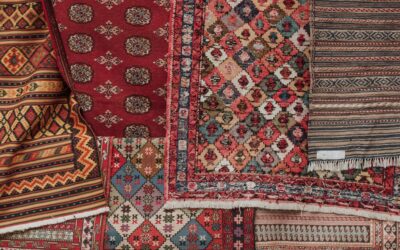
The fastest way to make a beautiful room feel awkward is to drop an undersized rug in the middle of it. A 5×7 floating in a 16×20 living room looks like a bath mat from across the space. Knowing the standard area rug sizes — and which size belongs in which room — saves you from the most common interior design mistake homeowners make. Rugs are sold in roughly half a dozen common dimensions, plus runners and rounds, and matching the right one to your room layout takes only a tape measure and a few rules of thumb. Here is the complete sizing playbook for every room in the house.
- The Most Common Rug Sizes
- Standard Rug Sizes in Centimeters
- Living Room Rug Sizing
- Dining Room Rug Sizing
- Bedroom Rug Sizing
- Entryway and Hallway Rugs
- Kitchen Rug Sizing
- Layering Multiple Rugs
- How to Measure Before Buying
- Custom and Cut-to-Size Options
- Quick Sizing Cheat Sheet
- Frequently Asked Questions
The Most Common Rug Sizes
You will see these dimensions repeated across nearly every retailer, from Wayfair and Rugs USA to West Elm and Crate & Barrel:
- 2×3 feet: Door mats, entryway accents, kitchen sink runners
- 3×5 feet: Small entryways, beside-bed accents, reading corners
- 4×6 feet: Foyers, small living areas, layered over larger rugs
- 5×7 or 5×8 feet: Small living rooms, dining rooms with 4-person tables, bedroom accents
- 6×9 feet: Mid-size living rooms, master bedrooms with king beds
- 8×10 feet: Standard family room rug. Anchors a sofa and two chairs.
- 9×12 feet: Large living rooms, formal dining rooms, open-plan spaces
- 10×14 feet: Great rooms, oversized living areas
- 12×15 feet: Estate-scale living spaces and great rooms
Runners typically come in 2.5×8, 2.5×10, or 2.5×12 feet. Rounds are sold at 4, 5, 6, and 8 feet in diameter. Square rugs at 6×6, 7×7, and 8×8 feet are rarer but useful in square rooms.
Standard Rug Sizes in Centimeters
Rugs sold in feet convert to the metric sizes below (1 foot equals 30.48 cm, rounded to the nearest centimeter). Rugs made to metric standards are often labeled in round numbers instead, such as 120 x 170 cm, 160 x 230 cm and 200 x 300 cm, which sit close to the 4×6, 5×8 and 6×9 sizes.
| Rug size (feet) | Approximate size (cm) |
|---|---|
| 2×3 | 61 x 91 |
| 3×5 | 91 x 152 |
| 4×6 | 122 x 183 |
| 5×7 | 152 x 213 |
| 5×8 | 152 x 244 |
| 6×9 | 183 x 274 |
| 8×10 | 244 x 305 |
| 9×12 | 274 x 366 |
| 10×14 | 305 x 427 |
| 12×15 | 366 x 457 |
| 2.5×8 runner | 76 x 244 |
Living Room Rug Sizing
For living rooms, the rule is: the front legs of every major piece of furniture should land on the rug. That single principle solves 90% of sizing dilemmas. Three common layout approaches:
- All legs on: Largest rug option. Sofa, chairs, and coffee table all sit completely on the rug. Best for formal rooms.
- Front legs only: Mid-size rug. Front legs of sofa and chairs touch the rug; back legs sit on the floor. Most common look.
- Coffee table island: Smallest practical option. Only the coffee table sits on the rug. Works in tiny spaces.
Most family rooms with a standard 84-inch sofa and two armchairs need an 8×10 or 9×12. Living rooms over 200 sq ft jump to 10×14. Less than that and the rug pinches the room visually.
Dining Room Rug Sizing
Dining room rugs need to extend at least 24 inches beyond the table on every side so chairs stay on the rug when pulled out. Match this to the table:
- 4-person rectangular table (36×60 inches): Use a 6×9 rug
- 6-person rectangular table (40×72 inches): Use an 8×10 rug
- 8-person rectangular table (44×96 inches): Use a 9×12 rug
- 10-person rectangular table (48×108 inches): Use a 10×14 rug
- Round table (48 inches): Use a 6-foot round or 8×8 square
- Round table (60 inches): Use an 8-foot round or 9×9 square
Nothing looks worse than chairs catching the rug edge when guests sit down. Measure your table fully extended (with leaves) before ordering.
Bedroom Rug Sizing
Bedroom rugs follow bed size, not room size. Three common configurations:
- Under the bed extending 18-24 inches on three sides: Most popular. Use 8×10 for queens, 9×12 for kings.
- Under the bottom two-thirds only: Saves money on big beds. The rug peeks out at the foot but skips the headboard area.
- Two runners flanking the bed: 2.5×6 or 2.5×8 runners on each side. Works well over hardwood.
For a king bed (76×80 inches), a 9×12 rug centered under the bed leaves about 22 inches of warm landing pad on each side — enough to step out of bed onto something soft on a cold morning.
Entryway and Hallway Rugs
Entryways need rugs sized to fit the space without crowding the door swing. Common sizing:
- Small foyer (4×6 ft): Use a 2×3 or 3×5 rug, ideally with low pile to avoid catching the door
- Medium entryway (6×9 ft): Use a 4×6 or 5×7 rug
- Hallways: Use 2.5-foot wide runners in 6, 8, 10, or 12-foot lengths. Leave 4-6 inches of bare floor at each end.
For long hallways, two shorter runners separated by a few inches often look better than one extra-long runner that bunches at one end.
Kitchen Rug Sizing
Kitchen rugs serve specific stations rather than anchoring the whole room:
- In front of the sink: 2×3 or 2.5×4 rug. Look for low-pile, washable cotton or polypropylene.
- Galley kitchen runner: 2.5×8 or 2.5×10 runner down the working aisle.
- Eat-in kitchen with table: Same sizing rules as dining rooms — 24 inches beyond the table on every side.
- Open-plan kitchen with island: 3×10 runner along the island, or skip the rug entirely.
Kitchen rugs take heavy traffic and constant spills. Polypropylene flatweave rugs from Ruggable, Loloi, or Surya wash easily and resist stains better than wool or cotton in this setting.
Layering Multiple Rugs
Layering a smaller patterned rug over a larger neutral rug is a designer trick that adds depth and visual interest. The base rug should be at least 2 feet larger on each side than the top rug. Common pairings:
- Base 9×12 jute or sisal + top 5×7 vintage Persian or Moroccan shag
- Base 8×10 wool flatweave + top 4×6 cowhide or sheepskin
- Base 10×14 sisal + top 6×9 patterned Oushak
This approach lets you bring in a smaller piece you love (often more affordable than a giant rug) without compromising the proportions of the room.
How to Measure Before Buying
Before ordering any rug, mark the proposed size on the floor with painter’s tape. Live with the outline for 24-48 hours and walk through the room. You will quickly see if doors clear, traffic flows around it, and furniture lands correctly.
Add a non-slip rug pad sized 1-2 inches smaller than the rug on each side. A good felt-and-rubber pad like Mohawk Home Dual Surface ($40-$80 depending on size) extends rug life by 30-50% by reducing fiber crushing and slipping.
Custom and Cut-to-Size Options
If your space falls between standard area rug sizes, custom-cut options exist. Carpet showrooms cut and bind broadloom in any dimension for $5-$15 per linear foot of binding. Rugs.com, Sisal Rugs Direct, and Carpet One offer made-to-order rugs in 1-foot increments with serged or bound edges.
Custom rugs cost 30-60% more than equivalent standard sizes but are worth it in odd-shaped rooms, bay windows, or staircase landings. Lead times typically run 4-6 weeks. Always order a 12×12-inch sample before committing to a custom job.
Quick Sizing Cheat Sheet
Memorize these matchups and you will rarely buy the wrong size:
- Apartment living room: 5×8 or 6×9
- Standard family room: 8×10
- Large open-plan space: 9×12 or 10×14
- King bedroom: 9×12
- Queen bedroom: 8×10
- Twin bedroom: 5×8
- 4-person dining: 6×9
- 6-person dining: 8×10
- Entryway: 3×5 or 4×6
- Hallway runner: 2.5×8 or 2.5×10
Frequently Asked Questions
What size rug is between 5×7 and 8×10?
A 6×9 rug sits between 5×7 and 8×10, and it is the go-to size when a 5×7 looks too small but an 8×10 crowds the room. It suits mid-size living rooms with front legs on, 4-person dining tables and queen beds placed on the bottom two-thirds of the rug. Some makers also sell 6×8 or metric 160 x 230 cm rugs that fill a similar gap.
What is the most common area rug size?
The 8×10 is the most common area rug size for living rooms and the one most often bought for family rooms, since it fits a standard sofa and two chairs with front legs on the rug. The 5×8 is the most common size for smaller rooms and apartments. For accent spots, 2×3 and 3×5 rugs are the usual sizes for doorways, kitchens and bedsides.
What sizes do outdoor rugs come in?
Outdoor rugs come in the same standard sizes as indoor rugs, most often 4×6, 5×7, 6×9, 8×10 and 9×12, plus runners and rounds. For a patio dining set, follow the dining rule of at least 24 inches beyond the table on every side. For a seating group, choose a rug large enough for the front legs of every chair and sofa, and pick polypropylene so it dries quickly.
What are the standard carpet widths?
Broadloom carpet is most commonly made in 12-foot widths, with some lines also sold at 13.5 or 15 feet for wider rooms without seams. That is why a carpet remnant bound into a custom rug is often 12 feet on one side. Carpet tiles are a separate format, usually 24 x 24 inches or 18 x 36 inches, and are laid individually rather than cut from a roll.