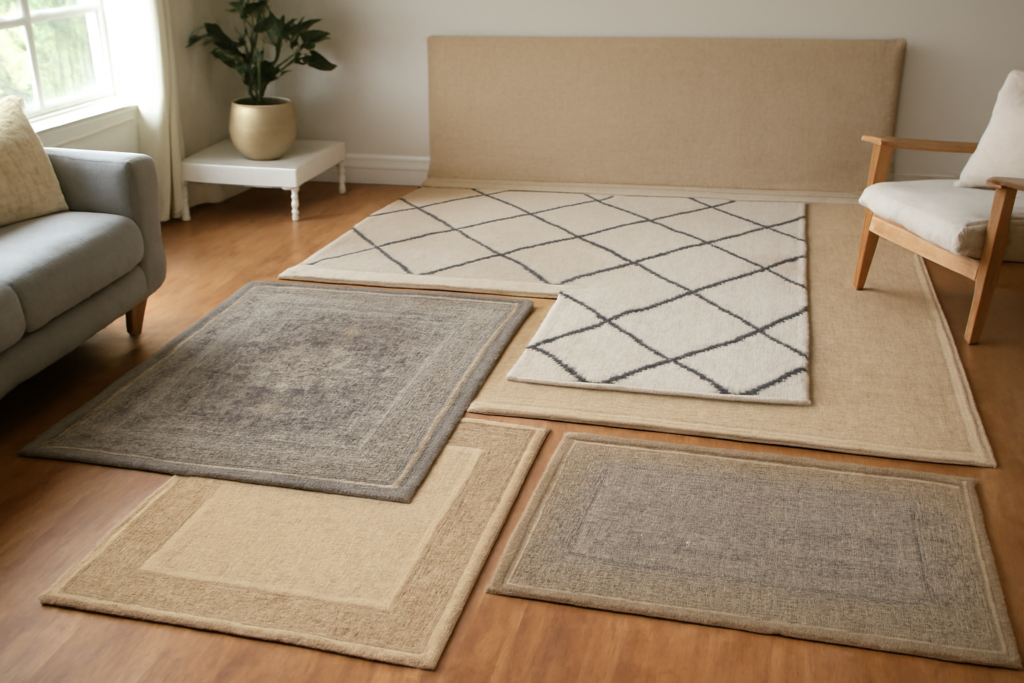
Choosing among the common rug sizes is the single most important decision when buying an area rug, and it is the one people get wrong most often. A rug that is too small makes a room feel disjointed and cramped, like a postage stamp floating in the middle of the floor. The right size pulls the furniture together and grounds the whole space. The good news is that rugs come in a handful of standard dimensions, and once you know which size fits which room, shopping gets a lot easier.
The Standard Rug Sizes
Manufacturers produce rugs in fairly consistent dimensions, which makes it easy to plan around them. These are the sizes you will see again and again:
- 2×3 and 3×5 feet: Accent rugs for entryways, kitchen sinks, and bedsides.
- 4×6 feet: A small area rug for reading nooks or under a coffee table in tight spaces.
- 5×8 feet: The most versatile mid-size, good for small living rooms and bedrooms.
- 6×9 feet: A step up for medium living and dining rooms.
- 8×10 feet: The workhorse size for most living rooms.
- 9×12 feet: A large rug for open-plan and spacious living rooms.
- Runners (2.5×8 or longer): Hallways, galley kitchens, and the sides of beds.
- Round rugs (around 6 or 8 feet): Under round tables or in entry foyers.
Living Room Rug Sizes
The living room is where size matters most because the rug has to relate to a whole furniture group. The general rule is that at least the front legs of every seating piece should rest on the rug. For a standard sofa-and-chairs layout, an 8×10 is the most common right answer, and a 9×12 suits larger or open-concept rooms. In a small apartment living room, a 5×8 or 6×9 works if you keep the front legs of the sofa on it. Leave roughly 10 to 18 inches of bare floor between the rug edge and the walls so the room can breathe.
Bedroom Rug Sizes
In bedrooms, you want soft footing where your feet land in the morning. The most luxurious approach is a large rug set under the bed so it extends about 18 to 24 inches beyond the sides and foot of the bed. For a queen bed, an 8×10 usually does this well; for a king, lean toward a 9×12. If a big rug is not in the budget, two runners flanking the bed or a small rug at the foot of the bed are practical alternatives.
Dining Room Rug Sizes
Under a dining table, the rule is that chairs must stay on the rug even when pulled out to sit down. That means the rug should extend at least 24 inches beyond the table edge on all sides. A typical six-seat rectangular table pairs well with an 8×10 or 9×12, while a smaller four-seat table works over a 6×9. For a round table, a round rug roughly 8 feet across keeps the look balanced and the chairs supported.
Entryways, Halls, and Kitchens
Smaller spaces have their own go-to sizes. A 2×3 or 3×5 mat handles a front door, while a runner anchors a hallway, leaving a few inches of floor on each side. Galley kitchens love runners in front of the sink and range. For a foyer with a round table, a round rug echoes the table shape and feels intentional. In all these spaces, a low-pile, washable rug stands up best to grit and spills.
How to Measure Before You Buy
Never buy a rug on guesswork. Measure your room and your furniture footprint, then use painter’s tape on the floor to mark the rug’s outline. Live with the taped outline for a day to see how it interacts with walkways and doors. This five-minute step prevents the most common and expensive rug mistake: ordering one that looks fine online but feels wrong in the room.
Round, Square, and Runner Sizes
Rectangular rugs get most of the attention, but the other shapes solve specific problems. Round rugs, commonly around 6 or 8 feet across, soften rooms full of straight lines and work beautifully under round dining or entry tables, where they echo the table shape. Square rugs suit square rooms and reading nooks. Runners, typically 2.5 feet wide and 8, 10, or 12 feet long, are made for narrow spaces: hallways, galley kitchens, and the long sides of a bed. For a hallway runner, leave 4 to 5 inches of floor on each side and a similar gap at each end rather than running it wall to wall.
How Rug Sizes Affect a Room’s Feel
Beyond fitting furniture, rug size changes how big a room feels. A large rug that nearly fills the floor unifies the space and makes a small room feel intentional and larger, while a too-small rug floating in the center has the opposite effect, chopping the floor into awkward zones. This is why designers almost always err toward the larger size when caught between two options. The extra cost of moving up one size is usually modest compared to the difference it makes in how finished the room looks.
Layering and Custom Sizes
If the standard sizes do not fit your space, you have options. Layering a smaller patterned rug over a larger natural-fiber rug like jute lets you hit an unusual footprint while adding texture and warmth, a popular trick in living rooms and bedrooms. Many retailers also offer custom-cut and bound rugs, where broadloom carpet is cut to your exact dimensions and the edges are bound, which is ideal for oddly shaped rooms, extra-large open plans, or a stair landing. Custom sizing costs more but guarantees a perfect fit when no standard size works.
Final Thoughts
The common rug sizes exist for a reason, and matching them to your room is mostly about furniture relationships rather than raw square footage. Keep furniture legs on the rug, leave a border of bare floor, lean toward the larger option when in doubt, and tape out the size before you commit. Follow those simple rules and your rug will pull the room together instead of leaving it feeling scattered.