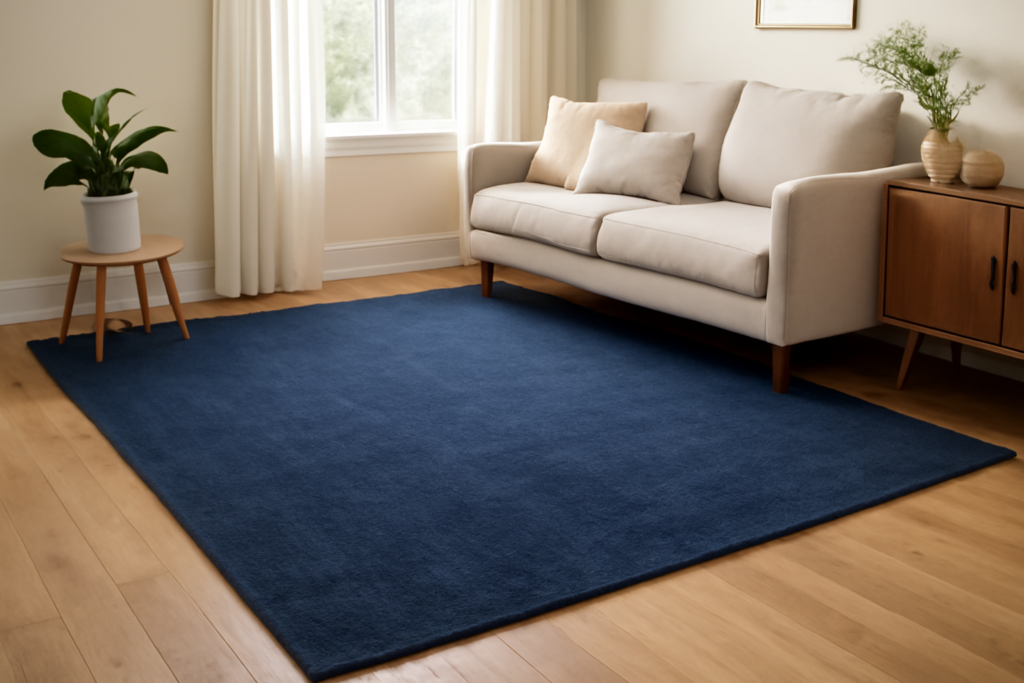
A navy rug is one of the most forgiving and versatile floor coverings you can buy. Deep blue reads as a neutral in practice, anchoring a room with quiet sophistication while pairing effortlessly with whites, grays, warm woods, brass, and pops of color. It also hides dirt and foot traffic far better than light rugs, which makes it a practical choice for busy households. The decision usually comes down to which shade of navy, what pattern, and what material best suits your room and lifestyle.
This guide covers how navy works in a space, the styles available, materials, sizing, and how to keep that rich color looking its best.
Why Navy Works in Almost Any Room
Navy behaves like a dark neutral. It grounds a space the way black would but with more warmth and less harshness, so it settles a room rather than dominating it. Because it is dark, it disguises crumbs, pet hair, and traffic patterns that show instantly on cream or beige, a real advantage in entryways, dining rooms, and family spaces.
It also flatters a huge range of palettes. Set navy against white walls for crisp coastal contrast, pair it with warm oak for a classic look, or layer it with mustard, blush, or emerald accents for a richer, more saturated scheme.
Choosing the Right Shade and Pattern
Not all navies are identical. Some lean almost black, others toward bright royal blue or have gray or teal undertones. Bring a swatch home and view it in your room’s light, since blues shift dramatically between daylight and warm bulbs. A few popular directions:
- Solid navy: The most flexible, acting as a calm foundation that lets furniture and art stand out.
- Navy and white patterns: Stripes, Greek key, and geometrics bring crisp, nautical energy.
- Persian and Oriental navy: Intricate medallions in navy grounds read traditional and timeless.
- Navy with metallic or jewel tones: Modern, glamorous, and great for dining or formal rooms.
Room Ideas
A navy rug suits nearly every room, but a few placements really sing. In a living room, a large navy rug under the seating group creates a cozy, pulled-together base, especially with a light sofa for contrast. In a bedroom, navy adds a restful, cocooning quality that pairs beautifully with white bedding. In dining rooms and entryways, the dark color earns its keep by hiding the inevitable dirt and spills.
For kids’ rooms and offices, a patterned navy adds personality while staying practical and easy to coordinate as the room evolves.
Material Choices
Material decides durability, feel, and price. The common options for a navy rug:
- Wool: Durable, soft, naturally stain-resistant, and holds rich navy dye beautifully. Higher cost but long-lasting.
- Polypropylene and synthetics: Budget-friendly, fade-resistant, and easy to clean, ideal for high-traffic or outdoor-rated navy rugs.
- Cotton: Often machine-washable in flatweave styles, great for casual and kids’ spaces.
- Viscose blends: Silky sheen but delicate; best for low-traffic rooms.
Sizing It Right
The most common rug mistake is going too small, which makes even a beautiful navy rug look like an afterthought. In a living room, aim for the front legs of all major furniture to rest on the rug, leaving a border of 8 to 18 inches of floor around the edges. Under a bed, choose a size that extends well past the sides and foot. For dining, allow 24 inches of rug beyond the table on every side so chairs stay on it.
Caring for a Navy Rug
Dark rugs hide dirt but show lint, dust, and pet hair, so regular vacuuming keeps a navy rug crisp. Blot spills immediately with a clean white cloth to avoid transferring dye, and test any spot cleaner in a hidden corner first, since some cleaners can lighten navy. For wool, use a cleaner formulated for wool to protect the fibers and color.
Rotate the rug every few months so traffic and any sun exposure wear evenly. Keep navy out of harsh direct sunlight where possible, because prolonged UV can fade even quality dyes over the years.
Colors That Pair Best With Navy
Half the appeal of a navy rug is how easily it coordinates, but a few pairings really make it sing. Crisp white and cream create a fresh, classic contrast that keeps navy from feeling heavy. Warm woods and rattan add organic warmth and balance the cool blue. Brass and gold accents pop beautifully against a navy ground, which is why navy rugs feel so at home in dining and formal rooms.
For bolder schemes, navy plays well with mustard yellow, blush pink, rust, and emerald green. If your room leans gray and modern, navy ties the cool tones together; if it leans warm and traditional, navy still grounds the space without clashing.
Where Navy Can Fall Short
For all its strengths, navy is not flawless. In a small, dark room with little natural light, a large dark rug can make the space feel even dimmer, so balance it with light walls and furnishings. Dark rugs also show lint, pet hair, dust, and any light-colored debris more readily than busy patterns, meaning a solid navy needs regular vacuuming to look its best.
If you want the navy color but worry about showing every speck, choose a navy-and-white or multicolor pattern. The pattern camouflages lint and crumbs while keeping the rich blue you wanted in the first place.
The Bottom Line
A navy rug delivers rare flexibility: it acts as a neutral, hides everyday mess, and coordinates with almost any palette from coastal to traditional to modern. Pick the shade in your own light, size it generously, choose a material that matches your traffic, and add a quality pad. Do that and a navy rug becomes a foundation you can build a whole room around for years. Of all the colors you could anchor a room with, navy ages the best, never feeling dated the way trendier hues can, which is why designers reach for it again and again across coastal, traditional, and modern interiors alike.