A 5 x 5 rug is one of the most underused shapes in home decor, and that is a shame, because a square rug solves problems that rectangles cannot. Round tables, reading corners, square foyers, and small bedrooms all look more balanced under a square than a stretched rectangle that fights the geometry of the space.
If you have struggled to anchor an awkward spot, the square format may be the answer. Here is where it shines, how to size around it, and what to expect on price and care.
Why Choose a Square Rug
Most rooms get furnished with rectangular rugs out of habit, not because the room calls for one. A square 5-by-5 mirrors the footprint of round tables and square seating arrangements, creating a calm, intentional look. The equal sides draw the eye inward and make a compact space feel deliberately designed rather than leftover.
Square rugs also read well in transitional zones where a long rectangle would point traffic in a direction you do not want. In a small or square room, matching the rug shape to the room shape is the quickest path to balance.
Best Rooms for a 5 x 5 Rug
Twenty-five square feet covers a surprising number of situations. The format is large enough to define a zone but small enough to avoid overwhelming a modest room.
- Round dining tables: a square base under a round table for four leaves room for chairs to slide back without catching an edge.
- Entryways and foyers: a square grounds a square hall and frames a center table or a landing spot for keys and mail.
- Reading nooks: pair it with a single chair and ottoman for a defined, cozy corner.
- Small bedrooms: place it at the foot of a bed or beside a twin to soften the floor.
- Home offices: tuck a desk and chair onto it to separate the work zone from the rest of the room.
- Kids’ play areas: a square gives a clear boundary for toys and floor time.
Sizing Furniture Around It
The classic question is how furniture should sit relative to the rug. For a round dining table, center the table on the square and aim for at least 24 inches of rug beyond the table edge on all sides so chairs stay on the rug when pulled out. With a 5-foot square, that comfortably handles a 36-inch round table for four.
In a seating area, you have two valid approaches. The first keeps all furniture legs off the rug, letting the square float as a centered accent under a coffee table or round side table. The second places only the front legs of a chair on the rug to tie the piece to the zone. Both look intentional; just keep it consistent within one room.
Materials and What They Mean for You
Material drives durability, feel, and price more than size does. Match the fiber to the traffic and the room.
- Wool: soft, resilient, naturally stain-resistant; ideal for living and dining areas, typically $150 to $500 for a quality 5-by-5.
- Polypropylene (olefin): budget-friendly and easy to clean, great for entryways and kids’ spaces, often $40 to $120.
- Cotton: casual and washable in flatweave form, good for low-traffic nooks, roughly $50 to $150.
- Jute or sisal: natural texture for a neutral base, durable but rough underfoot, around $80 to $200.
- Viscose or art silk: luxurious sheen but delicate; reserve it for low-traffic, dry rooms.
For a dining rug where crumbs and spills are guaranteed, a low-pile wool or a washable synthetic earns its keep. Plush high pile under a dining table just traps food.
Styling a Square Without It Feeling Static
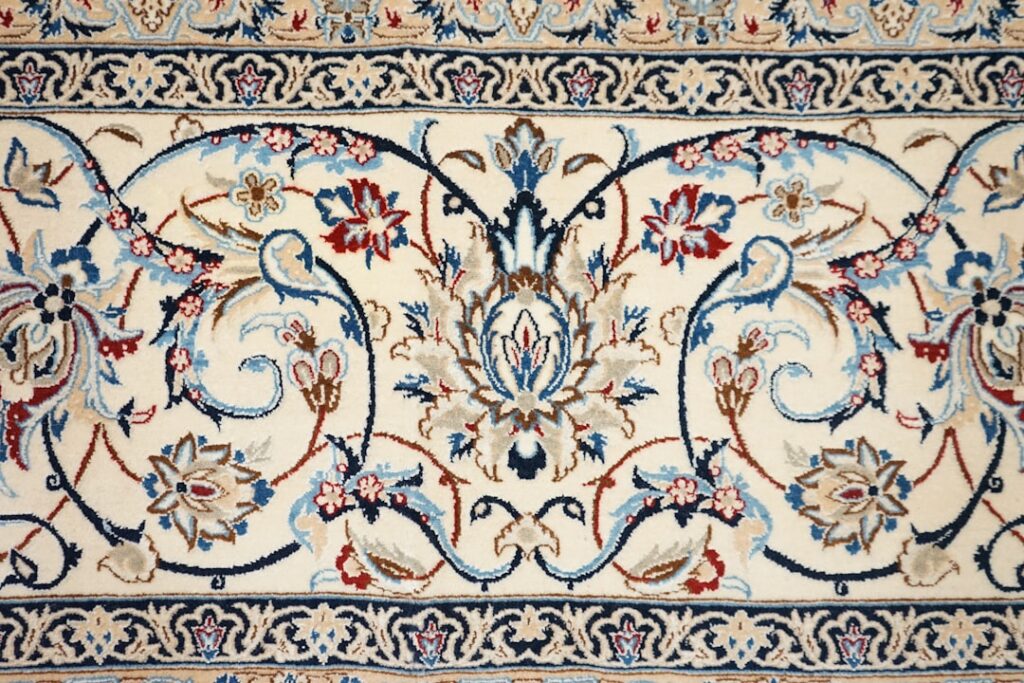
Squares can feel rigid if everything around them is also square, so introduce contrast. A round table, a curved chair, or an organic-shaped pot breaks up the right angles and keeps the room from looking like a grid. Pattern helps too. A bordered or medallion design pulls the eye to the center and reinforces the balanced, symmetrical quality of the shape.
Color is your other lever. A bold square in a neutral room becomes the anchor that everything else relates to, while a tonal, low-contrast square recedes and lets the furniture star. Decide which job you want the rug to do before you fall for a pattern.
Padding, Placement, and Care
Always use a rug pad cut slightly smaller than the rug. A good pad stops the corners from curling, protects the floor, adds cushion, and keeps a lightweight square from sliding, which matters most in an entry or under a chair on the move. For hard floors, choose a felt-and-rubber pad; for carpet, a thin gripper pad works best.
Vacuum regularly, rotate the rug a quarter turn every few months so wear and sun fading stay even, and blot spills immediately rather than rubbing them in. Most wool and synthetic squares respond well to spot cleaning with mild soap and water, but always check the manufacturer’s care label first, since viscose and some naturals need professional cleaning.
Layering and Pairing a Square Rug
Square rugs layer beautifully when you want texture and warmth without committing to a single large floor covering. Set a 5-by-5 square at an angle over a larger neutral jute base in a living room, and the contrast of shape and tone adds depth instantly. The technique works especially well in rentals where you cannot replace the existing carpet but want to define a seating zone on top of it.
You can also pair two squares in a long room, one under a reading chair and one under a side table, to create rhythm without a single oversized rug dominating the floor. Keep the two in the same color family so the repetition reads as intentional rather than mismatched.
Where a Square Falls Short
Honesty matters here, because the square is not a universal answer. Under a rectangular dining table or a full-size sofa, a 5-by-5 leaves chairs and legs hanging off the edges and looks undersized. Long, narrow rooms also fight a square, since the shape fails to lead the eye down the space the way a runner or rectangle does. In those rooms, choose a shape that follows the architecture instead. Reserve the square for round tables, square footprints, and compact zones where its symmetry becomes an asset.
Is a 5 x 5 Rug Right for Your Space?
Measure your zone before buying. Tape out a 5-foot square on the floor and live with it for a day to confirm the proportions feel right and walkways stay clear. If the square frames your round table, defines your nook, or fills your square foyer without crowding doors, it is the correct call. The shape is a specialist tool, and in the right spot a 5 x 5 rug looks far more considered than the default rectangle ever would.