
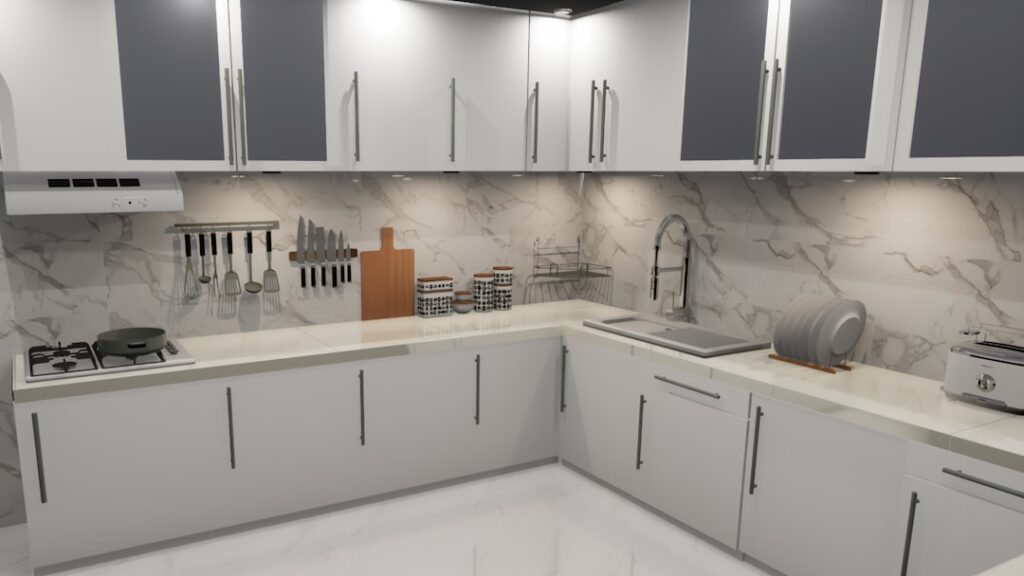
Green has displaced navy as the cabinet color of the moment. Sage, forest, olive, and seafoam have all appeared on cover features and showroom floors over the past three years. The challenge with green kitchen design is that the gap between sophisticated and gimmicky is narrow. Get the green undertone wrong, pair it with the wrong metal, or skip the supporting cast of countertops and floors, and the kitchen reads as a phase rather than a choice. Get those decisions right and a green kitchen ages gracefully for 20 years.
Part of our Kitchen Remodeling guide — explore the full guide →
The Five Green Families in 2026 Kitchens
“Green” covers an enormous color range. Each family has different design implications:
- Sage green (gray-green, muted): the safest cream-adjacent green, works in nearly any kitchen
- Forest/hunter green (deep blue-green): rich and grounded, classic library or English country feel
- Olive green (yellow-green): warm and earthy, harder to pair
- Hague blue-green (teal): dramatic and saturated, very current
- Seafoam/mint (cool light green): retro, works in coastal or eclectic kitchens
For a kitchen that holds up over a decade, sage and forest green are the lowest-risk choices. Olive and seafoam can be beautiful but are more polarizing and sensitive to trend cycles.
The Best Green Paint Colors for Cabinets
Tested in actual installed kitchens:
- Farrow and Ball Card Room Green (No. 79): the benchmark sophisticated muted green
- Sherwin Williams Evergreen Fog (SW 9130): the 2022 Color of the Year, still strong, gray-green
- Benjamin Moore Saybrook Sage (HC-114): versatile sage that reads slightly blue in cool light
- Farrow and Ball Green Smoke (No. 47): deep smoky green for islands or full kitchens
- Benjamin Moore Forest Green (CC-682): classic dark forest, traditional
- Sherwin Williams Rosemary (SW 6187): deep blue-green, very current
- Benjamin Moore Sherwood Green (HC-118): rich pine green
- Farrow and Ball Lichen (No. 19): earthy olive-green, sophisticated
For a first-time green kitchen, Saybrook Sage on perimeter cabinets with a deeper green like Card Room Green on the island is a tested combination that has held up since 2020.
Two-Tone vs. All-Green
The most flattering use of green for most kitchens is on the island, lower cabinets, or built-in hutch only, with the upper cabinets in cream, white, or natural wood. This breaks the visual mass and prevents the kitchen from feeling closed in.
All-green kitchens work in three specific scenarios: a kitchen with abundant natural light, a kitchen with very tall ceilings (10 ft plus), and a kitchen that is open to other rooms providing visual relief. In a closed 10 by 12 ft galley with 8 ft ceilings, all-green cabinetry can feel oppressive.
Countertop Pairings
Green cabinets need countertops that complement without competing. Strong pairings:
- Honed Carrara or Calacatta marble: the classic dressy choice, cool veining offsets warm greens
- White or cream quartz with subtle veining: Cambria Whitney or Caesarstone Statuario at $65 to $95 per sq ft installed
- Soapstone: dark green-black, ties beautifully with sage or forest greens
- Butcher block on an island: warm wood with green creates English country warmth
- Black honed granite: dramatic, especially against lighter greens
- Cream marble or limestone: for traditional kitchens, $50 to $90 per sq ft
Skip warm beige granites with strong gold tones – they fight most greens. Skip cool gray quartz with sage – the undertones cancel each other.
Hardware: The Critical Choice
Green cabinets demand warm metal hardware. The cool-metal pairings that work with white kitchens (chrome, polished nickel) tend to look sterile against green. Best options:
- Unlacquered brass: the gold standard, develops patina, $18 to $40 per piece
- Antique brass: warmer than unlacquered, less yellow
- Aged bronze: rich dark warm tone, works with most greens
- Polished brass: reads more glamorous, fewer kitchens carry it off
- Matte black: high contrast, contemporary but can feel heavy with deep greens
Brass in any finish is the single best pairing with green cabinets. Schoolhouse Electric, Rejuvenation, and Emtek all carry quality options at $20 to $50 per piece.
Wall Color Around Green Cabinets
The walls do a lot of work in a green kitchen. Best wall color choices:
- Warm white (Benjamin Moore White Dove or Swiss Coffee): the safe choice
- Cream (Sherwin Williams Creamy): warm, traditional
- Pale neutral (Edgecomb Gray, Pale Oak): sophisticated, soft
- Same green at lower saturation: tonal, drenches the room in color
- Deep terracotta or oxblood: historical, only for the brave
Avoid cool grays. They strip the warmth out of the green and leave the kitchen feeling cold.
Flooring Choices
The right flooring extends the warmth of brass hardware and grounds the cabinets:
- White oak with a natural or matte finish: the universal pairing for any green
- Wide-plank European oak in warm brown stain: Bona Antique Brown or similar
- Terracotta tile: deeply traditional, especially with olive or forest greens
- Black-and-white checkerboard tile: classic for English-influenced kitchens
- Limestone tile in cream or honey tones: elevated traditional
Skip gray-toned LVP, gray porcelain, and cool gray hardwoods. They visually wrestle the green for warmth.
Backsplash Strategy
A green kitchen can carry a quieter or louder backsplash depending on saturation:
- For deep green cabinets, a quieter backsplash (white subway, plain marble slab) lets the cabinets star
- For sage cabinets, a patterned tile (zellige, hand-painted Portuguese, or fluted glass) adds the visual interest the muted green does not provide alone
- Brass pot fillers, sconces, and faucets on the backsplash wall reinforce the warm metal theme
Lighting That Flatters Green
Green cabinets look very different under different color temperatures. 2700K is too warm and pushes sage toward olive; 3500K and above turns greens cold and gray. Aim for 3000K LEDs throughout for the most consistent rendering of the color you actually chose at the showroom.
Pendant lights over an island should reinforce the warm-metal palette. Brass or antique-bronze pendants from Hudson Valley Lighting, Schoolhouse, or Rejuvenation work well. Expect $200 to $700 per pendant.
Real Cost of a Green Kitchen
Green cabinet pricing matches any painted-finish kitchen:
- Stock cabinets in custom paint: $5,500 to $11,000 for a 10×10 kitchen
- Semi-custom in green (KraftMaid, Diamond): $9,000 to $20,000
- Custom local in green: $22,000 to $50,000
- Painting existing cabinets professionally: $1,800 to $4,000
Painting existing cabinets is the best low-risk way to test green. If you decide green is not for you in three years, repainting back to white costs $1,500 to $3,000.
Bottom Line
Green kitchen design works when sage or forest greens pair with brass hardware, warm white walls, white oak floors, and either marble-look counters or honed soapstone. Skip cool grays in the supporting cast. Two-tone with green on the island or lower cabinets only is the most flexible long-term choice. Test full cabinet door samples in your actual kitchen lighting before ordering – green more than any other color shifts dramatically by time of day.


