Some color combinations just work, and deep blue paired with green is one of them. Both pull from nature, think forest canopy against evening sky, so a navy and green rug brings a grounded, sophisticated calm to a room that few other palettes match. It’s rich without being loud, and it plays beautifully against wood tones, brass accents, and neutral walls. Whether you’re anchoring a living room or warming up a bedroom, this combination is versatile enough to fit traditional and modern spaces alike. Here’s how to pick the right one and make it sing.
Why Navy and Green Work Together
These colors sit near each other on the color wheel, which is why they feel harmonious rather than jarring. Blue and green are analogous cool tones, so the eye reads them as a natural, restful pairing. At the same time, navy’s depth gives green somewhere to pop, creating contrast without the tension of true complementary colors.
The result is a palette that feels both energizing and soothing. Emerald or olive green adds life and warmth, while navy grounds the composition and keeps it from feeling too bright. That balance is what makes the combination such a reliable designer choice.
Best Rooms for the Combination
This palette adapts to nearly any space, but it shines in a few settings:
- Living rooms: Anchors a seating area and ties together blue and green accents in pillows or art.
- Bedrooms: Creates a cocooning, restful mood, especially with a deeper navy base.
- Home offices: The cool tones aid focus while adding richness to a workspace.
- Dining rooms: A patterned navy-and-green rug adds formality under a table.
In open-concept spaces, the rug can define a zone, marking off the living area from the dining area with color rather than walls. Its cool depth reads as intentional and calm in nearly any layout.
Choosing a Pattern
The pattern sets the entire personality of the rug. Consider what mood you’re after:
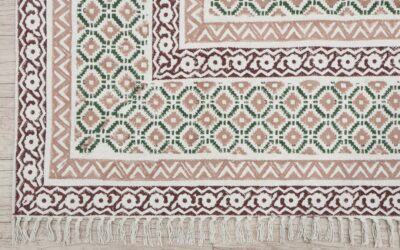
- Traditional Persian or Oriental: Intricate navy grounds with green accents feel timeless and layered.
- Botanical or floral: Leafy green motifs on navy lean organic and fresh.
- Geometric or abstract: Bold blocks of the two colors suit modern rooms.
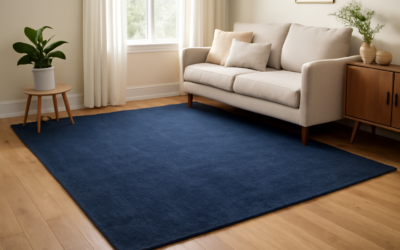
- Solid or tonal: A color-blocked or ombre blend of the two hues reads clean and contemporary.
- Living room: Large enough that at least the front legs of all seating sit on the rug. An 8×10 or 9×12 suits most.
- Bedroom: Extend 18-24 inches beyond the sides and foot of the bed, or use runners on each side.
- Dining room: Big enough that chairs stay on the rug when pulled out, usually 24 inches past the table edge.
Busier patterns hide soil and foot traffic well, which is a practical bonus in high-use rooms. A solid or subtly tonal rug makes a stronger design statement but shows every crumb, so match the pattern to how the room actually gets used.
Fiber and Construction
Color is only half the decision; the material determines how the rug feels and lasts. Wool is the classic choice, naturally stain-resistant, resilient, and rich in color depth, though it costs more. Synthetic fibers like polypropylene and polyester offer vivid navy and green tones at a lower price and stand up well to spills, making them smart for family rooms.
For softness underfoot, look at hand-tufted wool or plush polyester. For durability in a busy household, a flatweave or low-pile machine-made synthetic cleans easily and hides wear. Natural fibers like jute blended with color accents can work too, though pure jute won’t deliver saturated navy and green the way wool or synthetics do.
Sizing the Rug Correctly
A rug that’s too small is the most common decorating mistake, and it undercuts even the most beautiful color scheme. General guidelines:
Leave a border of 8-18 inches of bare floor around the rug’s edges in most rooms. That frame of exposed flooring makes the rug and the room feel intentional and balanced.
Styling Around the Rug
Once the rug is down, pull its colors into the room in small doses. Repeat the green in a few plants or throw pillows and echo the navy in curtains or an accent chair. You don’t need to match everything; a couple of touches of each color scattered around the room ties the whole scheme together.
Metals warm the cool palette beautifully. Brass or gold lamps, hardware, and frames glow against navy and green, while natural wood furniture adds an earthy counterpoint. Keep walls neutral, warm white, greige, or soft cream, to let the rug be the star rather than competing with it.
Care and Maintenance
Dark, saturated rugs actually hide dust and pet hair less well than mid-tones, so regular vacuuming keeps them looking crisp. Rotate the rug every few months so foot traffic and sunlight wear it evenly, since navy in particular can fade in strong direct sun. Blot spills immediately and use a rug pad underneath to prevent slipping and cushion the pile.
For wool, schedule professional cleaning every year or two and spot-clean between times. Synthetic rugs tolerate home cleaning with mild solutions and dry faster, another point in their favor for busy spaces.
The shade of each color you choose shifts the mood considerably, so it’s worth thinking beyond just “navy and green.” A deep forest or hunter green paired with navy feels traditional, cozy, and library-like, well suited to a den or a masculine study. Swap in a brighter emerald and the same navy suddenly reads as jewel-toned and glamorous, perfect for a formal living room. Olive or sage green against navy leans earthy and organic, pairing beautifully with rattan, linen, and lots of plants for a relaxed, nature-inspired room.
Consider the rug’s finish and sheen as well, since it affects how the colors present. A low-luster wool or matte synthetic gives navy and green a soft, grounded look that hides everyday wear. A rug with a subtle silky sheen, common in viscose blends and some hand-knotted pieces, catches the light and makes the colors look richer and more luxurious, though those fibers demand gentler care. In a high-traffic family room, the matte, durable option almost always makes more sense than a delicate sheen that shows every footprint.
Bringing It All Together
A well-chosen navy and green rug is one of the easiest ways to give a room depth, warmth, and a designer-level color story. Pick a pattern that matches your style and traffic, choose a fiber suited to the room’s use, size it generously, and echo its colors in a few accents around the space. Get those pieces right and the rug becomes the calm, grounding foundation that pulls the entire room together for years.
If you’re worried about the combination feeling too bold, start small and build confidence. Try a navy and green rug in a smaller room like a study or an entry before committing to it in the main living space. Once you see how naturally the two colors read together and how forgiving they are with wood, brass, and neutral walls, scaling the look up to a larger room feels far less risky. This palette has staying power precisely because it draws on nature’s own pairing, so it won’t feel dated the way a trendier color scheme might in a few years.