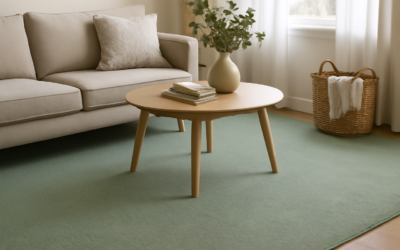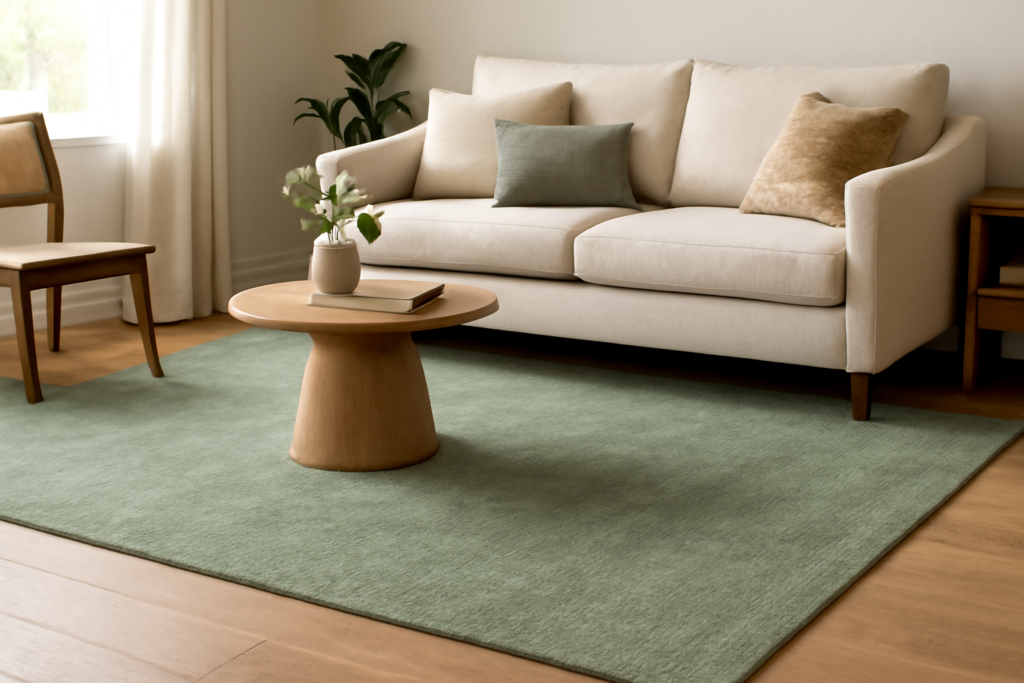
Of all the colors trending in home decor, few work as effortlessly as soft muted green. A sage green area rug brings a calm, organic, slightly earthy tone that pairs with almost any palette without shouting for attention. It reads as a neutral while still adding color, which is exactly why designers reach for it in living rooms, bedrooms, and dining spaces alike. Here is how to choose the right one and style it so the whole room feels pulled together.
Why Sage Green Works So Well
Sage sits in a sweet spot between gray and green — desaturated, warm, and soothing. Because it borrows from both the neutral and the natural worlds, it behaves like a chameleon: it grounds a bright, colorful room and adds life to a beige-and-white one. It evokes plants and nature, which makes a space feel fresh and relaxed.
That versatility is the practical reason it stays popular. You are far less likely to tire of sage than of a bold jewel tone, and it forgives changes to your furniture and wall color over the years.
What Pairs Beautifully With Sage
Sage plays nicely with a wide range of colors. Some of the most reliable pairings:
- Warm neutrals: cream, beige, tan, and camel for an organic, earthy scheme
- Whites and off-whites: crisp and airy, letting the sage read as the accent
- Warm woods: oak, walnut, and rattan echo the natural feel
- Blush and terracotta: soft, sophisticated color contrast
- Charcoal and black: modern grounding for a more dramatic look
- Brass and gold accents: a touch of warmth and elegance
If you want a serene, spa-like room, keep the palette tonal with sage, cream, and natural wood. For more energy, add terracotta or brass accents against the sage.
Choosing the Right Material
The rug material affects both the look and how it holds up. Match it to the room’s traffic.
Wool
Durable, soft, naturally stain-resistant, and long-lasting. Wool holds sage’s muted tone beautifully and hides everyday wear. The premium choice for living rooms and bedrooms, though it costs more.
Synthetic (Polypropylene / Polyester)
Budget-friendly, stain-resistant, and easy to clean. Great for high-traffic areas, kids’ rooms, and homes with pets. Machine-washable options make maintenance simple.
Natural Fibers (Jute / Cotton)
Jute in a sage tone leans into the organic aesthetic and adds texture, though it is coarser underfoot. Cotton flat-weaves are lightweight, often washable, and casual.
Getting the Size and Placement Right
The wrong rug size makes even a beautiful rug look like an afterthought. General guidance by room:
- Living room: big enough for at least the front legs of all seating to sit on the rug; an 8×10 or 9×12 anchors most living rooms
- Bedroom: extend the rug 18 to 24 inches beyond the sides and foot of the bed, or place a runner on each side
- Dining room: the rug should extend at least 24 inches past the table edge so chairs stay on it when pulled out
- Entryway: a runner or small rug that fits the space with room around it
Leave a consistent border of exposed floor around the rug — 8 to 18 inches — so it frames the room rather than wall-to-wall carpeting it.
Styling It Room by Room
Sage adapts to whatever mood you want to set.
Living Room
Pair a sage rug with a cream or gray sofa, natural wood coffee table, and a few plants to build a relaxed, nature-inspired space. Add throw pillows in terracotta or ivory to tie it together.
Bedroom
Sage under a bed with white or oatmeal linens creates a restful, calming retreat. Warm wood nightstands and brass lamps complete the look.
Dining Room
A sage rug beneath a wood table softens the space and defines the dining zone in an open floor plan. Choose a low-pile or flat-weave for easy chair movement and crumb cleanup.
Caring for a Sage Rug
Muted greens hide dirt reasonably well, but keep yours looking fresh with simple habits. Vacuum regularly, rotate the rug every few months to even out wear and sun fading, and blot spills immediately rather than rubbing. Use a rug pad underneath — it prevents slipping, adds cushion, and extends the rug’s life. Keep sage out of harsh direct sunlight where possible, since strong UV can gradually lighten the color.
The Bottom Line
A sage green area rug is one of the most versatile decor pieces you can add — calm enough to act as a neutral, colorful enough to bring a room to life, and easy to pair with woods, warm neutrals, and metallic accents. Choose wool for lasting quality or a washable synthetic for busy households, size it generously for the room, and it will anchor your space with an organic, timeless calm for years to come.
Decorating Around Sage Green
Sage green is popular precisely because it behaves like a neutral. Its soft, muted, gray-green tone pairs effortlessly with warm woods, cream and white walls, and natural textures like rattan and linen for an organic, calming room. For more contrast, sage sits beautifully against terracotta, blush, mustard, and navy, letting you build a scheme without fighting the rug.
In a north-facing or dimmer room, a sage rug reads cooler and grayer, while warm light brings out its green, so check a sample in your actual space before committing.
Materials and Placement
The right fiber depends on the room. In a living room, a plush wool or wool-blend sage rug feels luxurious and hides wear; in a high-traffic or pet-heavy space, a flatweave or performance polypropylene in sage cleans easily and resists fading. For placement, make sure the rug is large enough that at least the front legs of your seating sit on it, which anchors the furniture grouping rather than leaving the rug floating like a small island. Under a bed, a sage rug that extends 18 to 24 inches beyond the sides adds a soft landing. A rug pad underneath adds cushion, prevents slipping, and extends the life of the rug on any hard floor.