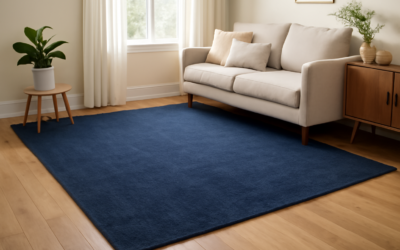
Navy is the unofficial uniform of well-designed outdoor spaces, and the reason is practical as much as stylish: deep blue hides dirt, resists the washed-out look of sun-faded brights, and pairs with nearly every patio palette. A navy outdoor rug anchors a deck or porch the way a coffee table grounds a living room, defining the seating area and adding color underfoot that survives rain, sun, and muddy paws. The trick is buying one built to live outdoors, not an indoor rug pressed into duty. Here is what separates the two.
Part of our Windows & Doors guide — explore the full guide →
Why Navy Works Outdoors
Deep navy is a workhorse color for exterior spaces. It is dark enough to disguise the pollen, dust, and footprints that plague lighter rugs, yet rich enough to feel intentional rather than utilitarian.
It also plays well with the materials common to patios, weathered wood, woven resin furniture, terracotta pots, and brass lanterns. Against a green backyard, navy reads crisp and nautical. Against gray stone or concrete, it adds warmth and depth. Few colors are as forgiving across so many settings.
Weather-Resistant Materials
The single most important factor in an outdoor rug is the fiber, because the wrong material rots, molds, or fades within a season. Look for these proven performers.
- Polypropylene (olefin): the most common choice, water resistant, mold resistant, fast drying, and affordable
- Polyester: soft and color-rich, with good fade resistance
- Recycled PET plastic: eco-friendly, durable, and easy to hose clean
- Solution-dyed acrylic: premium fade resistance, the navy stays deep for years
Avoid natural fibers like jute or untreated cotton outdoors. They hold moisture, grow mildew, and break down quickly when exposed to weather. Synthetic is the only sensible path for a true outdoor rug.
The Fade-Resistance Factor
A navy rug lives or dies by its UV resistance, because deep colors show fading more obviously than pale ones. A poorly dyed navy rug can wash out to a sad, patchy gray within a single sunny summer.
The key term is “solution-dyed.” In solution dyeing, color is locked into the fiber as it is made rather than applied to the surface afterward, so the navy runs all the way through and resists sun bleaching dramatically better. If your patio gets strong afternoon sun, pay the premium for a solution-dyed or UV-stabilized rug. It will hold its color for years rather than months.
Sizing for Your Space
An undersized rug floats awkwardly and makes furniture look disconnected. Size up rather than down.
- Small balcony or bistro set: a 5-by-7-foot rug defines a compact seating spot
- Standard patio dining set: 8-by-10 feet so chairs stay on the rug even when pulled out
- Large lounge or sectional area: 9-by-12 feet or larger to ground the whole grouping
The rule of thumb is that the front legs of all furniture should rest on the rug at minimum. For dining sets, the rug should extend far enough that chairs do not slide off the edge when someone scoots back.
Styling a Navy Rug
Navy is a versatile base that you can dress up or keep classic. The accents you pair with it set the entire mood.
For a coastal or nautical look, layer in white, cream, and natural rope textures with the navy as the anchor. For something warmer and more eclectic, pair navy with terracotta, mustard, and rust tones that pop against the cool blue. Crisp white outdoor furniture against a navy rug feels timeless and clean, while teak and brass lean elegant. Navy and white striped or patterned rugs are perennial favorites because they read fresh without competing with your furniture.
Cleaning and Care
One of the great joys of a synthetic outdoor rug is how easy it is to clean. Most can simply be hosed down.
- Shake off loose debris or sweep with a stiff broom.
- Hose the rug down and scrub stains with mild soap and water.
- Rinse thoroughly and stand the rug on edge or hang it to dry fully before laying it flat.
Drying completely is the step people skip, and trapped moisture between a rug and a deck can stain wood or breed mildew. After heavy rain, lift the rug to let the surface beneath dry out. Store the rug rolled in a dry spot over winter to extend its life by years.
Patterns That Work Outdoors
Navy is a versatile canvas for pattern, and the right design hides dirt while setting the tone. The pattern you pick does real work in an outdoor space that sees pollen, leaves, and foot traffic.
- Navy and white stripes: the classic coastal look, fresh and forgiving of dirt
- Geometric and trellis: modern and tidy, hides debris between cleanings
- Medallion and Persian-style: elegant and traditional, busy enough to mask wear
- Solid navy: a calm base that lets bold furniture and pillows shine
Busier patterns are the practical choice for a heavily used patio, since they disguise the inevitable spills and tracked-in dirt. A solid navy looks sharp but shows every leaf and crumb, so reserve it for covered or lower-traffic spaces.
Placement and Rug Pads Outdoors
Where and how you place an outdoor rug affects both its lifespan and your safety. On a smooth surface like sealed concrete, composite decking, or tile, a navy rug can slide underfoot, so a non-slip outdoor rug pad is worth adding.
Choose a pad specifically rated for outdoor use, since indoor pads can trap moisture and break down in the weather. The pad also lifts the rug slightly off the surface, improving airflow and drying so mildew does not form underneath. Position the rug away from standing water and the direct drip line of a roof edge where possible, and avoid laying it over a wood deck without occasionally lifting it to let the boards dry. On a covered porch, an outdoor rug lasts considerably longer because it is shielded from the harshest sun and rain, so a covered space is the ideal home for a rug you want to keep looking new.
Buying the Right Rug
Start with a reversible, flat-weave construction if you want a rug you can flip when one side gets dingy. Confirm the rug is rated for outdoor or all-weather use, check for solution-dyed fibers if sun is a concern, and add a non-slip outdoor rug pad on smooth surfaces like sealed concrete or composite decking.
A quality navy outdoor rug pulls a patio together, survives the elements, and forgives the dirt that comes with outdoor living. Choose the right material and size, give it a quick rinse now and then, and it will keep your outdoor room looking polished season after season.