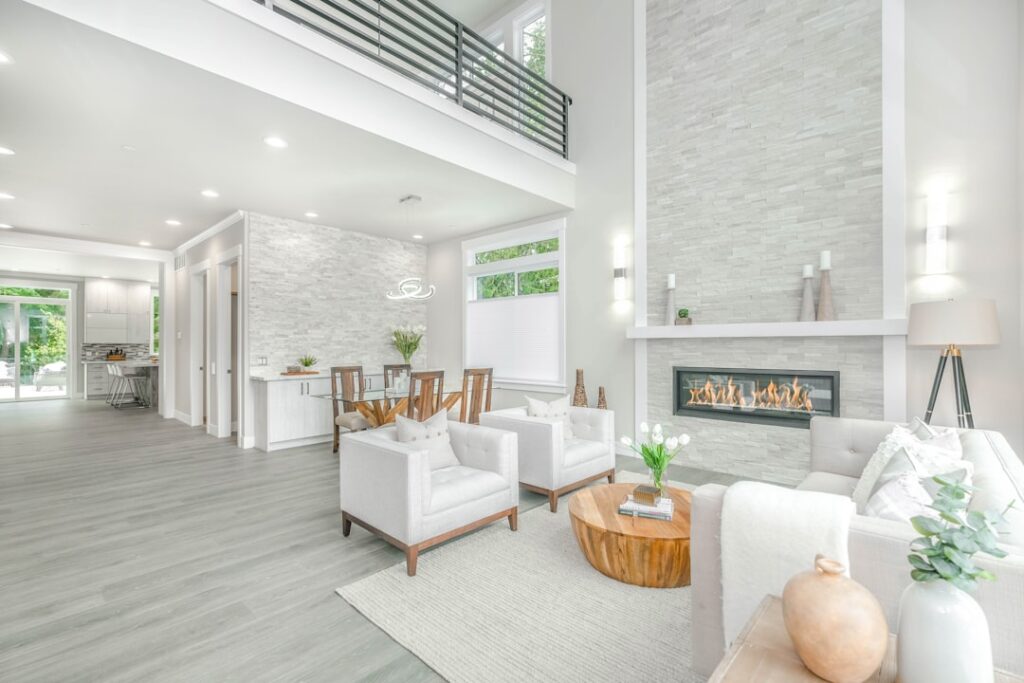
The medallion, the intricate border, the all-over floral field: these motifs are centuries old, yet a modern oriental rug takes that heritage and quiets it down for the way we actually live now. Instead of the deep reds and heavy indigos of a formal Persian carpet, today’s versions lean into faded, overdyed, and abstracted palettes that slip easily into a room with white walls and clean-lined furniture. You get the soul of a traditional weave without the museum-piece formality. This guide covers what makes these rugs modern, how they are built, which materials hold up, and how to place a patterned rug in a minimalist space without the room feeling busy.
What Makes an Oriental Rug “Modern”
The word oriental describes a family of designs that originated across Persia, Turkey, the Caucasus, India, and China, defined by symmetry, dense pattern, and symbolic motifs. What shifts a design into the modern category is rarely the pattern itself and almost always the treatment of it. Designers take a classic Tabriz medallion or a Heriz geometric field and wash out the saturation, blur the edges, or reduce a busy border to a whisper.
Three techniques dominate the modern reinterpretation. Overdyeing soaks a finished rug in a single bold or muted hue, unifying the pattern under one tone. Distressing and abstraction sand down the detail so the rug reads as a soft impression rather than a sharp diagram. And color remixing swaps the traditional red-and-navy for greige, blush, sage, charcoal, or a monochrome palette that plays nicely with contemporary paint colors.
Hand-Knotted Versus Power-Loomed Construction
How a rug is made determines its price, weight, longevity, and feel underfoot. There are two broad camps, and understanding the difference keeps you from overpaying or under-buying.
Hand-Knotted
A true hand-knotted rug is tied one knot at a time on a loom, a process that can take months. These are heirloom pieces, typically wool or wool-and-silk, with knot densities from 100 to over 500 knots per square inch. Expect to spend $1,500 to $10,000 or more for a room-size 8×10. They wear in rather than out, developing a patina over decades, and can be professionally repaired.
Power-Loomed
Machine-woven on computerized looms, power-loomed rugs reproduce the look of a modern oriental rug for a fraction of the cost, often $150 to $600 for an 8×10. They use polypropylene, polyester, or viscose blends, sometimes with a cotton or jute backing. They will not last three generations, but for a busy household with kids, pets, and a real budget, they are the sensible choice and look convincing.
Choosing the Right Material
Material affects how the rug feels, how it ages, and how much maintenance it demands. Each fiber has a clear trade-off.
- Wool: The gold standard. Naturally stain-resistant, resilient, and warm, wool springs back after crushing and hides soil well. Best for living rooms and high-traffic areas.
- Polypropylene: Budget-friendly, fade-resistant, and easy to clean, which makes it ideal for kitchens, entryways, and homes with pets. It lacks wool’s luxurious hand.
- Viscose (art silk): Adds sheen and mimics silk, but it is delicate, water-sensitive, and prone to shedding. Reserve it for low-traffic bedrooms.
- Cotton flatweaves: Lightweight, washable, and casual, great for a relaxed modern look, though they offer little cushion.
If you want the modern look with real durability, a hand-knotted or hand-tufted wool rug in an overdyed palette is the sweet spot. For rentals or trend-driven spaces, a power-loomed polypropylene version lets you swap styles without guilt.
Placing a Busy Pattern in a Minimalist Room
Homeowners often love a patterned rug in the store, then panic that it will clash with a spare, contemporary interior. The opposite is usually true. A single richly patterned rug becomes the anchor that keeps a minimalist room from feeling cold or unfinished. The key is letting the rug be the star and letting everything else recede.
Keep upholstery in solids or the barest texture. Pull one or two colors from the rug and repeat them in a throw pillow or a piece of art, but resist matching everything. Size the rug generously so the front legs of your sofa and chairs sit on it, which visually ties the seating group together and stops the rug from looking like a stamp on the floor. In a dining room, the rug should extend at least 24 inches beyond the table on all sides so chairs stay on it when pulled out.
Color-Drenched Versus Neutral Versions
Modern oriental rugs split into two moods, and the right one depends on your room’s role. A color-drenched piece, think a saturated teal, rust, or plum overdye, injects personality into an otherwise neutral space and works beautifully as a focal point in a home office or a dining room. Because the pattern is unified under one dominant hue, it reads as bold but not chaotic.
Neutral versions in ivory, taupe, soft gray, or muted blue do the quieter work of adding warmth and texture without competing for attention. These suit open-concept living rooms where the rug needs to coexist with a lot of other elements. If you are nervous about commitment, a low-contrast neutral rug is the safer long-term buy, since it will survive several rounds of furniture and paint changes.
Sizing and Layout Basics
Even the most beautiful rug looks wrong at the wrong size. The most common mistake is buying too small. In a living room, aim for a rug that leaves 8 to 18 inches of bare floor between its edge and the walls. Standard sizes to consider are 5×8 for a small seating area, 8×10 for a typical living room, and 9×12 for larger open spaces.
Under a queen bed, a 8×10 centered so it extends about 18 to 24 inches on each side and at the foot gives you soft footing when you step out. In a hallway or galley kitchen, a runner in a modern oriental design adds pattern where a large rug will not fit. Always tape out the dimensions on your floor with painter’s tape before ordering.
Caring for Your Rug
A little routine care keeps a modern oriental rug looking sharp for years. Vacuum weekly, and for wool or hand-knotted pieces turn off the beater bar or raise it to its highest setting to avoid pulling fibers. Rotate the rug 180 degrees every six months so foot traffic and sunlight wear it evenly, since uneven fading is one of the fastest ways a rug starts to look tired.
Blot spills immediately with a clean white cloth, working from the outside in, and never scrub, which frays the pile. Use a rug pad underneath: it prevents slipping, adds cushion, extends the rug’s life by absorbing impact, and improves airflow. For hand-knotted wool, schedule a professional cleaning every one to three years rather than steam-cleaning at home, which can shrink foundations and bleed dyes.
Is a Modern Oriental Rug Right for You
If you want a floor covering that carries history and craftsmanship but does not lock you into a formal, traditional room, this style delivers. It bridges old and new, pairing equally well with a mid-century sofa, a modern sectional, or a farmhouse table. Decide your budget first, since that steers you toward hand-knotted heirloom or power-loomed practicality, then choose between a bold color-drench and a quiet neutral based on how much attention you want the floor to command. Buy the right size, add a pad, and commit to simple maintenance, and a well-chosen modern oriental rug will ground your room for many years.