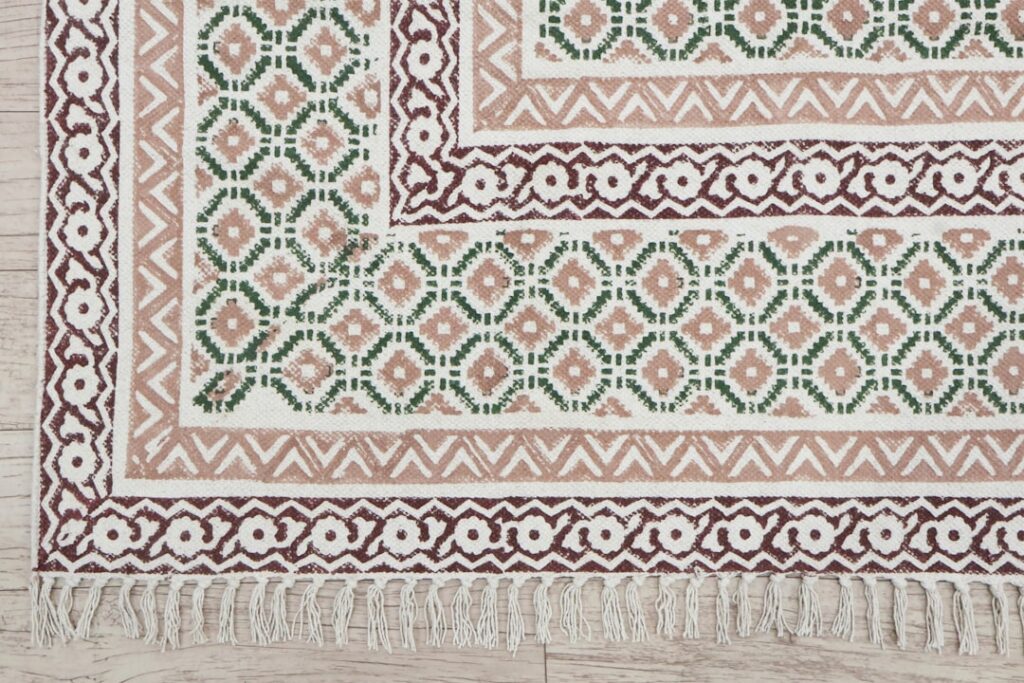
A geometric area rug brings order, rhythm, and a touch of modern confidence to a room in a way few other accessories can. Whether you are drawn to crisp diamonds, interlocking hexagons, bold chevrons, or subtle tonal grids, the right pattern can ground your furniture, define a seating zone, and pull a color scheme together without a single coat of paint.
The challenge is that geometric patterns are unforgiving when chosen carelessly. A rug that is too small, too busy, or the wrong scale can make a room feel cramped or chaotic. This guide walks you through everything you need to know to pick a rug that looks intentional rather than accidental.
Why Geometric Patterns Work So Well
Geometric designs rely on repetition and symmetry, two things the human eye finds naturally satisfying. Because the motifs are abstract rather than figurative, they pair with almost any decor style, from mid-century modern to Scandinavian minimalism to transitional spaces that blend old and new.
Patterns also do practical work. A repeating design hides crumbs, pet hair, and the occasional spill far better than a solid color does, which makes these rugs a smart choice for high-traffic areas like living rooms, hallways, and home offices. The visual movement of a pattern can also make a small room feel more dynamic and a large room feel more cohesive.
Choosing the Right Scale of Pattern
Scale is the single most important decision after size. Large-scale motifs, think oversized diamonds or wide bands, read as bold and contemporary, and they tend to suit roomy spaces with simple furniture. Small-scale repeats, such as tight lattice or pin-dot grids, behave almost like a textured solid from a distance and work beautifully in busier rooms.
A reliable rule of thumb: if your sofa, drapes, or wallpaper already carry strong pattern, keep the rug subtle. If your furnishings are plain, let the rug be the star. Mixing two large-scale patterns in the same room usually creates visual tension that is hard to live with.
Picking Colors That Last
Most geometric rugs combine two to four colors. To choose well, pull one shade from a piece you already own and plan to keep, such as a sofa, a piece of art, or your cabinetry. That anchor color keeps the rug feeling connected rather than random.
- Neutral grounds (gray, ivory, charcoal, taupe) with a single accent are the most flexible and forgiving over time.
- High-contrast designs like black-and-white make a strong statement but show wear and lint more readily.
- Tonal patterns, where the motif sits only a shade or two away from the background, add quiet texture without competing for attention.
Remember that color reads darker and richer across a large floor area than it does on a small swatch, so order a sample when you can.
Getting the Size Right
Undersized rugs are the most common decorating mistake. As a general guideline, the rug should be large enough that at least the front legs of every major seating piece rest on it. For dining areas, the rug should extend roughly 24 inches beyond the table edge on all sides so chairs stay on the rug when pulled out.
- Living rooms: 8 by 10 feet or 9 by 12 feet for most full seating groups.
- Bedrooms: a rug that extends 18 to 24 inches past the sides and foot of the bed, or smaller runners on each side.
- Dining rooms: size to the table footprint plus 24 inches of clearance.
Measure your space and tape out the rug footprint on the floor before you buy. Seeing the actual dimensions removes most of the guesswork.
Materials and Durability
The fiber you choose affects feel, cost, and how the rug ages. Wool is the classic premium choice: naturally resilient, stain-resistant, and soft underfoot, though it carries a higher price and can shed at first. Synthetic fibers such as polypropylene and polyester are budget-friendly, fade-resistant, and easy to clean, making them well suited to families, pets, and sunny rooms.
Natural fibers like jute and cotton give a casual, textured look, but they are less plush and can be harder to spot-clean. Flatweave and low-pile constructions show crisp geometric lines most clearly, while high-pile and shag styles blur sharp edges and favor softer, more organic patterns.
Placement, Layering, and Pads
A geometric rug can anchor a room or layer over a larger neutral one for added depth, a popular trick in living rooms and bedrooms. When layering, keep the bottom rug plain so the pattern on top stays the focal point. Always center the design with the room’s main sightline, not just the furniture, so the symmetry reads correctly from the doorway.
Invest in a quality rug pad. A pad cushions the rug, keeps it from sliding, protects your flooring, and extends the rug’s life by reducing friction wear. Choose a pad cut slightly smaller than the rug so it stays hidden at the edges.
Cleaning and Maintenance
Vacuum regularly to keep fibers from matting, but use a low-suction or hard-floor setting on flatweave and natural-fiber rugs to avoid pulling threads. Rotate the rug every few months so foot traffic and sunlight wear it evenly, which is especially important for high-contrast patterns where fading is more visible.
Blot spills immediately with a clean cloth rather than rubbing, and always test any cleaning product on a hidden corner first. For wool and larger investment rugs, professional cleaning every year or two protects both the fibers and the dye. Following the manufacturer’s care label is the surest way to keep your pattern looking sharp for years.
Matching the Rug to Each Room
Different rooms ask different things of a patterned rug. In a living room, the rug usually needs to unify a seating group, so a medium-scale design in colors drawn from the sofa or art tends to work best. In a bedroom, you want softness underfoot and a calmer pattern, since the rug is partly hidden by the bed and shouldn’t compete with bedding.
Dining rooms reward durable, easy-clean fibers and busier patterns that disguise crumbs, while entryways and hallways benefit from flatweave or low-pile geometrics that handle constant traffic and wipe clean. Home offices are a great place to be bold, since a striking rug under a simple desk adds energy without cluttering the room. Thinking room by room keeps each rug purposeful rather than picked in isolation.
Budgeting for Quality
Prices for a geometric area rug span a wide range depending on size, fiber, and construction. As a general estimate, machine-made synthetic rugs in common living-room sizes often fall in the lower hundreds of dollars, hand-tufted wool runs higher, and hand-knotted wool pieces can reach well into the thousands. These are broad ranges, and actual pricing varies by retailer, size, and quality.
When weighing cost, factor in how long you want the rug to last and how hard the room is on it. A durable wool rug in a busy living room may cost more upfront but outlast several cheaper replacements. Don’t forget to budget for a quality rug pad, which protects your investment and improves how the rug feels and performs.
Final Thoughts
The best geometric rug is one that fits your space, complements what you already own, and suits how the room is actually used. Get the size and scale right first, then let color and material follow. Choose thoughtfully and a single patterned rug can do more to transform a room than almost any other purchase you make.