Area rug padding is the single cheapest upgrade that makes an expensive rug perform better, last longer, and stay safely in place, yet it is the piece most homeowners skip. A quality pad does four jobs at once: it grips the floor so the rug does not slide, it cushions every step, it protects your flooring from abrasion and dye transfer, and it extends the life of the rug by absorbing the crushing force of foot traffic. Choosing the right pad for your floor type and rug size is a small decision that pays off every single day.
Why You Should Never Skip the Pad
A rug without a pad slides, bunches, curls at the corners, and grinds against the floor. On hard surfaces like hardwood, tile, and vinyl, a sliding rug is a genuine fall hazard, particularly for kids and older adults. Beyond safety, the pad keeps grit and the rug’s own backing from scratching your floor finish, and it prevents the rubber or latex in some rug backings from reacting with and staining your flooring. The cushion also takes the pressure off the rug fibers, so the rug wears far more slowly than it would ground directly against a hard floor.
The Main Types of Rug Padding
Pads fall into a few categories, each suited to different needs:
- Felt: Dense and firm, felt adds cushion and sound absorption without much grip. Best under large rugs that hold themselves in place, or over carpet.
- Rubber (natural): Thin and grippy, natural rubber stops sliding and is safe for most hard floors. Ideal for smaller rugs on tile and wood.
- Felt-and-rubber combo: The best of both, a felt cushion bonded to a rubber gripping layer. The most versatile choice for hard floors.
- Memory foam: Extra plush underfoot, great for comfort but offers less grip; best for larger rugs in low-traffic rooms.
For most living rooms and bedrooms over hardwood, the felt-and-rubber combo pad is the go-to because it grips, cushions, and protects all at once.
Watch Out for Cheap PVC Pads
The bargain waffle-textured pads sold everywhere are made of PVC or plastic, and while they are cheap and grippy at first, they carry real downsides. Over time and with heat, the plasticizers in these pads can break down and leave a sticky residue that discolors or even damages hardwood and vinyl finishes. They also flatten quickly and lose their grip. If you have a nice floor, spend a little more on a natural rubber or felt-and-rubber pad and avoid the sticky-residue problem entirely.
Matching the Pad to Your Floor
The right pad depends heavily on what is underneath. On hardwood and other hard floors, choose a natural rubber or felt-and-rubber pad and avoid solid-plastic grippers that can mar the finish. Over existing carpet, a firm felt or a dual-surface pad designed for carpet keeps the rug from creeping without adding too much squish. Over tile and vinyl, thin natural rubber grips well without lifting the rug edges. Radiant-heated floors need a pad that allows heat through, so a thin, breathable rubber is better than thick memory foam that insulates the warmth away.
Getting the Size and Thickness Right
Cut or buy a pad that is about one inch smaller than your rug on all sides. This keeps the pad completely hidden under the rug edges while still supporting them so the corners do not curl. Most quality pads can be trimmed with scissors to fit odd sizes. On thickness, a 1/4 inch pad is the standard all-purpose choice that adds noticeable comfort without making the rug edge a tripping lip. Go thicker, up to 1/2 inch, only in a bedroom or lounge where plushness matters and door clearance is not an issue. Under a door swing, keep the total rug-and-pad height low enough that the door clears.
What to Budget
Rug pads are priced by size, and quality ones are worth the small premium. Expect to pay roughly $20 to $40 for a pad sized to a common area rug, more for large room-sized pads and less for small runners. Compared to the cost of the rug it protects and the floor beneath it, that is inexpensive insurance. A good pad routinely outlasts several rugs, so buy once and keep it as you rotate rugs over the years.
How a Pad Extends the Life of a Rug
It is easy to think of area rug padding purely as a non-slip measure, but its quiet contribution to the rug’s lifespan is arguably the bigger payoff. Every time you walk across a rug laid directly on a hard floor, the fibers are crushed between your weight and an unyielding surface, and over thousands of footsteps that grinding action breaks down the pile and flattens the busy lanes far faster than the rug should wear. A pad introduces a layer of give that absorbs much of that force, so the fibers spring back instead of being ground down, and the rug keeps its plush look and even color for years longer. The pad also lets air circulate slightly beneath the rug, which helps it release trapped grit when you vacuum and keeps moisture from being trapped against the floor. For anyone who has spent real money on a wool or hand-knotted rug, the pad is not an accessory but a form of insurance that protects the investment underfoot every single day, and a quality pad routinely outlives the rug it was bought for.
Installing and Caring for a Pad
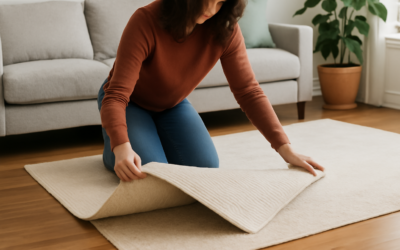
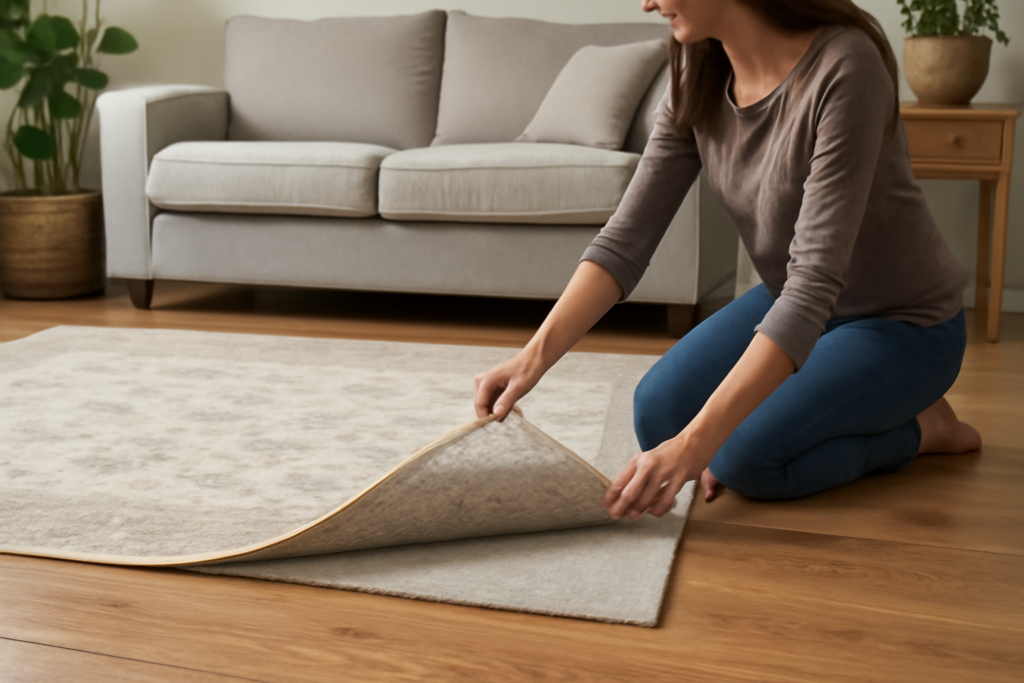
Getting a pad in place is simple, but a few habits make it work better. Lay the pad first with the grippy side down toward the floor and the cushioned side up toward the rug, then center the rug over it so an even margin of bare floor shows on all sides. If the pad shifts or the rug creeps over time, lift both and let the pad breathe for a few hours, since a pad compressed flat under furniture can lose a little grip until it recovers. Vacuum the top of the rug as usual, and every few months lift the rug to shake out the grit that filters down onto the pad, which keeps abrasive particles from working against both the pad and the floor finish. Natural rubber and felt pads clean up with a quick vacuum or a wipe with a barely damp cloth; avoid soaking any pad, and never machine-wash one, since the backing can degrade. Treated well, a good pad quietly does its four jobs for a decade or more.
The Bottom Line
Do not treat the pad as an afterthought. The right area rug padding keeps your rug safely anchored, makes it feel dramatically more comfortable underfoot, protects both the rug and the floor from wear, and quietly extends the life of a piece you spent real money on. Match the pad type to your floor, size it an inch smaller than the rug, choose natural rubber or felt over cheap plastic, and you will never notice it working, which is exactly the point.