A large area rug only performs as well as what sits beneath it, and a 9 x 12 rug pad is the unsung hero that keeps your rug from sliding, bunching, and wearing out early. For a rug this size, often the centerpiece of a living room or open layout, the right pad adds comfort, protects your floor, and extends the life of an investment you walk on every day.
This guide breaks down the pad types, how to choose thickness, how sizing actually works, and which materials are safe for different floors. By the end, you will know exactly what to look for so your big rug stays put and feels plush underfoot.
Why a Rug Pad Matters
It is tempting to skip the pad and save a few dollars, but that decision usually backfires. A rug pad does four important jobs at once: it grips the floor to stop slipping, cushions each step, protects the rug backing from grinding against hard flooring, and lets air circulate so dirt and moisture do not get trapped underneath.
On a large 9-by-12 rug, those benefits multiply. Big rugs catch more foot traffic and shift more easily, so without a pad you will constantly straighten corners and wear thin paths into the rug. The pad also keeps the rug from rubbing color or scratches into hardwood and laminate.
Common Types of Rug Pads
Pads are built from a few core materials, and each strikes a different balance between grip, cushion, and floor safety.
- Felt and rubber combo: The most popular all-around choice; dense felt adds cushion while a natural rubber backing grips the floor. Great for living rooms and large rugs.
- Natural rubber: Thin and very grippy, ideal for keeping rugs flat on hard floors without much added height.
- Felt only: Maximum cushion and sound dampening, best used under heavy furniture where a rug will not slide much.
- PVC or vinyl-coated mesh: Inexpensive and grippy, but lower quality versions can break down and stick to floor finishes over time.
For a versatile, comfortable result under a large rug, many homeowners choose a felt-and-rubber pad. It delivers both the plush feel and the anti-slip grip that a 9-by-12 rug needs.
Choosing the Right Thickness
Thickness changes how a rug feels and how it interacts with the room. Thicker is not always better; the best choice depends on traffic, doors, and the rug itself.
- Quarter-inch: A plush, comfortable feel that works well in living rooms and bedrooms where you want softness underfoot.
- Eighth-inch: A balanced, low-profile cushion suited to dining rooms where chairs must slide and clear the rug edge.
- Thin rubber (under an eighth-inch): Best when a door swings over the rug or you mainly want grip without added height.
Watch clearance near doors and transitions. A thick pad can lift a rug enough to catch a door or create a trip edge, so measure before you commit to a heavy pad in a high-traffic doorway.
How to Size a 9 x 12 Rug Pad
Correct sizing is simple but important. The rule of thumb is to cut or buy the pad about one inch smaller than the rug on all sides. For a true 9-by-12 rug, that means a pad close to 8 feet 10 inches by 11 feet 10 inches, so the pad stays hidden and the rug edges still lie flat against the floor.
Most quality felt-and-rubber pads can be trimmed at home with sharp scissors or a utility knife, so buying slightly large and cutting to fit is a reliable approach. Measure your actual rug first, since rug dimensions can vary slightly from the labeled size.
Matching the Pad to Your Floor
Floor safety is the detail people overlook most often, and it can cost you. Some inexpensive pads contain adhesives or plasticizers that react with floor finishes, leaving a sticky residue or discoloration on hardwood and luxury vinyl.
- On hardwood and laminate, choose a pad clearly labeled as safe for those finishes, ideally natural rubber and felt rather than cheap PVC.
- On luxury vinyl plank, confirm the pad will not stain or react; many manufacturers list compatible pad types.
- On tile and stone, grip is the priority since these floors are slick; a rubber-backed pad works well.
- On wall-to-wall carpet, use a firm pad designed to keep a rug from creeping on top of carpet.
When in doubt, check both the pad maker’s and your flooring manufacturer’s guidance before laying it down, especially on newer finishes.
Installation and Care
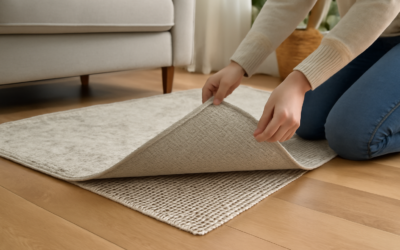
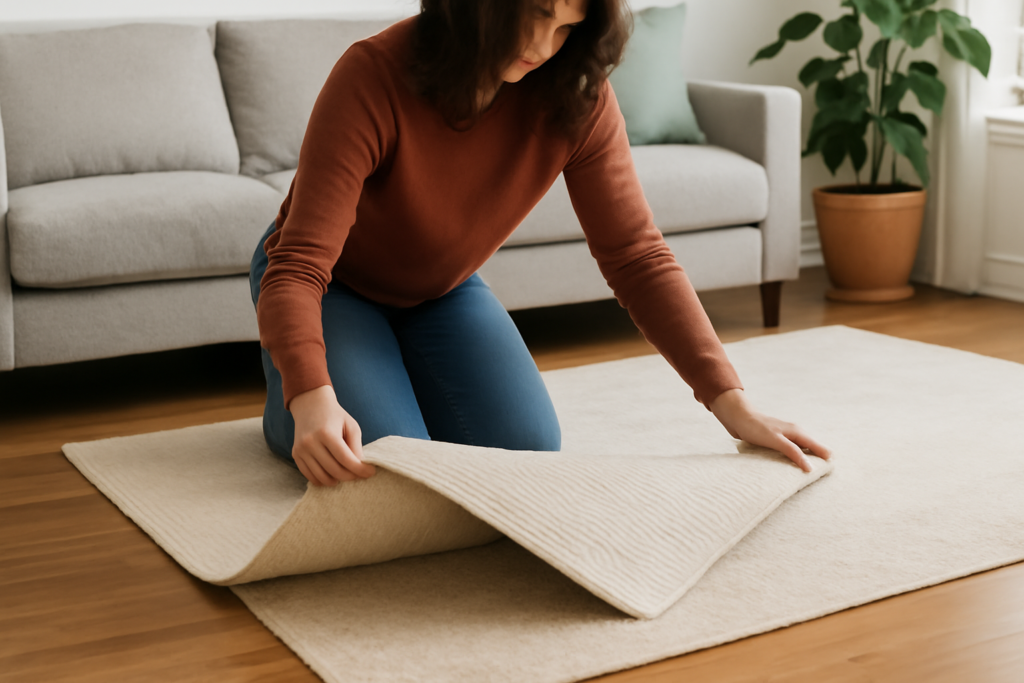
Putting down a pad takes only a few minutes. Vacuum the floor first so no grit gets trapped, lay the pad flat with the grippy side down, then center your rug on top and smooth it from the middle outward to remove wrinkles. Let a new pad relax for a day or two so any roll creases settle.
For upkeep, lift the rug and pad occasionally to sweep underneath and let the floor breathe. Vacuum the rug normally, and if the pad ever feels less grippy, a quick shake and a wipe usually restores it. A good pad can last many years before it needs replacing.
Common Mistakes to Avoid
A few simple errors undercut even a great rug pad. The most frequent is buying a pad the same size as the rug, which leaves edges curling up where the pad pushes them. Sizing the pad about an inch smaller on every side keeps the rug lying flat all the way to the border.
Another mistake is choosing purely on price. The cheapest PVC pads often stiffen, crumble, or leave residue, sometimes damaging the very floor you are trying to protect. It is also worth matching the pad to function: a thick, plush pad under a dining table makes chairs hard to slide, while a too-thin pad under a living-room rug feels no different from no pad at all. Think about how the room is actually used before you pick a thickness.
Cost and Value
A quality 9-by-12 pad typically runs roughly $40 to $120, depending on material and thickness, with premium felt-and-rubber options near the higher end. These are general estimates, so compare current prices for the type you want. Set against the cost of a large area rug and your flooring, a good 9 x 12 rug pad is inexpensive insurance that pays for itself in comfort, safety, and a rug that lasts years longer.