Most people buy a beautiful 8×10 area rug and skip the boring part underneath, then wonder why the rug slides, bunches, and wears out too soon. An 8×10 rug pad is the inexpensive accessory that quietly does the heavy lifting: it grips the floor, cushions every step, and shields your flooring from scratches and color transfer. For a rug this size, which usually anchors a living or dining room, the right pad makes a noticeable difference in safety, comfort, and how long the rug lasts.
Why a Rug Pad Matters
A quality pad solves several problems at once. It keeps the rug from creeping across the floor, which is both a tripping hazard and an annoyance. It absorbs impact, so the rug feels softer underfoot and the fibers crush down more slowly. It protects hardwood, vinyl, and tile from grit trapped between the rug and the floor, and it prevents some rug backings from discoloring or sticking to your finish.
On a large 8×10 rug that sees daily traffic, all of these benefits add up. The pad often outlasts the rug itself and can be reused under your next one.
Main Types of Rug Pads
- Felt and rubber combo: the all-around best choice; thick felt for cushion bonded to natural rubber for grip
- Natural rubber: thin and excellent for non-slip, ideal where you want grip without added height
- Felt only: maximum cushion and floor protection, but offers less grip on its own
- PVC and foam waffle pads: cheapest option, but can break down and stick to floors over time
For most living rooms, a felt-and-rubber pad delivers the best mix of comfort, protection, and slip resistance. Avoid cheap PVC pads on hardwood and vinyl, since the plasticizers can react with the finish and leave residue.
Choosing the Right Thickness
Thickness is a balance between comfort and practicality. Common options run from about 1/8 inch up to 1/2 inch.
- 1/8 inch: low profile, good under doors and in high-traffic walkways
- 1/4 inch: the most popular all-purpose thickness, comfortable without being bulky
- 3/8 to 1/2 inch: plush and luxurious for bedrooms and seating areas where comfort matters most
If the rug sits where a door swings over it, choose a thinner pad so the door clears. In a low-traffic living room, a thicker pad makes a thin rug feel far more substantial.
Getting the Size Right
Here is the detail many people miss: a rug pad should be slightly smaller than the rug, not the same size. For an 8×10 rug, look for a pad that measures roughly 7 feet 8 inches by 9 feet 8 inches, leaving about an inch of clearance on each side. That keeps the pad hidden under the rug edges so it does not peek out or create a lip. Most rug pads are designed to be trimmed easily with scissors or a utility knife, so you can buy the labeled 8×10 size and cut it down to fit precisely.
Matching the Pad to Your Floor
Different floors call for different pads. On hardwood, vinyl plank, and laminate, use a natural rubber or felt-and-rubber pad and avoid PVC, which can mar the finish. On tile and stone, a grippy rubber-backed pad prevents the rug from sliding on the slick surface. Over carpet, you need a firmer, dual-grip pad designed specifically for carpet, since standard pads will not hold a rug in place on top of carpeting. Always confirm the pad is rated as safe for your specific flooring type.
How to Install and Trim a Rug Pad
Putting a pad in place takes only a few minutes but makes a lasting difference.
- Vacuum the floor so no grit gets trapped between the pad and the finish.
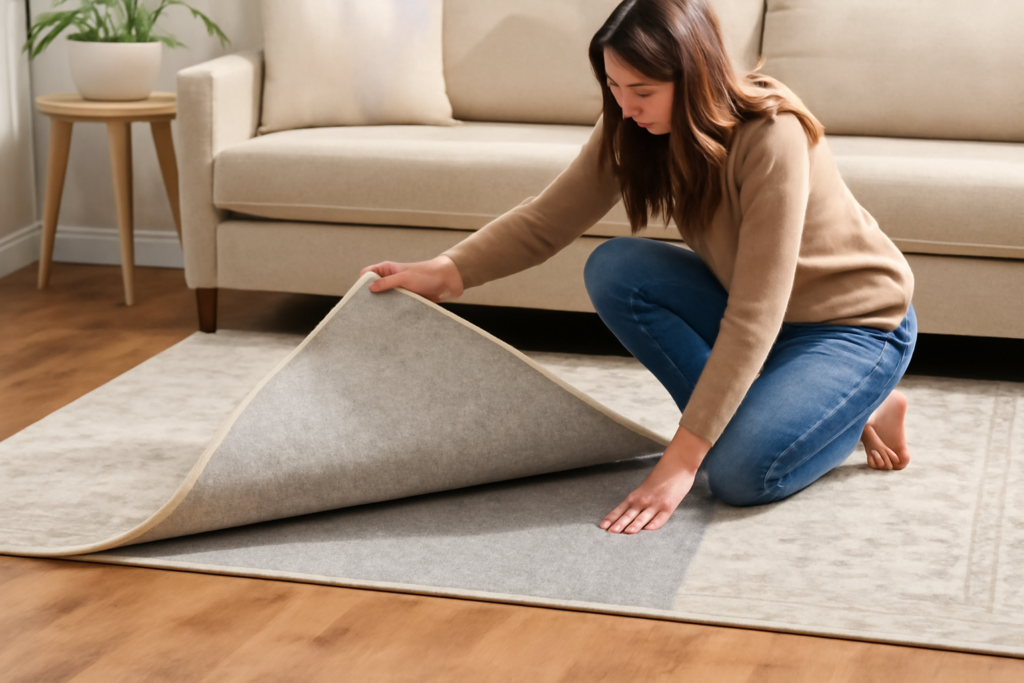
- Lay the pad in the rug’s position, grippy side down toward the floor.
- Center it and check the overhang; you want it set in about an inch from each rug edge.
- Mark and trim any excess with sharp scissors or a utility knife against a straightedge.
- Place the rug on top, smooth it flat, and walk the edges to settle it.
If the rug still shifts at the corners, a few low-profile rug grippers or anchors at the corners add extra hold without bulk.
Signs You Need a New Pad
Rug pads do not last forever, and a worn one quietly stops doing its job. Cheap PVC and foam pads are the worst offenders; over a few years they can dry out, crumble into a powdery residue, or even melt slightly and stick to the floor, leaving marks on hardwood and vinyl. If your rug has started sliding again, if you feel hard spots underfoot, or if you see residue when you lift the rug, it is time to replace the pad. A quality felt-and-rubber pad lasts much longer, often outliving the rug above it, which makes the upgrade worthwhile from the start.
Felt-and-Rubber Versus Pure Rubber
For an 8×10 rug, the two best options usually come down to a felt-and-rubber combo or a thinner pure-rubber pad, and the right pick depends on the room. A felt-and-rubber pad gives the best of both worlds: the thick felt layer adds cushion and protects the floor, while the natural rubber backing grips firmly. It is the top choice for living and dining rooms where you want comfort underfoot. A pure-rubber pad is thinner and prioritizes grip over cushion, making it ideal under doors, in walkways, or anywhere added height would be a problem. Both protect floors far better than cheap PVC waffle pads, which can degrade and stick to finishes over time.
Why Pad Quality Matters for a Large Rug
On an 8×10 rug, which usually anchors a main living space, the pad works harder than under a small accent rug. A larger rug sees more foot traffic across its surface, so a quality pad that cushions impact keeps the fibers from crushing and matting prematurely, preserving the rug’s appearance and value. The pad also keeps a big rug from rippling and shifting, which is both a tripping hazard and an eyesore on a piece this size. Because a felt-and-rubber pad often outlasts the rug itself, spending a bit more here protects what is typically a significant rug investment and improves comfort every day you walk on it.
Cost and Final Tips
An 8×10 rug pad generally runs in the range of a few tens of dollars for basic options up to around a hundred dollars or more for premium felt-and-rubber pads. Given that it protects both an expensive rug and your flooring, it is one of the better values in home goods. Vacuum the rug periodically, lift it occasionally to let the floor and pad breathe, and replace the pad if it starts crumbling or losing grip. Spend a little here and the rug above it will look better and last years longer.