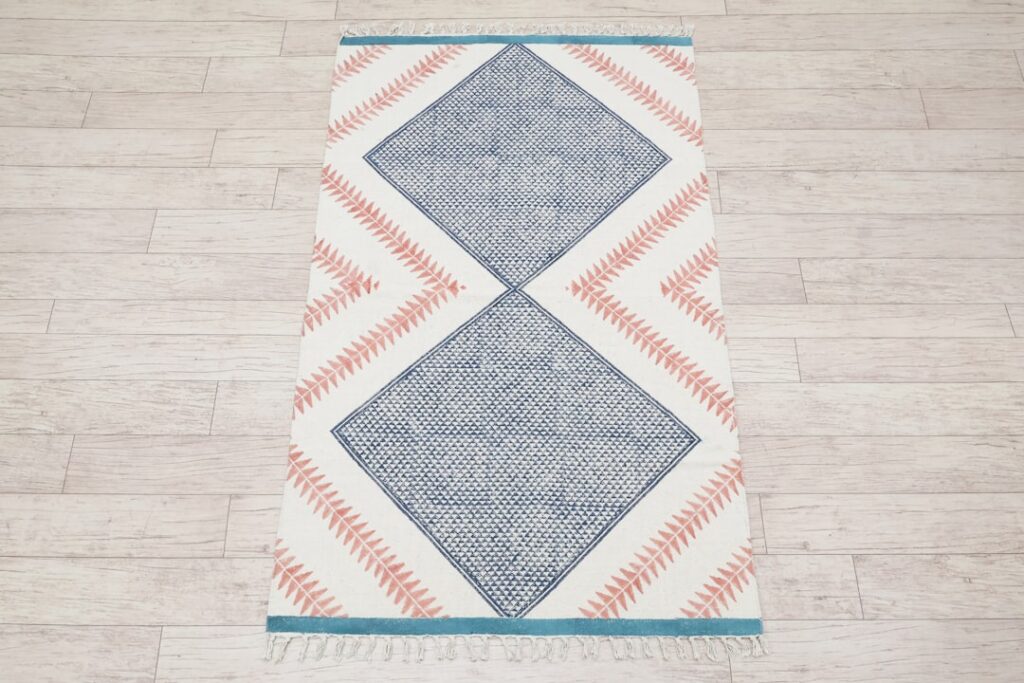
Few decorating moves feel as instantly transformative as laying down a white 8×10 rug in a living room or bedroom. That expanse of pale fiber reflects daylight, visually enlarges the floor plan, and gives busy furniture arrangements a calm foundation to sit on. Choosing a white 8×10 rug well, though, takes more thought than picking the brightest option on the shelf. Shade, pile height, fiber content, and cleaning strategy all determine whether the rug still looks fresh two years from now or turns dingy by the first holiday season.
Why 8×10 Is the Most Versatile Size
An 8-by-10-foot rug covers roughly 80 square feet, which makes it the default choice for standard living rooms measuring 12 by 14 feet or larger. In that setting, you can pull the front legs of a sofa and two accent chairs onto the rug while leaving a balanced border of exposed floor around the edges, usually 8 to 18 inches on each side.
The size also anchors a queen bed nicely when placed horizontally under the lower two-thirds of the frame, leaving soft footing on both sides. Because 8×10 is a mainstream dimension, you will find the widest selection of styles and the most competitive pricing here compared with oversized 9×12 or 10×14 options.
Understanding “White” Is Rarely Pure White
Shop around and you quickly learn that white is a spectrum. Manufacturers use terms like ivory, cream, bone, oatmeal, and pearl, and each reads differently against your wall color and lighting. Bright optic white can look crisp and modern but shows the faintest smudge, while a warmer ivory hides everyday soil and pairs better with wood tones and beige walls.
- Optic or pure white: best for high-contrast, contemporary rooms with disciplined households.
- Ivory and cream: forgiving, warm, and the easiest whites to live with day to day.
- Oatmeal and greige-white: blended tones with subtle flecks that camouflage minor stains.
Order a swatch or check the rug under your own lamps before committing. Store lighting is often cooler and bluer than home lighting, which shifts how the white appears.
Fiber Choices and What They Cost
Material drives both the feel underfoot and the maintenance burden. For a white rug in particular, stain resistance and cleanability should weigh heavily.
- Polypropylene (olefin): the workhorse for white synthetic rugs. It resists moisture, bleaches clean, and typically runs $80 to $250 for an 8×10. Ideal for families with kids or pets.
- Wool: naturally soil-resistant thanks to its lanolin coating, plush, and durable, but pricier at $400 to $1,500 and prone to shedding early on. Professional cleaning is recommended.
- Cotton: soft and machine-washable in flatweave form, running $100 to $300, though it flattens under heavy traffic.
- Viscose or faux silk: gorgeous sheen but notoriously hard to clean and prone to yellowing when wet, so reserve it for low-traffic bedrooms.
- Jute and natural fibers: technically off-white rather than true white, affordable, and textural, but they trap dirt and cannot be wet-cleaned aggressively.
Pile Height and Texture Trade-offs
A shaggy white rug with a 2-inch pile feels luxurious and hides crumbs between vacuum sessions, but long fibers also trap dust and are murder to deep clean. Low-pile and flatweave whites vacuum easily and dry fast after spot treatment, making them the smarter pick for dining-adjacent spaces or entryways.
Consider your traffic honestly. A thick, high-pile white rug in a heavily used family room will mat down along walkways within months. For those zones, choose a dense, short pile that springs back and resists showing footprints.
Keeping a White Rug Clean
Realistic expectations matter here. A white rug will need more attention than a patterned charcoal one, so build a maintenance routine from day one.
- Vacuum weekly, or twice weekly in high-traffic homes, to lift grit before it grinds into fibers.
- Blot spills immediately with a clean white cloth, working from the outside in. Never rub, which drives the stain deeper.
- Keep a synthetic-safe cleaner or a mild dish-soap-and-water mix on hand for quick treatment.
- Enforce a no-shoes rule and place a doormat nearby to cut incoming dirt dramatically.
- Schedule professional cleaning every 12 to 18 months for wool, or machine-wash cotton flatweaves as needed.
For synthetic white rugs, diluted oxygen bleach can lift stubborn spots without damaging fibers, but always test an inconspicuous corner first.
Styling a White 8×10 in Any Room
Because white recedes visually, it lets furniture, art, and accent textiles take the spotlight. In a minimalist room, an all-white palette layered with linen and pale oak feels serene and gallery-like. To keep the space from reading flat, introduce texture: a boucle chair, a woven throw, or a jute pouf adds depth without competing color.
For a bolder look, use the white rug as a blank canvas beneath saturated furniture, deep navy sofas, emerald velvet, or terracotta leather all pop against it. In bedrooms, a plush white rug framing the bed reads instantly hotel-luxe and feels wonderful on bare feet each morning.
Don’t Skip the Rug Pad
A quality rug pad is non-negotiable, especially for a light-colored rug. A dense felt-and-rubber pad, typically $40 to $90 for the 8×10 size, prevents sliding, cushions each step, and extends the rug’s life by reducing friction against the floor. Just as important, it creates airflow underneath that helps moisture evaporate after cleaning, discouraging the mildew and yellowing that plague white rugs laid directly on sealed floors.
Buy the pad one to two inches smaller than the rug on each side so it stays hidden. Avoid cheap PVC waffle pads on hardwood, as their coating can react with floor finishes and leave a residue over time.
Placement rules keep an 8×10 from looking stranded or cramped. In the living room, aim to slide at least the front legs of every major seating piece onto the rug so the arrangement reads as one connected zone. Floating a rug entirely inside a seating group, with no furniture touching it, tends to look undersized and disconnected.
Under a dining table the same 8×10 works only for smaller tables, since diners need roughly 24 inches of rug behind each chair so the back legs stay on the surface when pulled out. In a bedroom, center the rug under the lower two-thirds of a queen or king frame, or run it perpendicular so a soft band extends 18 to 24 inches past each side of the bed. Home offices and reading nooks benefit too, where a white rug defines the space and bounces light toward the ceiling.
Is a White 8×10 Rug Right for You?
The honest answer depends on your household. A quiet adult home or a bedroom retreat is a perfect candidate, where a white rug delivers airy elegance with modest upkeep. Homes with toddlers, muddy pets, or a red-wine-loving crowd should lean toward washable cotton, bleach-cleanable polypropylene, or a warm ivory with subtle flecking rather than crisp optic white.
Budget-wise, expect to spend $80 to $250 for a serviceable synthetic, $150 to $400 for a washable cotton, and $400-plus for wool that will last a decade with care. Pair whatever you choose with a good pad, commit to prompt spill cleanup, and a white 8×10 rug will reward you with a bright, spacious, and timeless foundation that flatters nearly any decor you build on top of it.