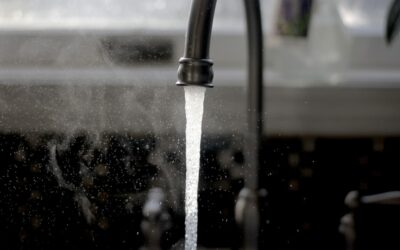
A small mesh screen at the tip of your kitchen or bathroom faucet can cut water use by 30% or more without any noticeable drop in pressure. That tiny device is called an aerator faucet attachment, and most homeowners never think about it until something goes wrong. Understanding how aerators work, which type fits your fixtures, and when to replace them can save you real money on water and energy bills every single month.
How a Faucet Aerator Works
An aerator mixes air into the water stream as it exits the spout. Inside the housing, a series of fine mesh screens break the single flow into many tiny streams and inject air between them. The result is a softer, wider spray pattern that feels full even though less water is actually flowing.
Most standard faucets without aerators push out 2.2 gallons per minute (GPM) or more. A WaterSense-labeled aerator faucet attachment can bring that down to 1.5 GPM in the kitchen and 1.0 GPM in the bathroom. Over a year, a family of four can save roughly 700 gallons just from bathroom sink use alone.
Types of Faucet Aerators
Not every aerator fits every faucet. Before you buy, you need to know the thread type and flow rate that match your fixture.
- Male-threaded aerators — screw into faucets with internal threads. These are the most common type in residential homes. Standard sizes are 15/16 inch for regular faucets and 13/16 inch for smaller fixtures.
- Female-threaded aerators — fit over faucets with external threads. You will find these on many commercial-style kitchen faucets.
- Cache (hidden) aerators — sit inside the spout and require a special key to remove. Popular in modern, streamlined faucet designs from brands like Delta and Moen.
- Swivel aerators — attach like a standard aerator but rotate to direct water flow at different angles, useful for large farmhouse sinks.
- Dual-flow aerators — let you toggle between a stream and a spray pattern by pulling or pushing the tip.
Choosing the Right Flow Rate
Flow rate is measured in gallons per minute, and the right number depends on where the faucet is located. Kitchen sinks benefit from 1.5 to 2.0 GPM because you need enough volume to rinse dishes and fill pots efficiently. Bathroom sinks rarely need more than 1.0 GPM since you are mostly washing hands.
For context, a 1.0 GPM aerator saves about 40% more water than a 1.5 GPM model. If your municipal water rate is $5 per 1,000 gallons, switching every faucet in a three-bathroom home from unrestricted flow to 1.0 GPM aerators can shave $30 to $60 off your annual water bill. The aerators themselves cost $3 to $10 each.
How to Install a Faucet Aerator
Installation takes less than five minutes and requires no special plumbing knowledge. Gather a cloth or rubber grip pad and possibly a pair of pliers.
- Unscrew the existing aerator by turning it clockwise (from below, looking up). If it is stuck, wrap a cloth around it and use pliers to avoid scratching the finish.
- Check the threads on your faucet spout. Male threads stick out; female threads are inside. Buy the matching aerator type.
- Place the rubber washer inside the new aerator if one is included. This prevents leaks.
- Hand-tighten the new aerator onto the spout. Turn counterclockwise for male-threaded models, clockwise for female-threaded.
- Run the water to test flow and check for leaks around the connection. Snug it a quarter-turn more if water drips from the base.
Cleaning and Maintenance
Hard water deposits build up on aerator screens over time, reducing flow and creating uneven spray patterns. If your faucet starts sputtering or the stream pulls to one side, a clogged aerator is almost always the culprit.
Remove the aerator and soak all parts in white vinegar for 30 to 60 minutes. Use an old toothbrush to scrub the mesh screens. Rinse everything thoroughly and reassemble. In areas with very hard water (above 10 grains per gallon), plan to clean your aerators every three to four months.
Top Aerator Picks for Different Budgets
You do not need to spend much to get a quality aerator. Here are reliable options at different price points.
- Neoperl 1.5 GPM Regular Size — around $4, fits standard 15/16-inch male threads, solid brass housing, WaterSense certified. Hard to beat for the price.
- Delta Faucet RP330 — roughly $6, cache-style aerator designed for Delta fixtures but compatible with many brands, 1.5 GPM flow.
- Moen 3919 — approximately $8, female-threaded 2.2 GPM for kitchen use, includes a flow restrictor you can remove if needed.
- Danze DA613075N Spray Aerator — about $12, dual-function stream/spray toggle, fits standard connections, 1.75 GPM.
When to Replace Instead of Clean
Cleaning solves most aerator problems, but replacement makes sense when the housing is cracked, the threads are stripped, or mineral buildup has eaten through the screens. Plastic aerators typically last one to two years; brass and stainless steel models can go five years or longer with regular maintenance.
If you notice persistent low pressure even after cleaning, the issue might be upstream in the supply lines rather than the aerator itself. Remove the aerator and run the faucet briefly. Strong flow without the aerator confirms a clogged screen. Weak flow points to a bigger plumbing issue worth investigating.
Common Mistakes to Avoid
Skipping the rubber washer is the most frequent installation error. Without it, water seeps around the threads and drips down the faucet body. Always check that the washer is seated flat inside the aerator housing before threading it on.
Another mistake is over-tightening with pliers. Hand-tight plus a quarter-turn with a cloth-wrapped grip is plenty. Cranking down too hard can crack plastic housings or damage the faucet finish, turning a $5 fix into a $150 faucet replacement.