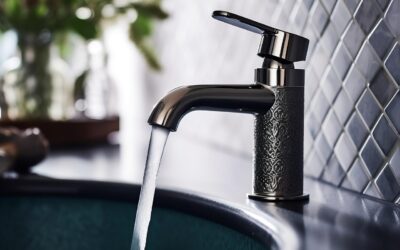
That small screen attachment on the tip of your faucet is doing more work than you probably realize. A sink aerator mixes air into the water stream, reducing flow from a gushing 3-5 gallons per minute down to a controlled 1.0-1.5 GPM — all without any noticeable drop in water pressure. Replacing a clogged or missing aerator is a 5-minute fix that can save a household of four over 3,000 gallons of water per year.
How a Sink Aerator Works
Inside the small housing, a series of screens and a flow restrictor break the solid water stream into dozens of tiny droplets mixed with air. This aerated stream feels just as strong against your hands as an unrestricted flow, but uses significantly less water. The screens also act as a final filter, catching small particles of sediment and pipe debris before they reach your glass or pot.
Standard aerators screw onto the faucet spout’s external or internal threads. Most kitchen faucets use a larger housing (15/16-inch male or 55/64-inch female thread), while bathroom faucets typically use a smaller size (13/16-inch male or 3/4-inch female thread).
Signs Your Aerator Needs Replacement
Aerators are inexpensive and easy to ignore — until they cause problems. Watch for these symptoms:
- Reduced water pressure: Mineral deposits and sediment gradually clog the screens, restricting flow. If only one faucet in the house has low pressure, the aerator is almost certainly the cause.
- Uneven or sputtering stream: A partially blocked screen creates an erratic spray pattern that splashes off dishes and hands.
- Visible buildup: White or greenish crusty deposits on the aerator housing indicate calcium, lime, or copper corrosion.
- Leaking around the threads: A cracked housing or worn washer inside the aerator causes dripping at the faucet tip.
In areas with hard water (above 7 grains per gallon), plan to clean or replace your sink aerator every 6-12 months. Homes with soft water or a whole-house filtration system can go 2-3 years between replacements.
How to Remove and Replace a Sink Aerator
You need no special tools for most aerators — just your hands and possibly a pair of pliers wrapped in a cloth to protect the finish.
- Unscrew the old aerator: Grip the housing and turn counter-clockwise (looking up at it from below). If it is stuck, wrap a rubber band or cloth around it for grip, then use pliers gently. Avoid channel-lock pliers directly on chrome — they will scratch.
- Inspect the threads: Look at the faucet spout. External threads (on the outside) need a female aerator. Internal threads (recessed inside the spout) need a male aerator with external threads.
- Measure the diameter: Standard sizes are 15/16-inch (regular, most kitchen faucets), 13/16-inch (small/junior, most bathroom faucets), and 3/4-inch (compact). Bring the old aerator to the hardware store if you are unsure.
- Install the new aerator: Hand-tighten clockwise until snug. Give it an extra quarter-turn with cloth-wrapped pliers. Do not overtighten — the rubber washer inside creates the seal.
- Test the flow: Turn on the faucet and check for leaks around the threads and even stream distribution.
Choosing the Right Flow Rate
Aerators come in several flow rates, measured in gallons per minute (GPM). Picking the right one depends on how you use the faucet.
- 2.2 GPM: Maximum allowed by federal standards. Good for kitchen faucets where you fill pots and the sink basin frequently.
- 1.5 GPM: A solid middle ground for kitchens. Saves about 30% versus the standard maximum.
- 1.0 GPM: Ideal for bathroom faucets used primarily for handwashing and brushing teeth. Saves over 50% compared to 2.2 GPM.
- 0.5 GPM: Ultra-low-flow option for commercial restrooms or powder rooms with minimal demand. Too slow for kitchen use.
WaterSense-labeled aerators (1.5 GPM or below) meet EPA standards for water efficiency and may qualify for local utility rebates in some areas.
Best Sink Aerator Products
Most aerators cost between $3 and $10, making them one of the cheapest home improvements available.
- Neoperl Perlator (1.5 GPM): Neoperl manufactures aerators for Moen, Delta, and Kohler. Their aftermarket Perlator line is the industry standard for consistent stream quality. Around $5.
- Delta Faucet RP330 (2.2 GPM): OEM replacement for most Delta kitchen faucets. Brass housing resists corrosion better than plastic. About $4.
- Danco 10492 (1.0 GPM): Popular low-flow bathroom aerator. Includes both male and female adapters so it fits virtually any faucet. Under $5.
- Niagara Conservation N3210N (1.5 GPM): Designed specifically for hard water areas with larger screen openings that resist clogging. Around $6.
Cleaning Instead of Replacing
If your sink aerator is only mildly clogged and the housing is not cracked, a quick vinegar soak restores full flow. Remove the aerator, drop it in a cup of white vinegar for 30-60 minutes, then scrub the screens with an old toothbrush. Rinse, reassemble, and reinstall. This method works well for light mineral buildup but will not fix a corroded or damaged unit.
Specialty and Swivel Aerators
Beyond the standard fixed aerator, several upgraded options are worth considering. Swivel aerators add a ball joint that lets you direct the stream at an angle — great for rinsing large pots or washing produce in a deep farmhouse sink. Dual-mode aerators toggle between a steady stream and a wide spray with a flip of a small lever. Prices for specialty models range from $8 to $20, and they still screw on like any standard aerator. For an older faucet that lacks a pull-down sprayer, a dual-mode aerator adds spray functionality at a fraction of the cost of a new faucet.