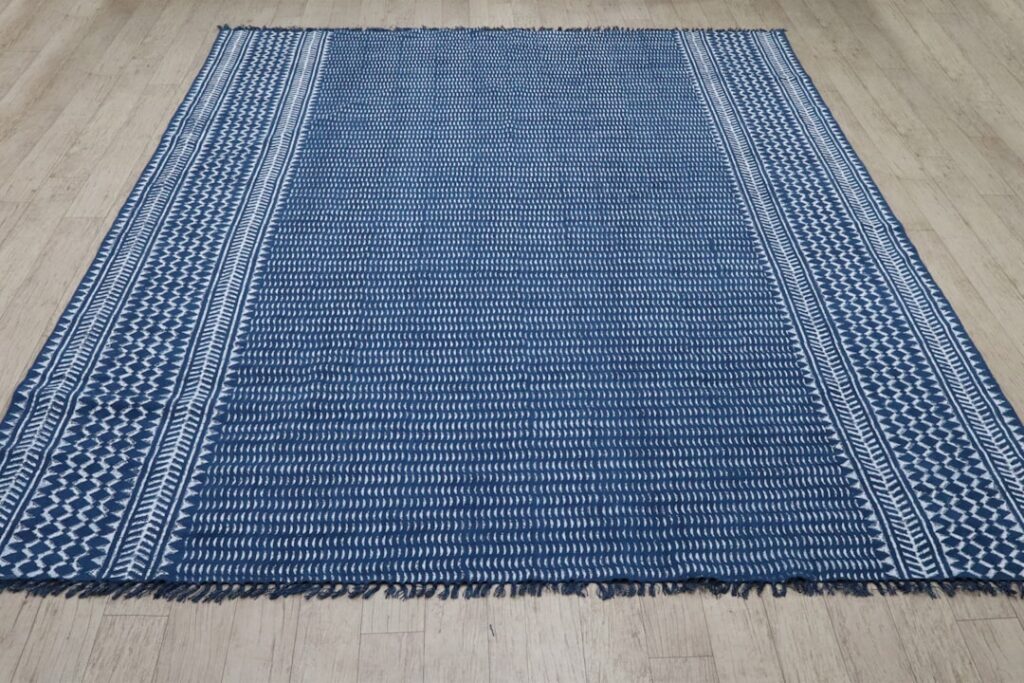
Of all the rug sizes, the 8-by-10-foot is the true workhorse of American living rooms, and blue is the color that keeps showing up in design magazines for a reason. A blue 8×10 rug is large enough to anchor a full seating group, and blue happens to be one of the most livable, versatile colors you can put on a floor. It reads calm and classic in navy, fresh and airy in sky blue, and rich and moody in indigo or teal. If you are trying to ground a room and add color without committing to a bold accent wall, this is one of the easiest wins in the house.
Why 8×10 Is the Go-To Size
The 8×10 hits a sweet spot. It is big enough to define a seating area in an average living room, roughly 12 by 15 feet or larger, while still leaving a border of floor around the edges. That size lets you place at least the front legs of your sofa and chairs on the rug, which is the design rule that makes a room feel intentional rather than pieced together. It also works under most dining tables that seat six, leaving room for chairs to slide out. In short, 8×10 is the default for good reason: it fits the rooms most people actually have.
Choosing the Right Shade of Blue
Blue covers a huge range, and the shade sets the mood:
- Navy — deep, classic, and grounding; hides dirt well and pairs with almost anything.
- Sky and powder blue — light and airy, ideal for coastal, cottage, and bright modern rooms.
- Teal and peacock — rich blue-green with energy; a statement in eclectic and jewel-tone spaces.
- Indigo and denim — muted, versatile mid-tones that read casual and warm.
- Blue-and-white patterns — Persian, Moroccan, and coastal prints that add pattern without overwhelming.
Navy is the safest, most forgiving choice for a busy family room because it hides soil and works with warm and cool palettes alike. Lighter blues brighten small or dim rooms but show dirt faster, so weigh the traffic.
Styles That Work in Blue
Blue suits nearly every rug style. Traditional Persian and Oriental patterns in navy and cream bring timeless elegance. Moroccan trellis and geometric designs feel modern and graphic. Distressed and vintage-look rugs in faded blue tones read casual and lived-in, which is popular in transitional homes. Solid or subtly textured blue rugs let your furniture and art take the lead. For a coastal or farmhouse room, a blue-and-white striped or medallion pattern is a natural fit. Match the pattern’s formality to your room and furniture.
Materials and Durability
An 8×10 covers a lot of floor and usually a lot of traffic, so material matters. Polypropylene is the most practical for family rooms: affordable, stain-resistant, fade-resistant, and easy to clean, which is why so many blue patterned rugs use it. Wool is the premium option, offering a plush feel, natural resilience, and deep, rich color that synthetics struggle to match, but it costs significantly more. Polyester delivers a soft hand and vivid blues at a lower price than wool, though it is less durable underfoot. Cotton flatweaves are washable and casual but wear faster. For a high-traffic living room, I usually recommend a quality polypropylene or wool blend that balances looks and longevity.
Placement Rules for an 8×10
Getting the placement right is what makes the rug look deliberate. In a living room, center the rug on the seating area and pull the furniture partly onto it; at minimum, the front legs of the sofa and chairs should sit on the rug, ideally all legs if the room allows. Leave 8 to 18 inches of bare floor between the rug edge and the walls for balance. Under a dining table, an 8×10 comfortably fits a table for six with about 24 inches of rug beyond each edge so chairs stay on when pulled out. Always add a rug pad; it stops slipping, cushions the rug, and extends its life considerably.
Keeping a Blue Rug Looking Good
Blue, especially navy, hides dirt reasonably well, but upkeep still matters. Vacuum weekly to lift grit before it grinds into the fibers, and rotate the rug every few months so it wears and fades evenly, particularly if part of it sits in direct sun. Blot spills immediately with a clean white cloth rather than rubbing. Most synthetic blue rugs clean with warm water and mild dish soap; test any cleaner in a hidden corner first, since some products can lighten dyes. Wool needs a wool-safe cleaner and gentler handling. For lighter blues, address stains fast, as they show more readily than on navy.
What an 8×10 Blue Rug Costs
Budget ranges widely by material. A synthetic blue 8×10 typically runs $150 to $400, while a polyester shag or plush version falls in a similar range. Wool 8×10 rugs generally start around $400 and climb to $1,000 or more for hand-knotted and premium constructions. Vintage and hand-made pieces sit at the top. For most family rooms, a mid-priced polypropylene or wool blend offers the best balance of durability and value, while a plush wool is worth the splurge in a formal, lower-traffic space.
Decorating Around a Blue Rug
Once the rug is down, let it guide the rest of the palette. Blue pairs naturally with warm neutrals, so cream, beige, and natural wood keep a blue rug feeling balanced rather than cold. For a crisp, classic look, combine a navy rug with white walls and warm wood furniture. If you want more energy, pull one or two accent colors from the rug’s pattern, a touch of coral, mustard, or blush, and repeat them in pillows and art to tie the room together.
Metals matter too. Brass and gold accents warm up a cool blue and lend a touch of elegance, while black and chrome push the room toward modern. Greenery is a reliable finishing touch, since plants echo blue’s natural, restful quality. The key is to treat the rug as the foundation and build the rest of the room’s colors and textures to complement it rather than compete.
Avoiding Common Rug Mistakes
Even with the right rug, a few missteps can undercut the look. The most frequent is buying too small; an 8×10 is generous, but in a large open room even that can look marooned if the furniture floats off it, so make sure the seating relates to the rug. Skipping the rug pad is another common error, since a pad prevents slipping, adds cushioning, and can double the rug’s lifespan. Finally, watch the undertone of your blue against your existing finishes: a warm denim blue and a cool sapphire read very differently next to gray versus beige walls. Bring home a sample or order from a retailer with an easy return policy, and view the rug in your own light before committing to it for the long haul.
The Bottom Line
A blue 8×10 rug is one of the most reliable ways to anchor a living or dining room and inject color that stays livable for years. Choose your shade to match the mood, navy for versatility and hiding dirt, lighter blues for brightness, then pick a style and material suited to your traffic. Follow the placement rules so the furniture relates to the rug, add a rug pad, and keep up with simple cleaning. Get those pieces right and this everyday size becomes the foundation the whole room is built around.