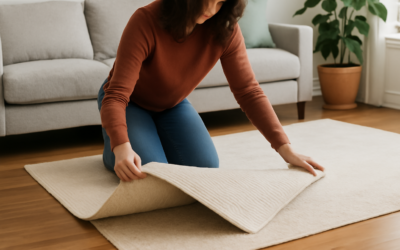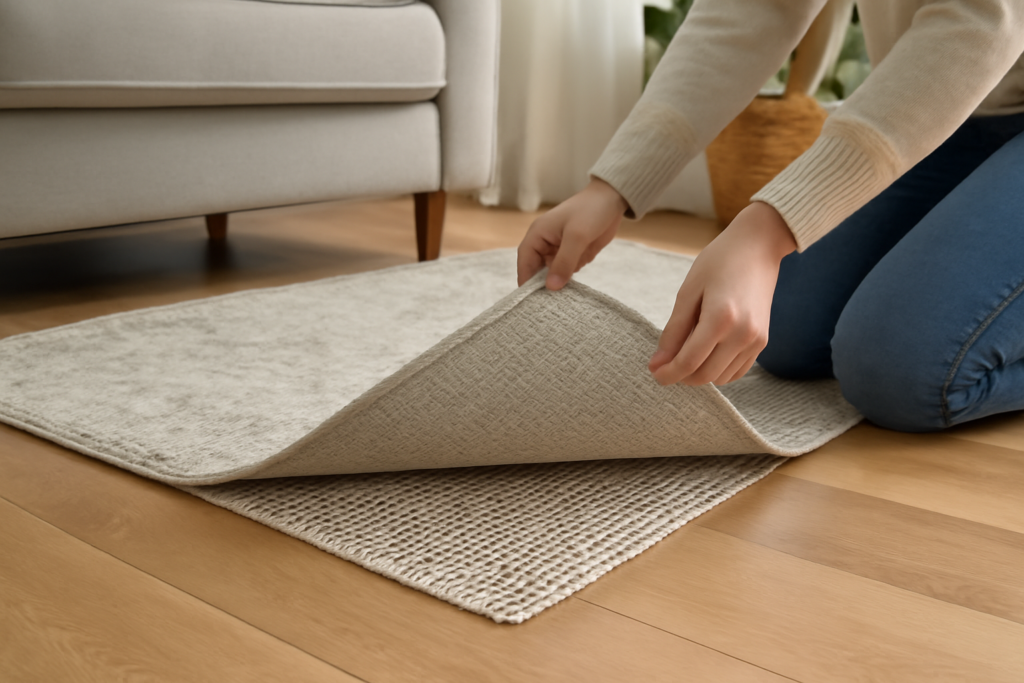
A non slip rug pad is the cheap, invisible upgrade that solves one of the most annoying and dangerous problems in a home: rugs that slide, bunch, and curl. Beyond stopping the slip-and-trip hazard, the right pad cushions your feet, protects your flooring, and extends the life of the rug by absorbing wear. Yet many people grab whatever pad is cheapest and end up with one that damages their hardwood or fails to grip. Choosing correctly takes about two minutes once you know what to look for.
Why You Need a Rug Pad
A good pad does four jobs at once. It keeps the rug from sliding, which prevents falls, especially for kids and older adults. It adds cushioning that makes a thin rug feel plush and easier on your feet and back. It protects the floor beneath from scratching and from the dye or backing of the rug. And it lets air circulate under the rug while reducing the constant friction that wears out a rug from the bottom up. For all those reasons, a pad is not an optional extra; it is part of doing the rug right.
Types of Non Slip Rug Pads
Pads come in several materials, and the best one depends on your floor and how much cushion you want.
- Natural rubber pads: Excellent grip and safe for most hard floors. The premium, longest-lasting choice.
- Felt-and-rubber combination pads: A felt layer for cushion bonded to a rubber layer for grip. The best all-around option for comfort plus hold.
- PVC and vinyl grid pads: The cheapest open-weave pads. They grip well at first but can break down and, importantly, some can damage certain floor finishes.
- Felt-only pads: Great cushioning but little grip, best under a large rug held in place by furniture.
The Floor-Safety Issue You Cannot Ignore
Here is the warning most shoppers miss: cheap PVC or adhesive-backed pads can react with the finish on hardwood, laminate, and luxury vinyl floors, leaving a discolored, sticky, or hazed mark that is difficult or impossible to remove. The chemicals in low-grade plasticizers are the culprit. To stay safe, choose a pad specifically labeled as safe for hardwood and your floor type, and lean toward natural rubber or felt-and-natural-rubber pads, which are far gentler on finishes. When in doubt, check the manufacturer’s floor-compatibility note before you buy.
Matching the Pad to Your Floor
Different floors have different needs:
- Hardwood and laminate: Use natural rubber or felt-and-rubber pads labeled finish-safe. Avoid cheap PVC.
- Luxury vinyl plank (LVP): Same caution; confirm the pad is rated safe for vinyl, since some pads can stain vinyl over time.
- Tile and concrete: Very forgiving; most grippy pads work, and rubber gives the best hold on smooth tile.
- Over carpet: Use a firm pad designed for rug-over-carpet to keep a small rug from creeping on the carpet pile.
How to Size a Rug Pad
Buy the pad slightly smaller than the rug, roughly one inch shorter on each side, so the pad sits about an inch in from the rug’s edge all the way around. This keeps the pad hidden and lets the rug edges taper down to the floor naturally, which reduces tripping. Most pads can be trimmed easily with scissors or a utility knife to fit an odd-sized or custom rug. Never let the pad stick out past the rug, both for looks and to avoid catching feet.
Cost and Value
Rug pads are inexpensive insurance. Basic PVC grid pads start around $10 to $25, but for the floor-safety reasons above, the better buy is a natural rubber or felt-and-rubber pad, which typically runs $20 to $60 for common rug sizes and more for large area-rug sizes. Spending a little extra on a quality, finish-safe pad protects flooring that costs far more to repair than the pad itself, and a good rubber pad can outlast several rugs.
Think of the pad as cheap protection for two expensive things: your rug and your floor. A quality pad keeps a rug from wearing thin on its underside, so the rug lasts longer, and it shields a hardwood or vinyl floor from scratches and staining that can cost hundreds or thousands to refinish or replace. Against those costs, even the priciest premium pad is a bargain, which is why skimping on the pad to save a few dollars is almost always the wrong call.
Choosing Thickness for Comfort
Pad thickness is a comfort and function decision. Thin pads, around an eighth of an inch, mainly provide grip and a little protection, and they keep the rug low enough to clear doors and avoid a tripping lip. Thicker felt-and-rubber pads, often a quarter to a half inch, add noticeable cushioning underfoot, reduce noise, and make a thin rug feel luxurious. In bedrooms and living rooms where comfort matters, lean toward a thicker pad; in entryways and under doors where clearance is tight, choose a thinner one. Just confirm the rug edges still taper down smoothly so the thicker pad does not create a trip hazard.
Installation and Care
Putting down a rug pad takes only minutes. Vacuum and clean the floor first so no grit is trapped underneath, lay the pad with its grippy side facing the floor (some pads are directional, so check), center it under the rug, and smooth the rug over the top. If the pad shifts over time, a clean dry floor and a quality natural-rubber pad usually solve it. Lift the rug and pad periodically to vacuum beneath and let the floor breathe, and clean a washable pad according to its instructions. A good pad lasts for years and can move with you to your next rug.
Final Thoughts
A non slip rug pad makes a rug safer, more comfortable, and longer-lasting, all for a modest price. The key is to match the pad to your floor and choose a natural rubber or felt-and-rubber pad clearly labeled safe for hardwood and your surface type, steering clear of cheap PVC that can mar a finish. Pick a thickness that suits the room, size it an inch smaller than the rug, and your rug will stay put and your floor will stay pristine.