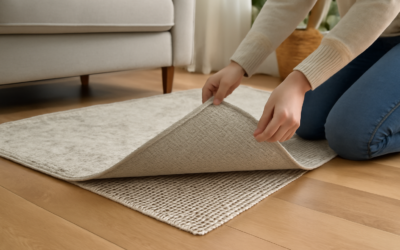
Glazed porcelain and polished ceramic are some of the slickest surfaces in a house, which is why an area rug on tile tends to creep, bunch and catch a toe. Non slip rug pads for tile floors solve that by adding friction between the smooth glaze and the rug backing, but the wrong pad can create new problems: yellow stains on light grout, a sticky film on the glaze, or a grid of grout lines pressed into the underside of the rug. The right choice depends on the finish of your tile, how much moisture the room sees and whether the floor is heated.
Part of our Tile & Grout guide — explore the full guide →
For most tile rooms, a thin pad made of natural rubber or a felt and natural rubber combination is the safest pick. It grips glazed tile well, breathes enough to let damp mopping residue dry, and does not break down into a tacky mess the way cheap PVC pads often do. In a bathroom or kitchen where the floor gets wet, choose an open-weave rubber pad that drains and dries quickly, and trim it about an inch smaller than the rug on every side.
- Why Non Slip Rug Pads for Tile Floors Need Different Rules
- Pad Materials Compared on Tile
- Protecting Grout and Glazed Tile
- Bathrooms, Kitchens and Entryways
- Rug Pads Over Heated Tile Floors
- How to Size, Trim and Lay the Pad
- Keeping Rugs on Tile From Becoming a Trip Hazard
- Troubleshooting Common Problems
- Typical Costs
- When to Call a Pro
- Frequently Asked Questions
The sections that follow cover how tile differs from wood and vinyl, which pad materials work, how to protect grout and glaze, the limits over radiant heat, and how to size and trim a pad so the edges stay flat.
Why Non Slip Rug Pads for Tile Floors Need Different Rules
Tile is hard, cold and nonporous on the surface, yet the grout joints between tiles are porous and slightly recessed. That combination matters. A pad that works on sealed hardwood relies on light friction across a continuous surface, while on tile it has to bridge small valleys every 12 to 24 inches. Thick, soft pads sink into those valleys over time and transfer a faint grid pattern to the rug, especially with thin flatweave rugs. Very thin pads, on the other hand, may not have enough mass to stay put on high-gloss glaze.
Temperature and moisture add two more variables. Tile stays cool and can hold condensation under a rug in humid climates or in a basement, and bathroom and kitchen floors get splashed daily. Pads that trap water against grout encourage mildew and discoloration. When you shop for non slip rug pads for tile floors, look for three traits: a grip layer that is natural rubber rather than plasticized vinyl, a structure that lets air move, and a thickness matched to the rug and the traffic.
Pad Materials Compared on Tile
Rug pads fall into a handful of material families. Each behaves a little differently on glazed and unglazed tile.
- Natural rubber waffle or grid pads: Thin (about 1/16 inch), open weave, strong grip on glazed tile. Good for runners, bath mats and small rugs in wet rooms because they drain and dry. Offer little cushion.
- Solid natural rubber sheets: Excellent grip and no pattern transfer, but less breathable. Better in dry living spaces than in bathrooms.
- Felt with a natural rubber backing: The most versatile choice for living rooms and dining rooms on tile. Typically 1/8 to 1/4 inch thick, adds comfort and sound control, and the rubber side grips while the felt side holds the rug.
- All-felt pads: Comfortable but do not grip well on their own. On slick tile they only work under large, heavy rugs pinned by furniture.
- PVC or vinyl coated mesh: Inexpensive and grippy when new, but plasticizers can migrate into grout and leave yellow or sticky residue, and the coating can fuse to the glaze in warm rooms. Avoid these on tile you care about.
- Memory foam or thick polyurethane foam: Soft underfoot but prone to sliding on glazed tile unless bonded to a rubber layer, and they can compress into grout joints.
If a product label is vague about composition, look for wording such as “100 percent natural rubber” and “safe for all hard floors.” Pads described only as “non-slip” with a strong chemical odor are often PVC.
Protecting Grout and Glazed Tile
Grout is the weak link. Cement-based grout is porous unless sealed, and it will absorb dyes, plasticizers and trapped moisture. Before you lay any pad, clean the floor thoroughly and let it dry completely, ideally for 24 hours after mopping. If your grout has not been sealed in the last year or two, apply a penetrating grout sealer first and give it the full cure time on the label before covering it.
A few habits keep glaze and grout looking right:
- Lift the rug and pad every one to three months, vacuum the tile and let it breathe for an hour or so.
- Do not put a pad down over a floor that still smells of cleaner. Residue plus rubber can leave a haze.
- Test a new pad in a closet or behind a sofa for a week, then check for any mark or tackiness.
- On natural stone such as marble or travertine, favor felt and natural rubber over bare rubber waffle, and avoid any pad with a coating that could etch or discolor the stone.
Grout-line imprinting is mostly cosmetic, but it can bother you on a thin wool or cotton flatweave. A firm felt and rubber pad about 1/8 inch thick spans the joints better than a soft foam pad. Rotating the rug a half turn once or twice a year also evens out wear.
Bathrooms, Kitchens and Entryways
Wet rooms need a different approach from a dry living room. In a bathroom, a small bath mat on a thin natural rubber grid pad is the most practical setup because water can drain through the open cells and the pad dries quickly once you hang the mat. Washable rugs should come out of the bathroom with their pad so both can dry. Never leave a damp pad sitting on grout for days, since that is how dark mildew rings start.
Kitchens bring grease and food spills. A low-profile felt and rubber pad under a flatweave runner keeps it from sliding while you move between the sink and the range, and the rug can still be cleaned easily. Keep runners out of the swing path of the dishwasher and oven doors so an edge is not constantly kicked up.
Entryway tile collects grit and meltwater. Choose an outdoor-safe or washable rug with a thin rubber grid pad, and put a coarse mat outside the door to catch most of the debris before it reaches the tile.
Rug Pads Over Heated Tile Floors
Radiant floor heating is common under tile, and a rug pad changes how that heat reaches the room. Every layer you add acts as insulation. A thick felt pad under a thick wool rug can trap enough heat to reduce the system’s output in that spot and make the floor under the rug run warmer than the surrounding tile.
Follow these limits for heated floors:
- Check the heating system’s instructions for any maximum combined rug and pad insulation value. Many systems recommend keeping the total low and avoiding thick padding altogether.
- Use the thinnest pad that holds the rug, usually a natural rubber grid about 1/16 inch thick.
- Avoid PVC, foam and pads with adhesive coatings, which soften or off-gas as they warm.
- Choose pads the manufacturer labels as suitable for radiant heat.
- Do not cover the floor sensor for an electric system with a rug, since it will read the trapped heat and cycle incorrectly.
If a rug on a heated floor feels hot to the touch or the pad starts to smell, remove it and switch to a thinner, more breathable setup.
How to Size, Trim and Lay the Pad
A pad that is too large peeks out, curls and becomes a trip hazard. One that is too small lets the rug edges flop and slide. Aim for a pad about 1 inch shorter than the rug on each side, or 2 inches smaller in overall length and width. For runners, trim about 1 inch in from each long edge and each end.
Tools and materials:
- Rug pad sized equal to or larger than the rug
- Sharp heavy-duty scissors or a utility knife with a fresh blade
- Tape measure and a straightedge
- Marker or chalk
- Vacuum and a dry microfiber mop
- Clean and dry the tile, including the grout lines.
- Lay the rug face down on a clean surface and place the pad over it, grip side up.
- Mark a line about 1 inch in from the rug edge all the way around.
- Cut along the line with scissors, or with a utility knife guided by a straightedge. Round the corners slightly so they do not catch and lift.
- Place the pad on the tile grip side down (check the label; some rubber pads grip on both sides).
- Roll the rug halfway, align it over the pad, then unroll it so the pad does not wrinkle.
- Walk the surface and smooth out any bumps toward the edges.
Keeping Rugs on Tile From Becoming a Trip Hazard
Slips on tile are a common cause of household falls, and a rug that shifts underfoot is part of the problem. Well-chosen non slip rug pads for tile floors are your first defense, but the rug edges matter just as much. Keep every edge flat, with no curled corners, and replace pads that have hardened, cracked or lost their grip. In homes with older adults or small children, pick low-pile rugs with tapered or bound edges and consider rug gripper tape designed for hard floors on the corners of lighter rugs, testing it first so it does not leave residue on glaze.
Watch for these warning signs that a setup is not safe:
- The rug moves more than half an inch when you step on it and pivot.
- A corner flips up after vacuuming.
- The pad edge shows beyond the rug.
- The pad has crumbled into bits on the tile.
Troubleshooting Common Problems
Rug still slides: The pad may be too small for the rug’s weight, or the tile may have a film from cleaners. Clean with warm water and a pH-neutral tile cleaner, dry fully and try a solid rubber or felt and rubber pad in place of a thin grid.
Yellow or brown marks on grout: Usually plasticizer migration from a PVC pad or trapped moisture. Remove the pad, clean the grout with a grout-safe cleaner, reseal once dry and switch to natural rubber.
Sticky residue on glaze: Degraded pad material. Remove it with warm soapy water and a nonscratch pad. Avoid solvents on grout.
Grid pattern on the rug: Move to a firmer, slightly thicker felt and rubber pad and rotate the rug periodically.
Typical Costs
Rug pads are an inexpensive upgrade compared with the rug itself. Thin natural rubber grid pads for small rugs and runners usually cost a modest amount, often less than a dinner out. Felt and natural rubber pads for an 8 by 10 foot rug generally land in a low to moderate range, with thicker premium versions costing more. Custom-cut pads from a rug shop add a small premium but save you the trimming. Budget to replace pads every few years, or sooner in bathrooms and high-traffic entries.
When to Call a Pro
A rug pad is a DIY job, but a few situations call for help. If grout is cracked, crumbling or badly stained, a tile professional can clean, repair or regrout before you cover it. If a heated floor behaves oddly under rugs or the thermostat seems to misread, a heating technician or electrician familiar with radiant systems should check it. And for valuable antique or hand-knotted rugs, a rug specialist can recommend a pad that protects the fibers as well as your tile.
Frequently Asked Questions
Do rubber rug pads damage tile floors?
Natural rubber pads are generally safe on glazed ceramic and porcelain. Problems usually come from PVC or synthetic rubber pads that release plasticizers and stain grout, or from any pad left over a damp floor for long periods.
Can I use the same rug pad on tile and hardwood?
Many felt and natural rubber pads are labeled for all hard floors, so yes. The main difference is that tile rooms often need thinner, more breathable pads because of moisture and radiant heat.
How thick should a rug pad be on tile?
Use about 1/16 inch for bath mats, runners and heated floors, and 1/8 to 1/4 inch felt and rubber under larger rugs in dry living areas. Thicker pads raise trip risk at the edges.
Will a rug pad stop grout lines from showing through my rug?
A firm felt and rubber pad bridges grout joints better than foam and usually prevents a noticeable grid pattern, especially when you rotate the rug once or twice a year.
Are rug pads safe on heated tile floors?
Thin natural rubber pads labeled for radiant heat are usually fine. Avoid thick felt, foam and PVC, keep rugs off the floor sensor, and follow the heating system’s insulation limits.
Prefer to explore on your own?
See how new flooring looks in your actual room in seconds — free, no signup.
Try the free Floor Studio →