Rug gripper tape is a simple, inexpensive product that solves two of the most common rug problems: rugs that slide across the floor and corners that curl up to create trip hazards. By adhering the rug to the floor or holding its edges flat, gripper tape keeps your rugs safely in place and looking neat. For homes with hard floors, children, older adults, or anyone who has tripped on a wandering rug, it is a small upgrade with a real safety payoff. This guide explains the types available, how to apply it correctly, and how to protect your floors in the process.
What Rug Gripper Tape Does
The job of gripper tape is to create friction or adhesion between a rug and the floor so the rug stays put. It addresses two problems at once: the rug sliding underfoot, which can cause dangerous slips, and edges or corners curling up, which catch toes and vacuum cleaners. Unlike a full rug pad that cushions the entire rug, tape targets the specific points, edges, corners, and high-movement areas, where slipping and curling occur. The result is a rug that lies flat and stays where you put it.
Types of Rug Gripper Tape
Several varieties exist, each suited to different needs:
- Double-sided adhesive tape: Sticks to both the rug and the floor for the strongest hold, ideal for rugs that move a lot.
- Reusable gripper strips: Cling to the floor with a tacky, non-adhesive surface that can be lifted and repositioned without residue.
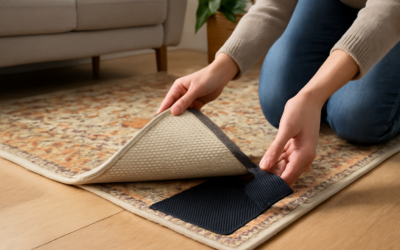
- Corner grippers: Triangular pieces designed specifically to hold down curling corners.
- Carpet-to-carpet tape: Formulated to grip a rug placed over wall-to-wall carpet, a tricky surface for most products.
Choosing the right type depends on your floor surface, how often you want to move the rug, and how aggressive the slipping or curling problem is.
Choosing the Right Tape for Your Floor
Floor compatibility is the most important consideration, because the wrong adhesive can damage your flooring. Strong double-sided tapes hold well but may leave residue or, on some finishes, lift or mar the surface when removed. For hardwood, luxury vinyl, and laminate, look for tape labeled safe for those surfaces or choose a reusable, non-adhesive gripper that relies on tack rather than glue. For tile and stone, most grippers work well, but check that removal will not pull at grout. On carpet, use a product specifically made for carpet-to-carpet use. When in doubt, test a small, hidden area first and read the manufacturer’s compatibility notes.
How to Apply Rug Gripper Tape
Proper application ensures the tape works and comes off cleanly later. A typical process looks like this:
- Clean and dry both the floor and the back of the rug so the tape adheres properly, dust and moisture weaken the bond.
- Cut tape into strips and place them along the rug’s edges and corners, plus a few in the center for large rugs.
- Peel the backing and press the tape firmly onto the back of the rug first.
- Position the rug exactly where you want it, then press it down onto the floor, smoothing from the center outward.
- Apply firm pressure along all taped areas to set the bond.
Focus tape on corners and high-traffic edges, since those are where curling and slipping start. Avoid overusing strong adhesive on delicate floors.
Safety Benefits
The main reason to use gripper tape is fall prevention. A rug that slides on a hard floor or a corner that flips up is a genuine hazard, particularly on stairs, in entryways, and in homes with young children or older adults. Keeping rugs firmly anchored reduces these risks significantly. For runners on stairs and rugs in high-traffic hallways, secure anchoring is especially important. If a rug consistently shifts despite tape, consider pairing it with a full non-slip rug pad for maximum stability.
Protecting Your Floors
While gripper tape improves safety, you want it to protect, not harm, your floors. Always choose a product rated for your specific flooring, and favor reusable, residue-free grippers on premium hardwood and vinyl. When removing adhesive tape, peel slowly and at a low angle, and clean any leftover residue with a method appropriate for your floor finish. Avoid leaving aggressive adhesive tape in place for years on sensitive surfaces, since prolonged contact can make removal harder. Testing in an inconspicuous spot before committing to a whole rug is always wise.
Cost Expectations
Rug gripper tape is one of the most affordable home-safety upgrades. As a general estimate, a roll of double-sided rug tape runs roughly $7 to $20, packs of reusable gripper strips and corner grippers fall around $8 to $25, and carpet-to-carpet tape is similarly priced. A full non-slip rug pad, if you choose that route instead, costs more but covers the entire rug. Confirm current pricing with retailers, since options and quantities vary. Given the safety benefit, the cost is minimal.
Care and Replacement
Gripper tape is low maintenance, but it does not last forever. Over time, adhesive collects dust and loses tack, and reusable grippers eventually wear out. Check periodically that your rug is still holding firmly, especially after cleaning the floor or moving the rug. Replace tape when it stops gripping rather than letting a rug become a hazard again. When you vacuum or wash the rug, inspect the tape and reapply fresh strips as needed. Keeping the bond fresh ensures your rugs stay safely in place year-round.
Gripper Tape vs. a Full Rug Pad
Homeowners often wonder whether tape or a full rug pad is the better choice, and the honest answer is that they solve slightly different problems. Gripper tape targets specific trouble spots, sliding edges and curling corners, with minimal bulk and cost, making it ideal for thin rugs, flat-weave styles, and situations where you mainly need the rug to stay put. It is also the better option when a rug lies over carpet, since dedicated carpet-to-carpet tape addresses that tricky surface.
A full rug pad, by contrast, sits under the entire rug and adds cushioning, protects the floor from abrasion, and extends the rug’s life by absorbing foot traffic, all while providing all-over slip resistance. For large area rugs in living rooms and bedrooms, a quality pad is usually the superior long-term investment. Many people use both: a non-slip pad for cushioning and overall grip, plus a few strips of gripper tape on stubborn corners that still want to flip up. Consider your rug’s thickness, the floor beneath it, your budget, and whether comfort underfoot matters. For a small entry runner, tape alone may be plenty; for a big living-room rug, a pad, optionally supplemented with tape, gives the best result.
Rug gripper tape is a small investment that delivers outsized safety and tidiness benefits. Choose a type matched to your floor, apply it to corners and edges with care, and replace it when it wears out, and you will keep your rugs flat, secure, and free of the slips and trips that loose rugs so often cause.