A rug that slides every time you step on it is more than annoying; it is a genuine trip hazard. A rug gripper pad fixes that, anchoring your rug to the floor so it stays put, lies flat, and stops bunching or curling at the corners. From a small accent rug to a large living-room piece, the right gripper keeps everything safely in place.
This guide explains the different types of grippers, how to choose the right one for your floor and rug, how to size and use them, and how to avoid the residue and floor-damage problems that come with the wrong product. It is a small purchase that solves a surprisingly common headache.
What a Rug Gripper Pad Does
At its core, a gripper pad provides traction between the rug and the floor. The best ones also tackle a secondary problem: corners and edges that flip up and catch toes or vacuum wheels. Some products are full-size pads that sit under the entire rug; others are small corner or edge grippers that anchor just the trouble spots.
Beyond safety, a gripper keeps the rug looking its best by holding it flat and preventing the rippling and creeping that distort the shape over time. On hard floors especially, this is the difference between a rug that stays crisp and one that constantly needs straightening.
Types of Rug Grippers
There are several formats, and the right one depends on your rug size and your main concern:
- Full-size gripper pads: A complete pad covering the whole rug footprint, providing grip plus some cushion and floor protection. Best for larger rugs and high-traffic areas.
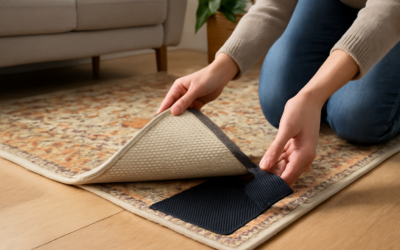
- Corner grippers: Small adhesive or grip pads placed under each corner to stop curling and creeping, ideal for small to medium rugs that mostly need their corners tamed.
- Edge grippers and tape: Strips run along the perimeter to keep edges flat and anchored.
- Reusable washable grippers: Gel-like or fabric pads with a tacky surface that grips both rug and floor and can be rinsed to restore stickiness.
For a large area rug, a full-size pad does the most good. For a small bath mat or accent rug that just flips at the corners, lightweight corner grippers may be all you need.
Choosing the Right Gripper for Your Floor
Floor compatibility is the most important factor and the one people most often get wrong. Hard floors, hardwood, laminate, luxury vinyl, and tile, need grippers explicitly labeled safe for that surface. Cheap PVC or strongly adhesive products can react with floor finishes, leaving a cloudy haze, discoloration, or sticky residue that is difficult to remove.
For hardwood and vinyl, favor natural-rubber or felt-and-rubber pads marked floor safe. On tile and stone, grip is the priority since these smooth surfaces let rugs slide freely. Over wall-to-wall carpet, you need a special carpet-to-carpet gripper or a firm pad designed for that use, because standard rubber grippers do not anchor a rug to carpet well. Always confirm the label matches your specific flooring.
How to Size and Use a Gripper Pad
Sizing follows a simple rule for full-size pads: the pad should be about an inch smaller than the rug on every side so it stays hidden and never peeks out. Most pads can be trimmed with scissors or a utility knife to match your exact rug, since rugs vary slightly from their labeled dimensions.
Using one is quick:
- Clean and dry the floor first so no grit gets trapped between the gripper and the finish.
- Lay the gripper or pad in the rug’s intended position, grip-side down on the floor.
- Set the rug on top and smooth it from the center outward to release any ripples.
- For corner grippers, attach one under each corner per the instructions and press firmly.
Smooth the rug fully so it bonds evenly to the gripper surface, and lift it occasionally to vacuum underneath and let the floor breathe.
Avoiding Residue and Floor Damage
The biggest pitfall with grippers is residue. Adhesive corner grips and low-quality PVC pads can leave marks or even pull up floor finish, particularly on hardwood and vinyl. Protect yourself by buying products specifically rated as floor safe and by checking on them periodically.
If you ever notice residue, discoloration, or the gripper beginning to break down or yellow, remove it promptly and switch to a higher-quality, floor-safe alternative. When in doubt with a delicate or newly finished floor, test the gripper in an inconspicuous spot for a few days before committing to the whole rug. Reusable washable grippers are a good choice here because they grip without aggressive adhesives.
Care and Longevity
A good gripper pad lasts for years, but its grip can fade as dust accumulates on the tacky surface. Many reusable types restore their stick with a simple rinse and air dry. Full-size felt-and-rubber pads benefit from occasional vacuuming and lifting to keep both the pad and the floor clean.
Expect quality grippers to outlast cheap ones by a wide margin. Bargain mesh and PVC products often crumble, yellow, or lose grip within a year or two, while a quality natural-rubber or felt-and-rubber pad keeps performing far longer. Replacing a worn gripper promptly is cheap insurance against both slips and floor damage.
Gripper Pad vs. Full Rug Pad
It is worth understanding the difference between a thin gripper and a full cushioned rug pad, since the terms get used interchangeably. A pure gripper focuses on traction and keeping the rug anchored, often with little or no cushion. A full felt-and-rubber rug pad grips too, but adds meaningful padding, sound absorption, and floor protection.
If your only concern is a rug that slides or curls, a gripper does the job affordably. If you also want underfoot comfort and to extend the rug’s life by cushioning the fibers, a thicker felt-and-rubber pad is the better investment, especially under large rugs in living rooms and bedrooms. Many homeowners use grippers for small rugs and full pads for large ones, matching the product to the rug’s size and the room’s traffic.
The Bottom Line
A rug gripper pad is a small, inexpensive upgrade that solves real problems: slipping, curling corners, creeping rugs, and the trip hazards they create. Choose a full-size pad for large rugs or corner grippers for smaller ones, and above all pick a product rated safe for your specific floor to avoid residue and finish damage. Size it an inch smaller than the rug on each side, lay it on a clean floor, and check on it now and then. Get those basics right and your rug will stay exactly where you put it, looking flat and crisp for years.