A sliding rug is more than an annoyance, it is a genuine trip hazard, and curling corners catch toes and vacuum heads alike. A rug gripper solves both problems by holding a rug in place on the floor and keeping its edges flat. These small accessories, ranging from corner pads to full underlay pads, are an inexpensive fix that makes any rug safer and better looking. This guide breaks down the types of grippers, how to choose one for your floor, how to use them correctly, and how to keep them working.
What a Rug Gripper Does
A rug gripper performs two jobs. First, it stops the rug from sliding across the floor when you walk or vacuum, which prevents falls and keeps the rug centered where you want it. Second, many grippers hold down curling corners and edges, the lips that lift and snag feet. The right gripper turns a hazardous, wandering rug into one that stays put and lies flat, while also adding a bit of cushion and protecting the floor beneath from abrasion.
Types of Rug Grippers
There are several styles, each suited to different needs.
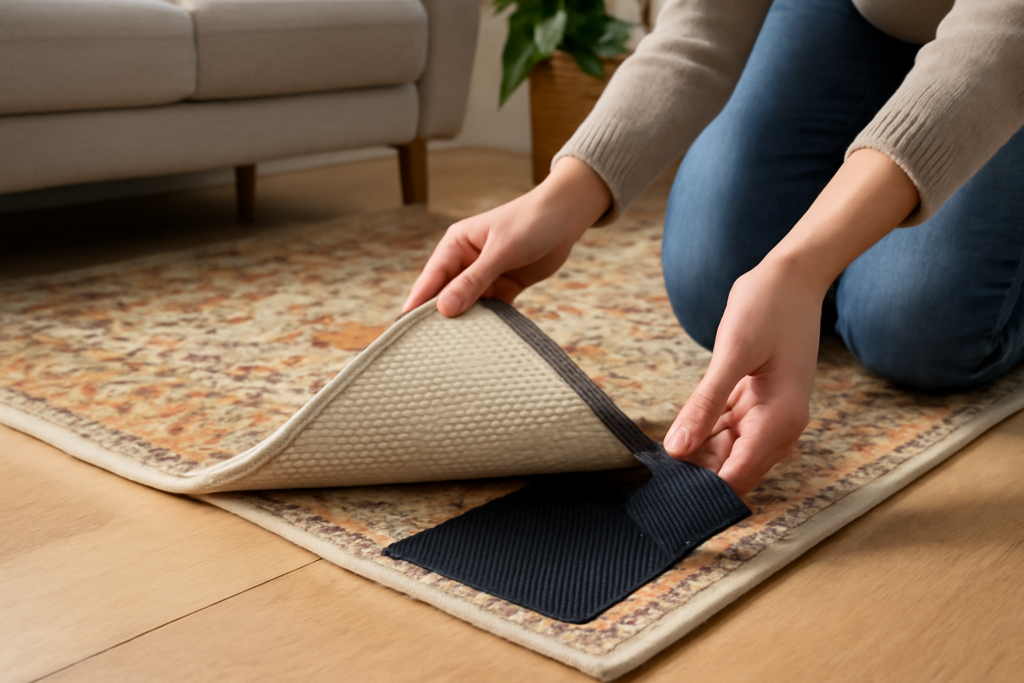
- Corner and edge grippers: Small adhesive or rubberized pads that stick to the corners and edges of a rug to stop curling and minor sliding. Cheap and easy, best for lightweight rugs.
- Full rug pads: A complete underlay cut to fit beneath the entire rug. These provide the most grip, the best cushioning, and protection for the floor underneath.
- Rubber and PVC mesh pads: Open-weave non-slip pads that grip well and let air circulate. Common and affordable.
- Felt-and-rubber pads: A felt top for cushion bonded to a rubber bottom for grip, the premium choice for larger rugs.
For a small accent rug, corner grippers may be enough. For a large area rug, a full pad is worth the cost.
Matching the Gripper to Your Floor
The floor underneath matters, because the wrong gripper can damage it. On hard floors like hardwood, laminate, vinyl, and tile, choose a pad specifically labeled safe for hard surfaces and non-staining. Some cheap rubber and PVC pads can discolor or leave residue on finished floors over time, especially with heat and sunlight, so look for a felt-and-rubber or natural rubber pad rated for hard floors. On carpet, you need a different style designed to grip a carpeted surface, since a smooth rubber pad just slides. Always confirm the product is rated for your specific floor type.
How to Use Rug Grippers
Proper setup ensures the gripper actually works.
- Clean the floor thoroughly. Dust and grit reduce grip and can scratch the floor under the pad.
- Cut a full pad to size, leaving it about an inch smaller than the rug on all sides so it stays hidden.
- Lay the pad grip-side down on the floor, then center the rug on top.
- For corner grippers, peel and stick or position them under each corner and any spot that lifts, pressing firmly.
- Smooth the rug from the center outward to remove ripples and seat it on the pad.
Typical Costs
Rug grippers are an inexpensive upgrade. A set of corner or edge grippers usually runs about 8 to 20 dollars. Full rug pads are priced by size, with small pads starting around 15 to 25 dollars and large room-size felt-and-rubber pads reaching 40 to 100 dollars or more. Given the safety benefit and the protection they offer both the rug and the floor, a quality pad is money well spent, especially for a rug in a high-traffic area or a home with kids and older adults.
Grippers for Specific Problems
Different annoyances call for different solutions. If your rug slides as a whole, a full non-slip pad underneath is the most effective fix because it grips the entire footprint. If the body stays put but the corners and edges curl up and trip you, dedicated corner grippers or edge tapes are the targeted answer, since they hold just the lifting spots flat. For rugs over carpet that creep and wrinkle, use a gripper made specifically for carpet-on-carpet, often a textured or hook-style pad, because smooth rubber simply slides on carpet. Matching the gripper to the exact problem saves money and works better than buying the most expensive option by default.
Safety Benefits Worth the Cost
Beyond keeping a rug tidy, grippers are a genuine safety upgrade, especially in homes with children, older adults, or anyone with mobility concerns. A sliding rug on a hard floor is a leading cause of slips and falls, and a curling corner is an easy thing to catch a toe or a cane on. A few dollars of grippers, or a quality full pad, removes that hazard at the entry, in hallways, and in the kitchen and bath where wet floors raise the risk further. For high-traffic and high-risk spots, treat a gripper as essential rather than optional.
Choosing the Right Pad Thickness
Full rug pads come in different thicknesses, and the right one balances grip, comfort, and door clearance. A thin pad, around an eighth of an inch, grips well and adds little height, making it the practical pick under a rug near a door that swings over it or in a kitchen where you want the rug to lie nearly flush. A medium pad of roughly a quarter inch adds noticeable cushion underfoot and is the sweet spot for a living room or bedroom rug. Thicker felt-and-rubber pads of three-eighths to a half inch deliver a plush, hotel-like feel and help quiet a room, but they can make a low-pile rug sit high enough to catch a door or a vacuum.
Match the thickness to the rug as well as the room. A thick, heavy wool rug needs less cushion than a thin flat-weave, which benefits from a denser pad to keep it from feeling like a sheet of paper on the floor. If foot traffic or rolling chairs cross the rug, a firmer, denser pad holds up better than a soft, spongy one that compresses and shifts over time.
Common Rug Gripper Mistakes
A few errors keep grippers from doing their job. The most common is buying a cheap solid rubber or PVC pad and laying it on a finished hardwood or vinyl floor, where heat and time can cause the backing to react with the finish and leave a sticky residue or discoloration. Always confirm the pad is labeled non-staining and safe for your specific surface. Another mistake is cutting a full pad to the exact size of the rug, so the edges peek out; trim it about an inch smaller on every side so it stays hidden and the rug edges still rest on the pad.
People also tend to ignore grit. Laying a pad over a dusty floor traps abrasive particles that can scratch hardwood as the pad flexes underfoot, so clean and dry the floor first. Finally, do not expect adhesive corner grippers to last forever, since their tack fades; if a corner starts lifting again, replace the gripper rather than pressing the same worn pad back down. Matching the gripper to the floor and refreshing it when it wears keeps both the rug and the floor in good shape.
Care and Replacement
Grippers wear out, so check them periodically. Lift the rug now and then to confirm the pad has not bunched, slid, or started to crumble. Rubber and PVC pads can dry out and lose grip over a few years, and adhesive corner grippers lose their tack and need replacing. If you ever see discoloration or residue on the floor beneath, remove that pad and switch to a product rated safe for your surface. Vacuum or shake out reusable pads occasionally to clear trapped grit. With the right gripper, well maintained, your rugs stay flat, safe, and exactly where you put them.