The most striking shift in the 2024 kitchen cabinet colors conversation is the move away from the stark, all-white kitchen that dominated for more than a decade. Surveys of designers and remodelers consistently show that more than half of new kitchen projects now incorporate color or warmer neutrals rather than pure bright white. If you are planning a kitchen refresh, understanding these directions helps you choose a palette that feels current without locking you into a look that dates quickly.
At D and G Flooring we see how cabinet color sets the tone for an entire room and influences flooring, countertop, and lighting choices. This evergreen guide walks through the leading shades, how to combine them, and how to make a decision you will still love years from now.
Warm Whites and Creamy Neutrals
White cabinets are not gone; they have simply warmed up. Instead of cool, blue-tinged bright whites, homeowners are gravitating toward soft warm whites, creams, and greige (a blend of gray and beige). These tones feel cozier, hide everyday smudges a little better, and pair beautifully with natural wood and brass hardware. A warm white kitchen still reads clean and bright, but it avoids the slightly clinical feeling that pure white can create under certain lighting.
Greige in particular has staying power because it works as a chameleon. It leans warmer or cooler depending on the surrounding finishes, so it adapts to changing decor over time. For homeowners nervous about commitment, a warm neutral is the lowest-risk way to feel current.
Deep Greens, the Standout Choice
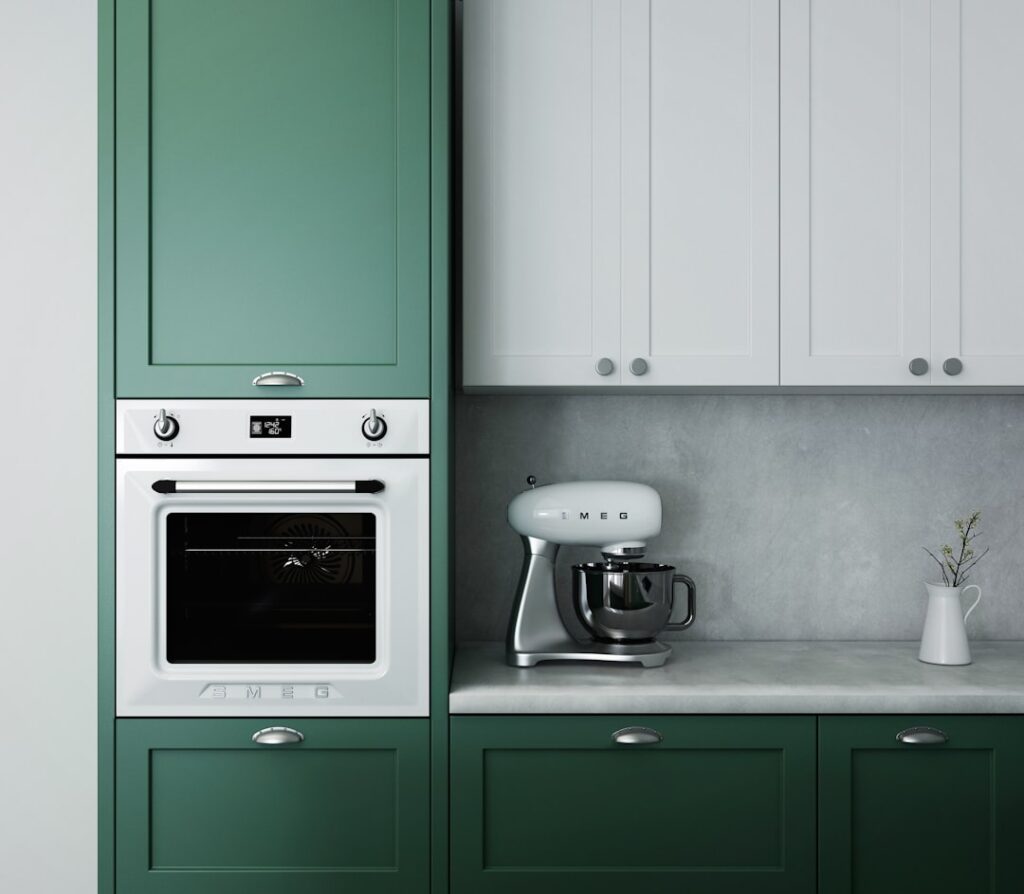
If one color defines this era of kitchens, it is green. Sage, olive, forest, and deep hunter greens have surged in popularity. Green works because it connects to the natural world and pairs effortlessly with wood tones, white countertops, black hardware, and brass accents alike. A muted sage green on lower cabinets feels calm and organic, while a rich forest green on a full set of cabinets makes a confident, sophisticated statement.
Green also photographs well and tends to feel timeless rather than trendy, since it draws on the long tradition of nature-inspired interiors. For a homeowner who wants color but worries about regret, a soft sage is one of the safest ways to step beyond neutral.
Moody Blues
Blue remains a favorite, but the popular shades have deepened. Navy and dark slate blues bring drama and a sense of depth, especially on a kitchen island or lower cabinets. Lighter dusty blues and soft blue-grays offer a gentler, more coastal feeling. Blue pairs naturally with white marble-look countertops, warm wood floors, and both polished nickel and brass fixtures, making it one of the most flexible color families.
Earthy and Warm Tones
Beyond green and blue, warm earthy colors are having a moment. Think terracotta, clay, mushroom, taupe, and warm browns. These shades respond to a broader design movement toward natural, grounded, comfortable spaces. Warm wood-stained cabinetry is also returning, especially white oak and walnut tones that show off the grain rather than hiding it under paint. After years of painted cabinets, natural wood feels fresh again.
Black and Charcoal for Contrast
Black and deep charcoal cabinets continue to appeal to homeowners who want drama and a modern edge. Few people choose all-black kitchens, but black lower cabinets, a black island, or black accents against lighter uppers create striking contrast. Matte black finishes feel especially contemporary. The key with very dark cabinets is lighting: a black kitchen needs generous natural light or well-planned task lighting so it feels intentional rather than heavy.
The Two-Tone Kitchen
One of the strongest directions is not a single color at all but a combination. Two-tone kitchens pair one color on the upper cabinets with a different, usually darker, shade on the lowers or the island. Common pairings include:
- Warm white uppers with sage or forest green lowers
- Cream cabinets with a navy island
- Light wood uppers with charcoal lowers
- Greige perimeter cabinets with a contrasting wood-tone island
Two-tone designs add depth and personality while letting you bring in color without committing the entire room to a bold shade. The island becomes a natural focal point, and the lighter uppers keep the space feeling open.
Finishes and Hardware That Complete the Look
Color is only part of the story. The finish and hardware dramatically change how a color reads:
- Matte and satin finishes are popular for their soft, modern feel and their ability to hide fingerprints better than high gloss.
- Brass and gold hardware warm up cool colors and have become a signature pairing with green and navy.
- Matte black hardware grounds lighter cabinets and reinforces a clean, contemporary look.
- Unlacquered or aged brass develops a patina over time and suits warm, earthy palettes.
How to Choose a Color You Will Not Regret
Trends are useful inspiration, but your kitchen needs to work for years. Keep these practical principles in mind:
- Test large samples in your own light. Paint big sample boards and move them around the kitchen at different times of day. Lighting changes a color completely.
- Consider resale. If you may sell within a few years, lean toward warm neutrals and broadly liked colors like sage, reserving bolder shades for an island that can be repainted.
- Balance with permanent elements. Flooring, countertops, and backsplash are harder to change than cabinet paint. Choose cabinet color to complement those longer-term finishes.
- Think about the whole house. The kitchen should flow with adjoining rooms rather than clash with them.
- Use the 60-30-10 rule. Let one color dominate about 60 percent of the space, a secondary color about 30 percent, and an accent roughly 10 percent for a balanced result.
Pairing Cabinets With Flooring
Because cabinets and floors share so much visual weight, their relationship matters. Warm white and greige cabinets are forgiving and pair with nearly any wood tone. Green and navy cabinets look especially good over warm or medium wood floors that echo the natural theme. Very dark cabinets benefit from lighter flooring to keep the room from feeling closed in, while light cabinets can carry a darker, dramatic floor. Aim for either a gentle contrast or a clearly intentional pairing rather than two finishes that are close but not quite matching.
The Bottom Line
The defining theme of this period is warmth and personality: softer whites, nature-inspired greens, deep blues, earthy tones, and confident two-tone combinations are replacing the cool all-white kitchen. The smartest approach is to draw on these directions for inspiration while grounding your final choice in your own lighting, your permanent finishes, and how long you plan to stay. Choose a color that feels current but also genuinely suits your home, and it will serve you well long after any single year’s trends have moved on.