The right kitchen cabinet lighting ideas can turn a flat, shadowy kitchen into a warm, functional, magazine-worthy space, often for a few hundred dollars and a weekend of work. Cabinet lighting does double duty: it illuminates your countertop work zones so you can chop and read recipes without shadows, and it adds layers of ambient glow that make the whole room feel finished. This guide walks through every type of cabinet lighting, the technology behind it, wiring and control options, realistic costs, and design tricks that elevate the result from builder-grade to custom.
Because LED technology has become inexpensive, energy-efficient, and easy to install, cabinet lighting is now one of the highest-impact upgrades a homeowner can make. Even renters can add plug-in or battery versions. Let’s explore the options.
- Under-Cabinet Lighting: The Essential Layer
- In-Cabinet and Glass-Front Lighting
- Above-Cabinet Accent Lighting
- Toe-Kick and Floor-Level Lighting
- Power and Control Options
- Choosing Color Temperature and Brightness
- Cost and DIY vs Professional
- Common Mistakes to Avoid
- Layering Light for a Professional Look
- Smart and Motion-Activated Options
Under-Cabinet Lighting: The Essential Layer
Under-cabinet lighting is the single most useful cabinet lighting upgrade because it directly illuminates the countertop, eliminating the shadow your body casts when overhead lights are behind you. The main options are:
- LED strip (tape) lights: Flexible ribbons of LEDs you stick to the underside of upper cabinets. Inexpensive, dimmable, and available in warm to cool color temperatures. The most popular DIY choice.
- Linear LED bars (light bars): Rigid fixtures that link together, offering brighter, more even light than strips and a cleaner look. Slightly pricier.
- Puck lights: Round fixtures that cast pools of light. Good for accent but create scalloped bright-and-dim patterns on the counter.
Mount the fixture toward the front edge of the cabinet bottom and hide it behind a light rail or the face frame so you see the glow on the counter but not the diode itself. Aim for warm white (2700K to 3000K) for a cozy feel or neutral (3500K to 4000K) for crisp task lighting.
In-Cabinet and Glass-Front Lighting
Interior cabinet lighting turns glass-front cabinets into display features, casting a soft glow over dishware, glassware, or collectibles. Motion-activated puck lights or strips inside pantries and deep cabinets also solve the frustration of digging through dark shelves. For glass-front uppers, run a vertical strip along the inside edge or place puck lights at the top corners so the light washes down over the contents. On a dimmer, these become a beautiful nighttime accent when the main lights are off.
Above-Cabinet Accent Lighting
If your upper cabinets stop short of the ceiling, the gap above them is a perfect spot for indirect accent lighting. A hidden LED strip laid on top of the cabinets throws light up onto the ceiling, creating a soft halo that makes the room feel taller and more luxurious. This purely decorative layer adds warmth for evening entertaining and costs very little since the strips are hidden and don’t need a polished finish.
Toe-Kick and Floor-Level Lighting
Recessed lighting in the toe-kick, the recessed base beneath your lower cabinets, produces a floating effect and doubles as a gentle nightlight for midnight kitchen trips. LED strips or thin bars tucked into the toe-kick recess wash light across the floor. This modern touch reads as high-end and is especially striking in contemporary kitchens with dark floors. Pair it with a motion sensor so it glows automatically when you enter.
Power and Control Options
How you power and control the lights determines how polished the result looks:
- Hardwired: The cleanest look, with no visible cords, powered through a driver connected to a switch or dimmer. Best done during a remodel or by an electrician. Allows integration with wall switches and smart controls.
- Plug-in: Fixtures with a cord that plugs into an outlet, ideal for renters or quick upgrades. Hide the cord behind the backsplash or run it into an outlet inside a cabinet.
- Battery or rechargeable: No wiring at all, great for closets and display cabinets, though batteries need periodic recharging.
For control, add a dimmer to set the mood, and consider smart options that let you adjust brightness and color temperature from a phone or voice assistant, or trigger motion sensors for hands-free operation.
Choosing Color Temperature and Brightness
Color temperature dramatically changes the feel of a kitchen. Warm white (2700K to 3000K) flatters wood tones and cream cabinets and feels inviting. Neutral white (3500K to 4000K) suits white and gray modern kitchens and gives the crispest task light. Match the cabinet lighting to your other kitchen fixtures so the whole room reads consistently. For brightness, look for strips rated around 300 to 500 lumens per foot for task areas; accent lighting can be dimmer.
Cost and DIY vs Professional
Cabinet lighting is refreshingly affordable. A quality plug-in LED strip kit for under-cabinet use runs $30 to $80. Higher-end linear bar systems for a full kitchen cost $150 to $400. Hardwiring by an electrician adds $200 to $600 in labor depending on how many runs and whether walls are open. A complete professionally installed, hardwired, dimmable system for a standard kitchen typically lands between $500 and $1,500.
DIY is very achievable for plug-in strips and bars; the main skills are measuring, cutting the strips at marked points, sticking them straight, and hiding the driver and wires. Hardwiring into a switch is where most homeowners bring in an electrician.
Common Mistakes to Avoid
- Placing lights too far back: Mount toward the front edge or the counter’s back edge stays lit while the front is dim.
- Mismatched color temperatures: Mixing warm and cool lights in one kitchen looks chaotic.
- Visible diodes or cords: Use a light rail or trim to hide the source; nothing cheapens the look faster than exposed strips.
- Skipping the dimmer: Full brightness is great for cooking but harsh for evenings; dimming adds versatility.
- Underestimating lumens: Too-dim strips disappoint; buy adequate brightness for task zones.
Layering Light for a Professional Look
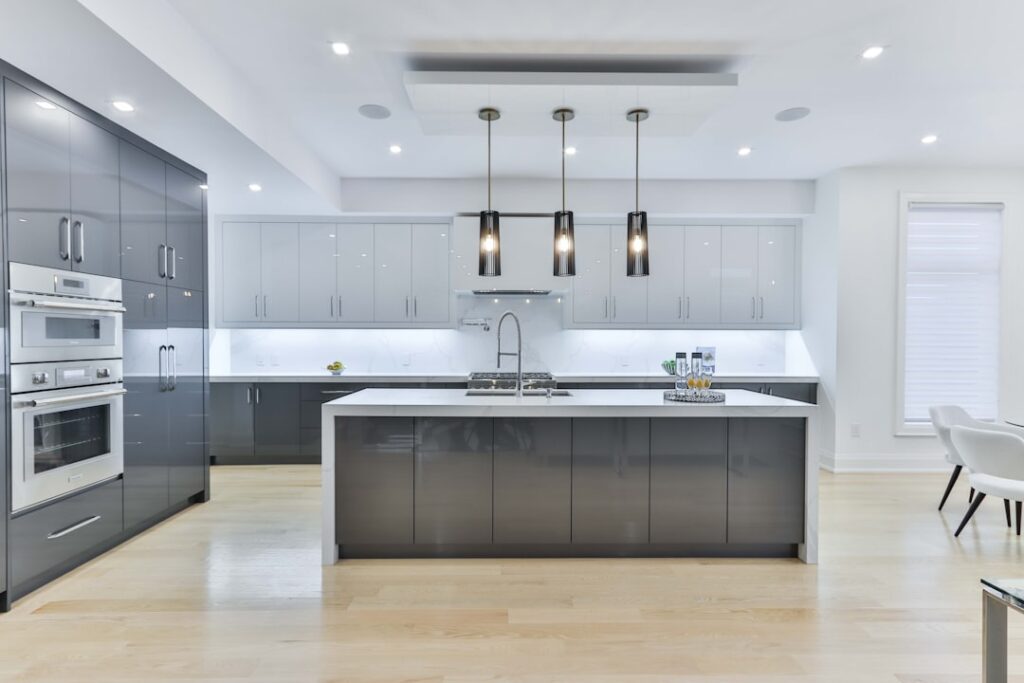
The secret behind every beautifully lit kitchen is layering, and cabinet lighting is one layer among several. A well-designed kitchen combines ambient lighting (ceiling fixtures or recessed cans for overall illumination), task lighting (under-cabinet and pendant lights that put light where you work), and accent lighting (above-cabinet, in-cabinet, and toe-kick glow that adds depth and drama). Cabinet lighting contributes to all three layers, which is why it has such an outsized effect. When you plan these layers to work together, controlled by separate switches or dimmers, you can shift the room from bright and functional for cooking to soft and atmospheric for a dinner party with the turn of a dial. Thinking in layers rather than adding a single strip is what separates a builder-grade kitchen from a designer one.
Smart and Motion-Activated Options
Modern controls make cabinet lighting more convenient and efficient. Motion sensors inside pantries and deep cabinets turn lights on automatically when you open the door and off when you close it, so you never fumble in the dark or waste power. Smart LED systems let you adjust brightness and even color temperature from a phone app or voice assistant, shifting from crisp daylight while cooking to warm amber in the evening. Some systems tie into whole-home automation so the under-cabinet lights come on gently as a nightlight when motion is detected after midnight. These features add modest cost but real everyday convenience, and because they run on efficient LEDs, they add almost nothing to your electric bill while making the kitchen feel genuinely high-tech.
With thoughtful kitchen cabinet lighting ideas, you get a space that works harder and feels warmer without a full remodel. Start with under-cabinet task lighting for the biggest functional gain, then layer in above-cabinet, in-cabinet, and toe-kick accents to build depth. Choose consistent, dimmable warm-toned LEDs, hide the sources cleanly, and your kitchen will look and feel dramatically upgraded.