For fifty years, 3 tab roof shingles were the default American roof — flat, cheap, and everywhere. Today they’re a shrinking niche: several manufacturers have discontinued lines, big-box stores stock one or two colors instead of a wall of them, and most roofing crews quote architectural shingles by reflex. That doesn’t make 3-tab obsolete. It makes it a specialty product with a few specific jobs it still does better than anything else, and a lot of jobs it should no longer be sold for. Here’s the honest math.
Part of our Roofing guide — explore the full guide →
What Makes a Shingle “3-Tab”
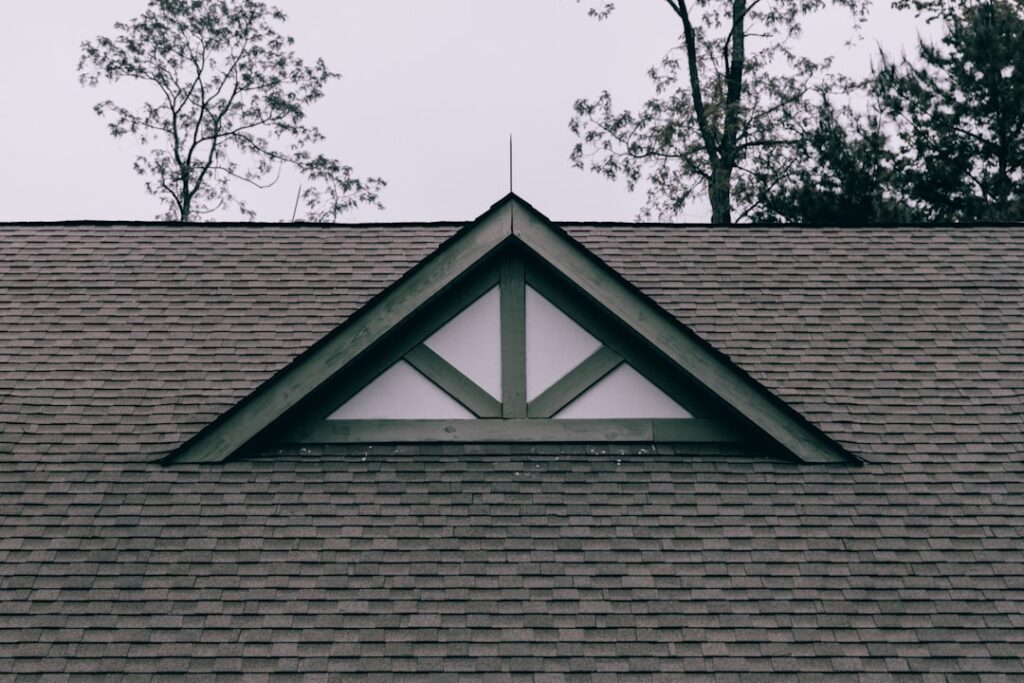
A 3-tab shingle is a single layer of fiberglass mat coated in asphalt and granules, 12 by 36 inches (metric versions run 13-1/4 by 39-3/8), with two slots cut into the exposed edge dividing it into three equal tabs. Installed, those tabs create the familiar uniform grid of 5-inch by 12-inch rectangles. Because it’s one layer, a 3-tab weighs 190 to 240 lbs per square (100 sq ft), roughly two-thirds the weight of an architectural shingle, and lies dead flat. That flatness is the defining visual: no shadow lines, no dimensionality, just a clean repeating pattern that reads “economy” to modern appraisers but “tidy and traditional” on the right house.
Current Costs
- Material: $85 to $120 per square. CertainTeed XT25, GAF Royal Sovereign, Owens Corning Supreme, and TAMKO Elite Glass-Seal are the surviving major lines. Per bundle (3 bundles/square), figure $30 to $42.
- Installed: $3.50 to $5.50 per sq ft total project cost, so a modest 1,700 sq ft roof runs roughly $6,000 to $9,300 including tear-off, underlayment, and flashings.
- Savings vs architectural: material is $15 to $40 per square cheaper, but labor is identical or slightly higher because 3-tab demands straight coursing — every slot must align vertically, and a wandering line shows from the street. Net installed savings is usually only 5 to 10 percent of project cost, often under $1,000 on a typical house.
That last point is the one homeowners miss. The price gap that made 3-tab compelling in 1995 has collapsed; manufacturers shifted volume and promotional pricing to laminated products, and 3-tab now sells in low volume at weak discounts.
Lifespan: What 20-25 Years Really Means
Warranties on 3-tab shingles run 20 to 30 years, but warranty and service life aren’t the same number. In moderate climates with good attic ventilation, a quality 3-tab delivers 18 to 25 years. In the South and high-UV mountain states, 15 to 20 is more realistic — the thin single layer carries less asphalt, so it dries out, curls at the tab corners, and sheds granules sooner than a laminate. The failure pattern is predictable: sealant strips let go first at tab corners, corners lift and flutter, then tabs crease and snap off in wind events. Once you see widespread tab curl and bare spots at the slots, the roof has 2 to 4 years left regardless of age on paper.
Wind Ratings and the Weather Problem
Standard 3-tab shingles carry a 60 to 70 mph wind rating (ASTM D3161 Class A/D), versus 110 to 130 mph for most architectural lines installed with upgraded nailing. The physics are simple: each tab is an individual flap with three-quarters of its area unsupported, and single-layer construction gives nails less material to grip. Insurance data backs it up — after straight-line wind events, 3-tab roofs show tab loss at wind speeds architectural roofs shrug off. Some carriers now surcharge or refuse new policies on 3-tab in coastal and hail-prone counties, and Fortified-designation programs effectively exclude it. If you live where 60 mph gusts happen every year, this alone rules 3-tab out for a primary residence.
Why 3-Tab Is Fading from the Market
Three forces are squeezing it. Manufacturers make better margin on laminates and have retired 3-tab plants and colors — GAF dropped Royal Sovereign to limited distribution in several regions, and color choices industry-wide have thinned to whites, grays, and browns. Insurers penalize it, as above. And resale expectations moved: appraisers and buyers now read a flat-tab roof as a near-term expense, so a new 3-tab roof adds less value than it costs on any house above entry-level pricing. Expect availability to keep narrowing; some analysts project 3-tab as special-order-only in most markets within a decade, which matters for future repair matching.
Where 3-Tab Still Makes Sense
- Sheds, detached garages, and outbuildings. A 200 sq ft shed roof needs $70 to $90 of shingles, wind exposure is low to the ground, and nobody appraises a shed. This is the sweet spot.
- Rental and flip properties at the low end of the market, where the roof needs to be watertight and financeable, and the hold period is short. Just check the insurer will bind coverage first.
- Matching repairs. If a 12-year-old 3-tab roof loses a slope’s worth of tabs, patching with matching 3-tab (color-matched as close as current stock allows) beats replacing a roof with half its life left. Keep a bundle from any 3-tab job for this reason.
- Historic districts and mid-century restorations, where review boards occasionally require the flat, uniform coursing that laminates can’t reproduce.
- Starter courses and hip/ridge caps. Cut 3-tab still gets used as an economical cap on budget jobs, though dedicated cap shingles perform better.
Installation Notes That Extend Its Life
If you do install 3-tab, small choices buy years. Use 6 nails per shingle instead of 4, placed on the nail line — not high-nailed — which bumps most products to their enhanced wind rating. Hand-seal tabs with asphalt cement in cold-season installs, because factory sealant won’t activate below roughly 45°F and unsealed tabs are the first ones gone in a spring storm. Ventilate the attic to keep deck temperatures down; heat is the primary ager of a thin shingle. And keep coursing honest with chalk lines every few courses — a 3-tab roof is a grid, and the grid forgives nothing.
Repairing an Existing 3-Tab Roof
Because millions of 3-tab roofs are still in service, repair technique deserves its own space — and 3-tab is genuinely the easiest shingle to repair, one of its last virtues. To swap a damaged shingle: break the sealant bond under the tabs above with a flat bar on a cool morning (heat makes the sealant gummy and tears the shingles), pop the eight nails holding the damaged shingle and the course above’s lower nail line, slide the new shingle in, nail on the line, and hand-seal with quarter-size dabs of asphalt cement under each tab. Total time, ten minutes a shingle; total cost, under $5. Color matching is the hard part on an aged roof — new shingles read darker and flatter than weathered ones, so pull replacements from a less visible slope if appearance matters on the front, or buy a bundle and let it weather on the garage roof for a season before using it on the street side. Creased tabs from windstorms can be cemented flat if the mat isn’t fractured; once you can see fiberglass strands at the crease, replace the shingle, because a cemented crack opens again in the next blow. And keep perspective on repair volume: patching five shingles a year on a 19-year-old roof is normal end-of-life triage, but the second time you’re up there in one season, apply the repeated-repairs math from above — the ladder time is telling you something the calendar already knows.
Bottom Line
On a primary home you plan to keep, the 5 to 10 percent premium for architectural shingles buys double the wind rating, 8 to 12 more years of service, and better resale — take it. Reserve 3 tab roof shingles for the shed, the rental, the repair match, and the restoration job. In those lanes it remains exactly what it always was: the cheapest legitimate roof you can nail down in a day. If you do buy it, buy it smart: confirm your insurer will cover it at replacement cost, stick to the surviving name-brand lines rather than off-brand closeout bundles (formulation quality varies more at the bottom of the market than anywhere else in roofing), and store two spare bundles flat in the garage — future-you, hunting a color match in a market that’s abandoning the product, will consider them the best $70 the project spent.