An 8×10 jute area rug is one of the most popular natural-fiber choices for a reason: it brings warm, organic texture to a room at a price that’s hard to beat, and it plays well with nearly every decor style from coastal to farmhouse to modern minimal. But jute is also widely misunderstood. People buy it expecting a soft, durable, spill-proof rug and end up frustrated when it sheds on the first vacuum or stains from a knocked-over glass of wine.
The truth is that jute is a wonderful rug fiber in the right room and a poor choice in the wrong one. Knowing exactly what jute is, where an 8×10 belongs, and how it compares to its natural-fiber cousins will save you from an expensive mistake. This guide covers the pros, the very real cons, placement, cleaning, and cost so you can buy with clear eyes.
What Jute Actually Is
Jute is a plant fiber harvested from the stalks of the jute plant, grown mostly in India and Bangladesh. It’s the same fiber used to make burlap and twine, spun into soft, ropey strands and woven or braided into rugs. Because it comes straight from a fast-growing, renewable crop and requires relatively little processing, it’s one of the more eco-friendly rug materials on the market.
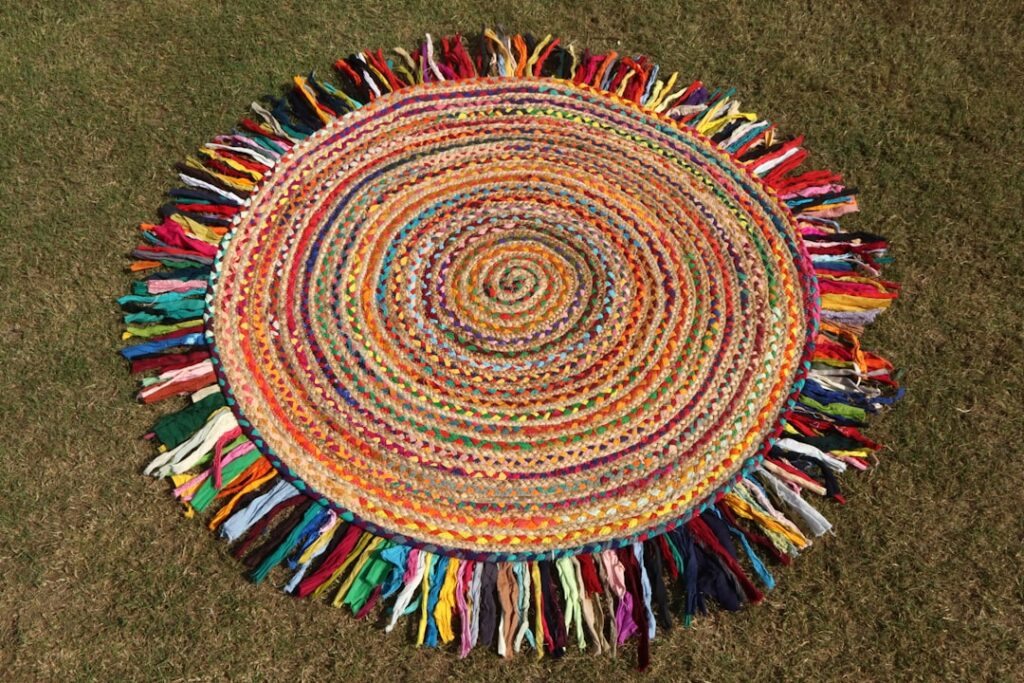
The look is jute’s calling card: a warm, natural tan color with visible chunky texture and a subtle sheen. It reads casual and earthy, adding depth to a room without competing with your furniture or art. An 8×10 jute area rug lays down a neutral, textural foundation that makes almost anything placed on top of it look intentional. That understated, tactile quality is why designers reach for it so often as a base layer.
The Pros of an 8×10 Jute Rug
Start with sustainability. Jute is biodegradable, renewable, and lightly processed, so it’s a genuinely green flooring choice in a category full of synthetics. If eco-friendliness matters to you, few rugs check the box as honestly. It’s also affordable — jute is one of the least expensive natural-fiber rugs, so an 8×10 costs far less than a comparable wool rug of the same size.
Then there’s the texture and warmth. Jute’s woven, ropey surface adds instant character and a sense of coziness that flat synthetic rugs can’t match. It’s a fantastic layering piece, working beautifully as the large neutral base under a smaller patterned or plush rug. And because the color is a natural, forgiving tan, it hides a surprising amount of everyday dust and dry crumbs between cleanings. For a low-key, budget-conscious, style-forward foundation, an 8×10 jute rug is tough to beat.
The Cons You Have to Accept
Now the honest part. Jute is rough underfoot — this is not a plush, sink-your-toes rug. Its coarse texture feels scratchy to bare feet and isn’t the fiber you want beside a bed you’ll step onto barefoot every morning. If softness is a priority, jute will disappoint you.
Jute also sheds, especially when new, leaving little fibers you’ll vacuum up for the first few weeks. More important, it stains easily and is genuinely hard to clean. The natural fibers absorb liquid fast, and here’s the critical rule: jute is not water-friendly. Water can cause it to brown, discolor, or even rot over time, so you can never wet-clean or steam it. That makes an 8×10 jute area rug a bad fit for kitchens, dining rooms with frequent spills, bathrooms, entryways exposed to rain, or any high-moisture area. Treat it as a dry-room-only rug and you’ll avoid the most common regrets.
Where an 8×10 Jute Rug Fits Best
Size-wise, an 8×10 is a large rug well suited to defining a full seating area or grounding a bed. In a living room, place it so the front legs of the sofa and chairs rest on the rug, unifying the arrangement over a generous, textural base. It’s a workhorse size for that job. Under a queen or even king bed, an 8×10 gives good coverage — though remember jute’s roughness underfoot, so it’s better as a layering base with a softer rug on top if you’ll be barefoot.
The guiding principle is low-moisture, moderate-traffic, dry rooms. Living rooms, bedrooms, home offices, and formal spaces are ideal. Keep it away from anything that spills, splashes, or stays damp. Put an 8×10 jute rug where it can stay clean and dry, and it’ll reward you with years of good looks; put it in a spill zone and you’ll be shopping for a replacement within a season.
Jute vs. Sisal vs. Seagrass
These three natural fibers get lumped together, but they behave differently. Jute is the softest and warmest-looking of the three but also the weakest and most stain-prone — it’s the decorative, layering choice for lower-traffic rooms. Sisal is much tougher and more durable, standing up to higher traffic like hallways and stairs, but it’s coarser and stains even more readily than jute because it’s so absorbent. Sisal is the durability pick when you don’t have a soft-touch requirement.
Seagrass splits the difference on cleaning: its fibers have a natural waxy coating that makes them slightly more stain-resistant and able to tolerate a bit more moisture than jute or sisal, though it’s harder and smoother underfoot and takes dye poorly, so it comes in limited natural greens and tans. If you want the softest look and lowest price for a dry room, choose jute. If you need durability, choose sisal. If you want a touch more spill tolerance, seagrass edges ahead.
Backing, Rug Pads, and Cleaning
Most jute rugs have either a natural woven back or a cotton-latex backing, and either way you want a quality rug pad underneath. A pad keeps the rug from sliding, cushions its coarse feel a bit, extends its life by absorbing foot-traffic wear, and — importantly for jute — lets air circulate underneath so trapped moisture can dry rather than rotting the fibers. Skipping the pad is a false economy on a natural-fiber rug.
Cleaning jute is all about staying dry. Vacuum regularly with the beater bar or brush roll turned off, since the rotating brush tears out fibers and worsens shedding — use suction only, and vacuum both sides occasionally to shake out grit. For spills, act fast and blot, never rub, using a dry or barely damp cloth; then let the spot air-dry completely, and consider a fan to speed it. Never saturate jute, never steam-clean it, and never send it out for wet washing. For a deeper clean, a dry-cleaning powder made for natural fibers is the safe route.
Cost and the Bottom Line
Price is a big part of jute’s appeal. An 8×10 jute area rug typically runs from around $150 on the budget end to roughly $400 for a nicer, denser weave — well below what you’d pay for wool at the same size. That affordability, combined with the eco-friendly credentials and the warm natural texture, makes it a smart buy for the right room.
Just go in knowing exactly what you’re getting: a beautiful, sustainable, budget-friendly textural base that is rough underfoot, sheds at first, stains easily, and cannot handle water. Keep your 8×10 jute rug in a dry, lower-traffic living room, bedroom, or office, pair it with a good rug pad, vacuum it gently, and blot spills fast — and it’ll deliver years of easygoing, natural style at a price that’s hard to argue with.
One last tip on longevity: rotate the rug 180 degrees every few months so foot traffic and any sun exposure wear it evenly rather than fading and flattening one end. Natural fibers are sensitive to prolonged direct sunlight, so if the rug sits in a bright room, moderating the light with sheers or occasional rotation keeps that warm tan color from bleaching unevenly. And if a jute rug ever does get genuinely wet — a pipe leak, a big spill — get it up off the floor and dry it as fast as you can, ideally flat with airflow on both sides, because trapped moisture is the one thing that turns a good jute rug into a musty, browning loss. Handled with those few habits, an 8×10 jute area rug is a low-fuss, high-character investment that punches well above its modest price.
Prefer to explore on your own?
See how new flooring looks in your actual room in seconds — free, no signup.
Try the free Floor Studio →