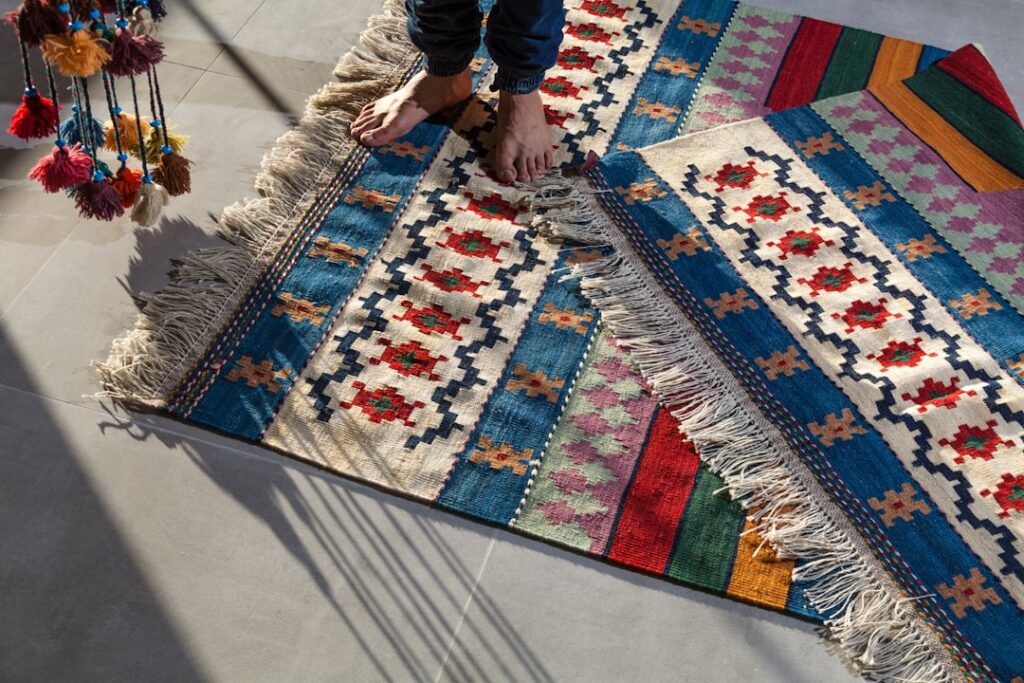
The single most common rug-buying mistake is choosing a size that leaves furniture stranded on bare floor, and an 8×6 area rug is one of the sizes that quietly solves that problem in a lot of American homes. At 8 feet by 6 feet, it is large enough to define a seating group or ground a bed, yet compact enough to fit apartments, bedrooms, and small living rooms where a 9×12 would swallow the space. This guide breaks down exactly where an 8×6 belongs, the placement rules that make it look designed, and what to check before you buy.
Understanding the 8×6 Area Rug Size
First, the naming: an 8×6 and a 6×8 are the same rug, just listed with the long or short side first. It measures 8 feet on the long side and 6 feet on the short side, covering 48 square feet. That puts it squarely between the small 5×7 and the medium 8×10 in the standard size ladder. In inches, that is 96 by 72, a footprint you can tape out on the floor before you buy so you can see exactly how much bare floor will remain around it.
Because it is a moderate rectangle, an 8×6 area rug reads as a defined zone rather than wall-to-wall coverage. That is exactly what you want in a room where you like seeing some of the flooring, whether that is hardwood, tile, or a larger neutral rug underneath.
Where an 8×6 Area Rug Fits Best
This size shines in mid-sized rooms and specific furniture arrangements. The strongest uses are:
- Small living rooms: Perfect for a room roughly 10 by 12 feet, where the rug anchors a sofa and one or two chairs with the front legs on the rug.
- Bedrooms under a queen bed: Slide the rug under the lower two-thirds of a queen, leaving a border of rug on both sides and the foot for a soft landing.
- Apartments and condos: A right-sized statement rug that fills the floor without overwhelming a compact open-plan space.
- Home offices and dens: Grounds a desk-and-chair or a reading-chair arrangement with room to spare.
In a dining room it is usually too small, because a dining rug needs to extend 24 inches past the table on all sides so chairs stay on the surface. For most dining tables that math points to an 8×10 or larger.
Placement Rules That Make It Look Right
Getting the size right is only half the job; placement is the rest. Follow these proven guidelines:
- Front legs on the rug. In a living room, the front feet of the sofa and chairs should rest on the rug. This ties the group together without needing every leg on the surface.
- Leave a floor border. Aim for 8 to 18 inches of exposed flooring between the rug edge and the walls. That frame keeps the room from looking crowded.
- Keep walkways clear. Allow at least a 30- to 36-inch path around the seating area so the rug does not crowd traffic lanes.
- Center on the focal point. Align the rug with the sofa, the bed, or the fireplace rather than the room’s exact center, which often looks off once furniture is in place.
In a bedroom, position the top edge of the 8×6 just under the nightstands or a few inches in front of them, so your feet land on softness when you get out of bed. That placement uses the rug where it matters and hides the part tucked under the mattress.
Choosing the Right Material
The best fiber depends on where the rug lives and how much traffic it takes:
- Wool: Durable, naturally stain-resistant, and soft. The premium choice for living rooms and bedrooms, at a higher price.
- Polypropylene (olefin): Budget-friendly, stain-resistant, and easy to clean. Great for family rooms, kids’ spaces, and pet households.
- Jute and natural fibers: Textured and casual, ideal for a relaxed or coastal look, though harder to clean and rougher underfoot.
- Washable polyester: Thin and machine-washable, a smart pick for high-mess rooms where you want to toss the rug in the laundry.
Pile height matters too. A low pile under a half inch is easiest to vacuum and best under furniture, while a plush pile of three-quarters of an inch or more feels luxurious but shows footprints and traps more debris.
What to Check Before You Buy
A few details separate a rug you love from one you return:
- Actual dimensions: Confirm the listing is a true 6 by 8 feet, since some brands round off a 5-foot-6 by 7-foot-6 rug.
- Backing: Look for a sturdy, non-shedding backing, and plan to add a separate non-slip pad on hard floors.
- Pile and weight: A heavier rug generally signals denser construction that will wear longer.
- Return policy: Buy where you can return it, and tape out the footprint at home before committing.
Budget-wise, expect roughly $60 to $150 for a machine-made polypropylene or washable 8×6, and $200 to $500 or more for hand-tufted wool. A quality pad adds $20 to $40 and meaningfully extends the rug’s life.
Pads, Care, and Longevity
On hardwood, tile, or laminate, always use a non-slip pad cut about an inch smaller than the rug on every side. The pad stops sliding, cushions footsteps, and protects both the floor finish and the rug backing from grinding wear. Vacuum weekly, blot spills immediately with a clean cloth, and rotate the rug 180 degrees every few months so sun and foot traffic wear it evenly. For wool and synthetic rugs, a professional cleaning every year or two restores loft; washable versions simply go in the machine on cold and gentle.
8×6 vs. Other Common Rug Sizes
Knowing how an 8×6 compares to the sizes on either side of it helps you decide with confidence:
- Versus a 5×7: The 8×6 covers about 40 percent more floor, enough to get the front legs of a sofa on the rug instead of leaving it as a floating accent under a coffee table.
- Versus an 8×10: The 8×10 covers 80 square feet to the 8×6’s 48, so it suits larger living rooms and full dining setups. Choose the 8×6 when an 8×10 would crowd the walls or block a walkway.
- Versus a 6×9: These are close cousins; the 8×6 is slightly squarer, which reads a touch more balanced under a compact seating group.
If you tape out both an 8×6 and an 8×10 on your floor, the right choice is usually obvious within a minute. The 8×6 keeps more flooring visible, which is what makes a small room feel open rather than boxed in.
Styling an 8×6 in Real Rooms
In a rental or first apartment, an 8×6 under the sofa instantly signals that the living area is a defined room rather than leftover space. Layer a couple of textured throw pillows and keep the coffee table centered on the rug. In a kid’s room, the same size works beautifully as a play surface at the foot of a twin or full bed, soft enough for floor games and small enough to vacuum in a couple of passes. For a home office, center the rug so the desk chair rolls on the surface without catching the edge, which happens when the rug is too small and the chair keeps rolling half-on and half-off.
Final Thoughts
An 8×6 area rug hits a sweet spot that a lot of rooms need: big enough to anchor a sofa or a bed, small enough to keep bare floor in view and fit tighter spaces. Match the material to the traffic, follow the front-legs-on and floor-border rules, add a good pad, and tape out the footprint before you buy. Do that, and this modest size will make a small living room or bedroom feel finished rather than cramped.