Most rugs on the market are rectangles, so when a room reads as a square, homeowners often struggle to make a standard rectangle feel balanced. A 9×9 square rug solves that instantly, echoing the room’s proportions and grounding a seating area with symmetry that a rectangle simply cannot match. I steer clients toward square rugs more often than they expect, and once they see one in place, they understand why. This guide covers where a 9×9 square works, how to arrange furniture on it, and what to look for when buying.
Why Choose a Square Rug Over a Rectangle
The shape of your room should guide the shape of your rug. In a genuinely square or near-square space, a square rug mirrors the walls and creates a calm, intentional look. A rectangle in the same room can leave awkward, uneven margins that make the layout feel off without anyone quite knowing why.
A 9×9 square measures 81 square feet, giving you a generous surface that anchors a full conversation area. It works especially well under symmetrical furniture arrangements, where matching sofas or chairs face each other. The balanced footprint also suits round dining tables beautifully, since the rug’s four equal sides complement the circle at the center.
Best Rooms for a 9×9 Square Rug
This size is versatile, but it shines in a few specific settings:
- Square living rooms — Center it under a coffee table with seating pulled partly onto the edges.
- Round dining tables — A 9×9 comfortably fits a 48- to 60-inch round table plus chairs that stay on the rug when pulled out.
- Open-concept zones — Use it to define a seating area within a larger room, creating a visual island.
- Large bedrooms — Placed at the foot of a bed or centered under a reading nook.
Measure your room before committing. A 9×9 rug needs a space large enough to leave 12 to 18 inches of bare floor around the rug’s edges, which generally means a room at least 12 by 12 feet. In a smaller room, drop to an 8×8 to keep that breathing room around the perimeter.
Furniture Placement That Works
How you arrange furniture on a rug determines whether the room feels cohesive or scattered. With a 9×9 square, you have three reliable approaches. In the all-on layout, every piece of furniture sits fully on the rug, which works when the seating group is compact and the rug is large relative to the pieces.
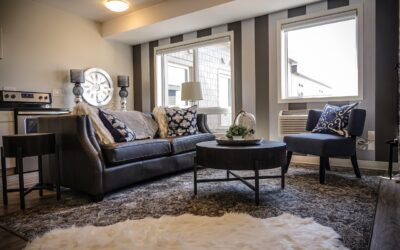
The front-legs-on layout is my most-used approach for living rooms. The front legs of each sofa and chair rest on the rug while the back legs sit on the floor, tying the whole grouping together and making the space feel larger. The third option, floating, keeps furniture off the rug entirely with the rug centered in the seating zone, best reserved for smaller conversation areas or under a coffee table alone.
Materials to Consider
The right material depends on the room’s traffic and your tolerance for maintenance. Here is how the common options compare:
- Wool — Durable, soft, naturally stain-resistant, and long-lasting. Expect to pay more, but it wears beautifully for decades.
- Polypropylene — Budget-friendly, stain-resistant, and easy to clean, ideal for high-traffic family rooms.
- Jute and natural fiber — Textured and organic looking, great for casual and coastal spaces, though harder to clean.
- Cotton — Soft and often machine-washable in flatweave styles, best for lower-traffic rooms.
For a dining room, avoid deep, plush piles that trap crumbs and catch chair legs. A low-pile or flatweave 9×9 lets chairs slide easily and cleans up quickly after meals.
What a 9×9 Square Rug Costs
Because square rugs are less common than rectangles, selection is narrower and prices can run slightly higher for the same quality. Budget polypropylene 9×9 rugs start around $150 to $300. Mid-range machine-made wool blends land at $400 to $800. Hand-knotted wool or premium natural fiber squares can reach $1,000 to $3,000 or more depending on craftsmanship.
Watch for the shape when shopping online, since many retailers list 9×9 sizes sparingly. If you cannot find the exact style you love in a true square, some rug companies offer custom cutting and binding, where a broadloom carpet is cut to 9×9 and edge-bound for a made-to-order square, typically for a reasonable upcharge.
Layering and Design Tips
A square rug can feel like a strong graphic element, so coordinate it with the room’s lines. Under a round table, the contrast of square rug and round furniture is intentional and pleasing. In a living room, align the rug’s sides parallel to the walls for a crisp, orderly look rather than angling it.
Layering is another option for adding warmth and texture. A smaller patterned square or hide layered over a large neutral jute 9×9 adds depth in a casual space. Keep a rug pad underneath regardless of material; it prevents slipping, protects your floor, and adds a cushioned feel underfoot that cheap rugs otherwise lack.
Where to Find a True 9×9 Square
The biggest practical hurdle with this size is simply finding one, because most retailers stock far more rectangles than squares. Start with the big online rug marketplaces and filter specifically by shape, since a keyword search alone will bury the squares among 9×12 and 8×10 rectangles. Brands that specialize in flatweaves, natural fibers, and modern geometric styles tend to carry more square options than traditional Persian-style sellers. If you are set on a particular color or pattern that only comes as a rectangle, ask whether the maker offers it in a square cut.
Custom binding is the reliable fallback when the ready-made selection disappoints. Many carpet and flooring stores will cut a piece of broadloom carpet to a precise 9×9 and finish the raw edges with serged stitching or a fabric binding tape. This route lets you match an exact color and fiber, and it often costs less than you would expect, roughly the price of the carpet by the square yard plus a modest binding fee per linear foot. The finished edge is durable and clean, and you get an exact 81-square-foot square in the material you actually want. Just confirm the binding style before ordering; a serged edge looks more finished and premium than a plain tape binding, and it holds up better over years of foot traffic. Ordering custom also lets you choose a low pile suited to a dining room or a plusher pile for a living space.
Care and Longevity
Rotate the rug 180 degrees every six months so foot traffic and sunlight wear it evenly. Vacuum regularly, using a suction-only setting for delicate wool and natural fibers to avoid pulling loops. Blot spills immediately rather than rubbing, and address stains with a cleaner appropriate to the fiber.
For synthetic rugs, most spills wipe up easily and some smaller squares are even machine-washable. Wool benefits from professional cleaning every couple of years. With basic care, a quality 9×9 square rug holds its shape and color for many years, making it a smart anchor for the right room. Confirm your dimensions, pick a material suited to the traffic, and this underused shape will make a square space finally feel complete.