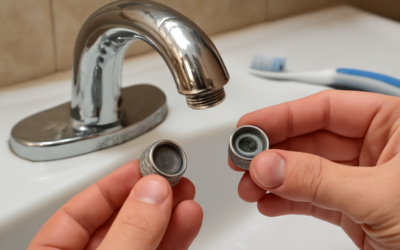
That ASME stamp etched into the side of your kitchen aerator throws people off, but the code itself is just the plumbing standard every US-made faucet has to meet — it tells you nothing about thread size. The actual a112.18.1 faucet aerator replacement only requires matching two specs: the thread diameter and whether the threads are inside (female) or outside (male). Once you have those, the swap takes under 10 minutes with a single tool from the kitchen drawer.
What the A112.18.1 Designation Actually Means
A112.18.1 is the joint ASME/CSA standard covering plumbing supply fittings — faucets, valves, and yes, aerators. It governs flow rates, pressure ratings, and material safety for everything that touches potable water. The current federal max for kitchen aerators is 2.2 GPM, while bathroom lavatory faucets cap at 1.5 GPM under WaterSense rules. California, Colorado, and Washington enforce stricter 1.8 GPM kitchen and 1.2 GPM lavatory limits.
Knowing this matters because cheap replacement aerators from overseas sometimes lack the certification stamp and may not meet your local code. Stick to brands like Niagara, Neoperl, or genuine OEM units from Moen, Delta, or Kohler.
Identify the Thread Size First
Unscrew the existing aerator by hand — turn counterclockwise when looking up at the spout. If it spins free, you can read the size on the body or measure the outside diameter with calipers. The three sizes you will see in 95 percent of American homes are:
- Regular Male (15/16-inch / 24mm): The most common kitchen size
- Regular Female (55/64-inch / 22mm): Common kitchen and bath
- Junior Male (13/16-inch / 20.5mm): Older bath lavatory faucets
- Junior Female (3/4-inch / 18.5mm): Smaller bath faucets, mostly pre-1995
- Tom Thumb (M16.5 or M18): Decorative European-style spouts
If your aerator threads are visible on the outside of the spout tip, you need a female aerator that screws over them. If the threads are recessed inside the spout, you need a male aerator that threads in.
Tools You Need
For 90 percent of swaps, your bare hand and a microfiber cloth for grip are enough. If the existing aerator is mineral-locked from hard water, grab a pair of Channellock 426 tongue-and-groove pliers and a strip of duct tape to protect the chrome. Slip a turn of tape around the aerator before clamping the pliers — chrome and brushed nickel scratch the moment metal jaws touch them.
A Neoperl Cache aerator removal key, about $4 at any hardware store, is the right tool for hidden aerators on Brizo, Hansgrohe, and many Moen pulldown spouts. The cache key has six points that engage notches on the inside of the aerator face.
Remove a Stuck Aerator
If hand removal fails, soak a paper towel in white vinegar and wrap it around the aerator for 20 minutes. The acid dissolves calcium scale around the threads. Try again by hand. Still stuck? Use the duct-taped pliers with a slow, firm counterclockwise twist. Avoid jerky motions — you can crack a plastic spout housing on cheaper builder-grade Glacier Bay or Pegasus faucets.
For hidden cache aerators with no visible notches outside the spout, peer up into the spout opening. You should see a slot pattern. The Neoperl key clicks into those slots and turns the aerator out cleanly.
Clean the Spout Threads
Once the old aerator is out, wipe the male threads on the spout with a damp cloth and inspect for mineral buildup. Use an old toothbrush dipped in CLR or distilled vinegar to scrub the threads gently. Skip steel wool — it can leave fragments that lodge in the new aerator screen.
Check the rubber washer inside the new aerator. It should be intact and seated flat. A folded or missing washer is the most common reason a new aerator leaks from the threads on first install.
Install the New Aerator
Thread the new aerator on by hand, turning clockwise when looking up. Snug it down hand-tight, then give it an additional eighth-turn with the duct-tape-wrapped pliers if you see seepage at the threads under pressure. Do not overtighten — the plastic body inside the metal jacket can crack and ruin the flow pattern.
For dual-thread aerators that fit both male and female spouts, the unit comes pre-assembled with an adapter ring. If your spout is male-threaded, leave the adapter in place. If female, unscrew the adapter and the threads underneath fit directly.
Test for Leaks and Flow Pattern
Turn the water on slowly. Watch the threaded joint for any seepage. A clean install produces a soft, aerated stream with no spray scatter at the edges. If water sprays sideways or sputters, debris from the supply lines may have lodged in the new screen. Unscrew the aerator, rinse the screen under running water, and reinstall.
If you replaced a 2.2 GPM unit with a 1.5 GPM WaterSense aerator, you should notice slightly slower fill times on pots but no real difference in dishwashing or rinsing. A complete a112.18.1 faucet aerator replacement is one of the highest-impact 10-minute jobs in a home — better flow pattern, lower water bills, and one less leak source under the faucet.
How Often to Replace a Faucet Aerator
In a typical household with city water, an aerator runs reliably for 3 to 5 years before mineral buildup starts to restrict flow noticeably. On well water with higher iron or hardness content, that window shrinks to 12 to 18 months. The cheap fix is to soak the aerator in a small dish of white vinegar overnight every 6 to 12 months. The vinegar dissolves calcium scale and restores flow, often eliminating the need for replacement entirely.
Replace the aerator outright when soaking no longer restores flow, when the screen has visible corrosion or pitting, or when the spray pattern stays uneven after cleaning. Neoperl Perlator units run $8 to $14 each, the Niagara Conservation 1.0 GPM water-saving model runs about $5, and OEM Moen, Delta, or Kohler replacements range from $12 to $28 depending on faucet model. Buying two at a time and keeping a spare in the toolbox is the move I recommend for anyone tired of weekend home center runs.