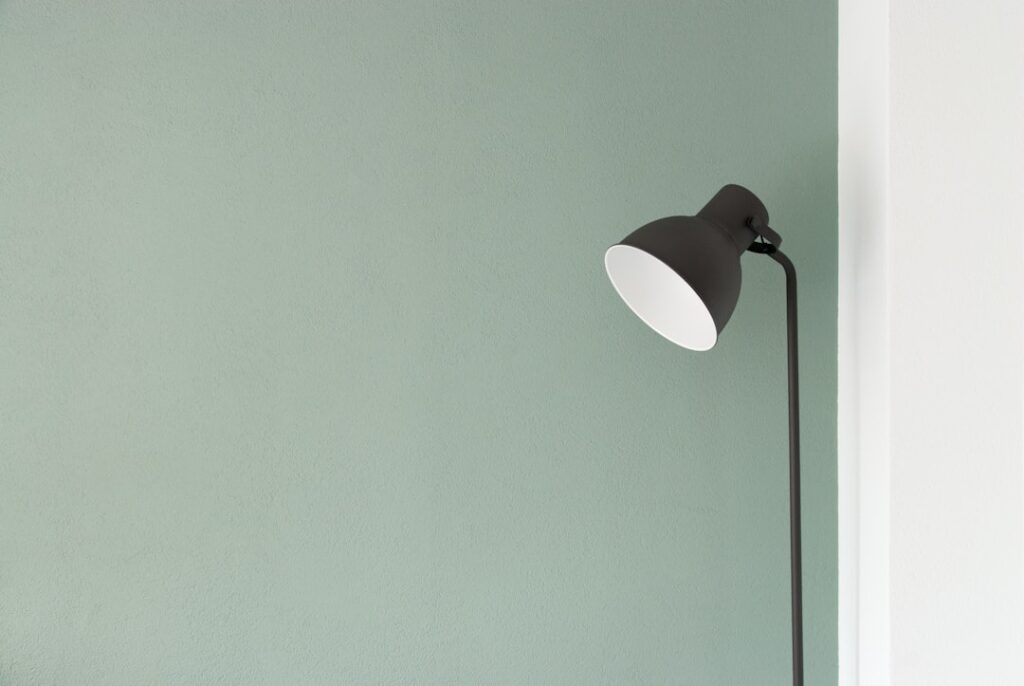
A fixed overhead light pools brightness in the center of a room and leaves the corners where you actually read, sew, or work in shadow. An adjustable floor lamp solves that by letting you push light exactly where you need it, whether that is over your shoulder for a book or down onto a desk for close work. The category covers everything from sleek arc lamps that arch over a sofa to articulated task lamps with multiple pivot points. Choosing well means matching the lamp’s reach and adjustability to how you live in the space.
Types of Adjustable Floor Lamps
Not all adjustable lamps move the same way, and the mechanism determines what jobs the lamp can do.
- Arc lamps: a long curved arm extends the shade several feet from the base, letting you light a seating area without a table underneath.
- Gooseneck lamps: a flexible metal neck bends in any direction for precise spot lighting near a chair or workbench.
- Swing-arm and task lamps: jointed arms with elbows extend, retract, and angle, ideal for desks and reading nooks.
- Tree or tower lamps: multiple adjustable heads on one pole light several directions at once.
- Torchiere lamps with tilting heads: bounce light off the ceiling for soft ambient fill while allowing some directional aim.
Bulbs, Brightness, and Color
LED is the clear default now. A good LED bulb sips 8 to 12 watts while producing the light of an old 60- to 75-watt incandescent, runs cool to the touch, and lasts for years. Look at lumens for brightness rather than watts: 800 lumens suits general reading, while 1,500 or more is better for detailed tasks like crafts or paperwork.
Color temperature shapes the mood. A warm 2,700K bulb feels cozy and relaxing for living rooms and bedrooms, while a cooler 4,000K to 5,000K bulb keeps you alert and renders colors accurately for work. Many adjustable lamps now ship with built-in LEDs that offer tunable color temperature, letting you shift from warm to cool with a touch.
Dimming and Controls
Dimming turns one lamp into several. A lamp dialed bright for reading can drop to a soft glow for watching television, all from the same fixture. Controls range from a simple twist knob to touch-sensitive poles, foot switches, and remote or app control on smart models. If you want true range, confirm the lamp and bulb are both dimmable, since pairing a non-dimmable LED with a dimmer causes flicker and buzzing.
Smart adjustable lamps add scheduling and voice control through systems like Alexa or Google Home. They cost more, but the convenience of dimming or scheduling a reading lamp without leaving the couch wins over a lot of homeowners.
Stability and Build Quality
An adjustable lamp lives or dies by its base. The whole point of an arc or extended-arm lamp is to put weight out away from the pole, and a flimsy base tips. Look for a heavy weighted base, ideally marble, cast metal, or a wide steel disc, especially on arc lamps where the shade hangs far from center. A base that feels light in the store will feel tippy in your living room.
Check the joints, too. Quality lamps use metal pivots with enough friction to hold a position without drifting. Cheap plastic joints loosen over time, and within a year the head sags no matter how you set it. Spend a little more for solid hardware on a lamp you plan to reposition daily.
Where to Place It
Reading lamps work best positioned slightly behind and to the side of a chair, with the shade roughly at eye level when you are seated, so light falls over your shoulder onto the page without glaring in your eyes. Arc lamps shine over a sofa or sectional where no end table fits. Task lamps belong at desk corners angled down onto the work surface.
Mind the cord and the foot traffic. Place the lamp near an outlet to avoid running cable across a walkway, and keep extended arms clear of doorways and paths where someone could clip them. In a large room, two smaller adjustable lamps often light the space more evenly than one big fixture.
Matching the Lamp to the Room
Different rooms ask different things of an adjustable lamp. In a living room, an arc lamp or a tree lamp with multiple heads spreads light across a seating area where overhead fixtures fall short. Beside a favorite reading chair, a swing-arm or gooseneck lamp puts a focused pool of light right on the page without lighting the whole room. In a home office, a task lamp with a tunable cool-white LED keeps you alert and renders documents accurately.
Bedrooms benefit from a warm, dimmable lamp that can drop to a soft glow for winding down, while a craft or hobby space wants the brightest, most precisely aimed light you can get. Thinking about the primary task in each room before you shop steers you toward the right type and saves you from buying a beautiful lamp that lights the wrong spot.
Energy Use and Safety
Modern LED adjustable lamps barely register on an electric bill, drawing a fraction of the power of the old incandescent and halogen fixtures they replaced. Halogen torchiere lamps, still found in older homes, run extremely hot and have been a fire concern when placed near curtains, so swapping to an LED model is a worthwhile safety upgrade. Check that any lamp you buy carries a recognized safety listing, and keep extended arms and shades clear of fabric and flammable materials.
Cost and Final Tips
Basic adjustable floor lamps start around $30 to $60, solid mid-range models with quality joints and weighted bases run $80 to $200, and designer arc lamps or smart fixtures climb past $300. For most homeowners, the sweet spot is a well-built mid-range lamp with a dimmable LED and a heavy base. Match the lamp type to your task, prioritize stability, and you will get light exactly where you want it for years.
Prefer to explore on your own?
See how new flooring looks in your actual room in seconds — free, no signup.
Try the free Floor Studio →