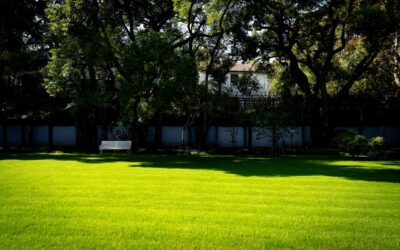
The fastest way to make synthetic turf look fake is to cover an entire yard in one flat rectangle of green. Real lawns are broken up by trees, beds, paths and shadows, and the eye expects that variety. Good artificial grass landscaping treats the turf as one material in a larger plan, surrounded by planting beds, gravel, edging and stepping stones that give it shape and context. Done well, visitors notice the garden first and the grass second.
The basic recipe is simple: limit the turf to the areas people actually walk and play on, give it curved or deliberate edges, frame it with soft planting and hardscape, and choose a product with realistic color and blade variation. Layout ideas, material pairings, practical details such as drainage and heat, and typical costs all shape the final result.
- Artificial Grass Landscaping Starts With a Plan, Not a Roll
- Layout Ideas That Break Up the Green
- Choosing Turf That Looks Real
- Edging and Borders
- Practical Details: Drainage, Heat and Base
- Step-by-Step Design Process
- Troubleshooting a Layout That Looks Fake
- Cost Ranges and When to Call a Pro
- Frequently Asked Questions
Artificial Grass Landscaping Starts With a Plan, Not a Roll
Before choosing a product, sketch the yard on graph paper or a phone app. Mark sun and shade, slopes, downspouts, trees, the routes people walk, and where kids or dogs play. Turf belongs in the high-use, open spaces. Planting belongs at the edges, in corners and around structures. Hardscape such as gravel, pavers or stepping stones belongs on the paths and in spots too narrow or too shaded for turf to make sense.
A useful rule of thumb is to keep turf to roughly half to two-thirds of the open yard area. That leaves enough room for beds and paths to create depth. In small yards, a single lawn panel framed by a gravel border and a planted strip often looks more natural than wall-to-wall coverage.
Shape the Lawn
Gentle curves and kidney shapes read as organic, while crisp rectangles and circles feel modern and intentional. Both can work. What looks artificial is a shape dictated only by the property line. Pull the turf back from fences by 18 to 36 inches and fill that band with plants or rock, and the lawn instantly looks like a designed space rather than a carpet.
Layout Ideas That Break Up the Green
Turf With Planting Beds
Planting beds are the most effective way to soften synthetic turf. Use layered beds with taller shrubs or ornamental grasses at the back, mid-height perennials in the middle and low groundcovers at the front edge where they meet the lawn. Drought-tolerant natives keep watering low, which fits the reason most people choose turf in the first place. Let some foliage drape slightly over the edging so the line between lawn and bed is not perfectly rigid.
Turf and Gravel
Gravel borders give a clean, low-maintenance frame. Decomposed granite, pea gravel or river rock in a 12 to 24 inch band around the turf separates it from beds and fences and gives rain somewhere to soak in. Choose a gravel color that complements the turf: warm tans and golds look natural next to green, while bright white rock can look stark.
Stepping Stones Set in Turf
Flagstone or concrete stepping stones running across a lawn suggest a garden path and make the turf feel lived in. Space them for a comfortable stride, usually 22 to 26 inches center to center, and set them flush with the turf surface so they are not a tripping hazard or mower obstacle for neighbors who also have grass. Installers cut the turf around each stone and secure the edges with nails or adhesive on a compacted base.
Turf Strips Between Pavers
Narrow bands of turf between large pavers create a checkerboard or ladder look that suits modern patios and side yards. This pattern is covered in more depth in guides focused on pavers, but in a landscape plan it works best as a transition zone between a hard patio and a softer lawn.
Play and Pet Zones
A dedicated play pad or dog run can be turf while the remaining yard stays planted. Fence or edge it with low hedges, rock or timber borders so it reads as its own room in the garden.
Choosing Turf That Looks Real
When people ask about the best artificial grass, they usually mean the most natural-looking one. Look for these features:
- Multi-tone blades. Two or three shades of green blended with tan or brown thatch at the base mimics a living lawn.
- Varied blade shapes that reflect light differently and reduce the glossy plastic sheen.
- Appropriate pile height. Around 1.25 to 1.75 inches looks like a mowed lawn. Longer pile looks lush but mats faster under heavy traffic.
- Good drainage backing, either perforated or fully permeable, especially for pet areas.
- UV stabilization so the color holds in full sun.
Order samples and look at them outside in morning and afternoon light, from standing height and from across the yard. A turf that looks great in a showroom can look too bright in direct sun. If you are shopping by the roll, buy enough to lay all pieces in the same direction, since grain direction changes the color noticeably.
Edging and Borders
Edges make or break the finished look. The turf needs a firm perimeter to stay stretched and to keep base material in place. Common options include:
- Steel or aluminum edging: thin, crisp lines that disappear visually and bend into smooth curves.
- Concrete curbing: durable and good for mowing strips next to neighboring real lawns.
- Timber or composite boards: simple, warm and suited to straight runs.
- Paver or brick soldier courses: a formal border that doubles as a path edge.
Avoid flimsy plastic edging that heaves over time; once it moves, the turf edge lifts and the illusion is gone.
Practical Details: Drainage, Heat and Base
Natural-looking design still has to function. Plan for a few practical issues before installation.
Drainage
Turf sits on a compacted base of crushed rock and finer aggregate, typically 3 to 4 inches deep, graded with a slight fall away from the house. Point downspouts into gravel beds or drains rather than onto the turf. Planting beds and gravel bands around the lawn help absorb runoff.
Heat
Synthetic turf can get noticeably hotter than living grass in full summer sun. Placing it where trees or structures provide afternoon shade, choosing lighter or heat-reducing products and using it alongside planted areas all help. A quick rinse with a hose cools the surface on very hot days.
Call 811 Before Digging
Installing turf usually means excavating 3 to 4 inches of soil, and edging or stepping stones can go deeper. Call 811 a few days before any digging so utility lines are marked. Shallow irrigation lines and low-voltage lighting cables are common in yards, so locate those too and cap or reroute irrigation heads in the turf area.
Step-by-Step Design Process
- Measure and map the yard, including slopes, shade and utilities.
- Define zones: lawn, beds, paths, patio, play or pet area.
- Draw the turf shape with a garden hose laid on the ground. Look at it from the house windows for a day or two.
- Choose border materials and how wide the gravel or bed bands will be.
- Select plants suited to your climate and the amount of sun each bed receives.
- Pick the turf from outdoor samples.
- Install hardscape and edging first, then the base, then the turf, then planting and mulch.
Laying hardscape before turf means seams and cuts can be tucked neatly against finished edges, which is the detail that separates a professional look from an amateur one.
Troubleshooting a Layout That Looks Fake
- Too much green: cut back the lawn and widen the beds or add a gravel border.
- Visible seams: seams run against the grain or were not brushed. Re-seam or brush the fibers up with a power broom.
- Shiny appearance: the product is low quality or laid with the grain facing the main viewpoint. Face the grain toward the house.
- Bare-looking edges: let groundcovers spill onto the edge, or add a strip of mulch or rock to soften it.
Cost Ranges and When to Call a Pro
Turf material typically runs a few dollars per square foot, while professionally installed artificial turf landscaping, including base preparation, edging and labor, commonly lands in a higher per-square-foot range that varies by region, access and site prep. Planting, gravel, stepping stones and edging add to the total but can be done in phases. Many homeowners handle planting and gravel themselves and hire a crew for the excavation, base compaction and turf fitting, since a plate compactor, sod cutter and precise seaming make a big difference in how flat and natural the lawn looks. Bring in a landscape contractor for slopes, drainage problems, retaining walls or large yards.
Frequently Asked Questions
How do I make artificial grass look natural?
Limit turf to open, high-use areas, give it shaped edges, surround it with planting beds and gravel, and choose a multi-tone product with brown thatch. Face the grain toward the main viewing area.
Can plants grow next to artificial turf?
Yes. Planting beds beside turf work well as long as the edging separates the soil from the turf base. Use drip irrigation in the beds so water stays where the plants need it.
What goes around artificial grass?
Steel or concrete edging with a border of gravel, mulch, pavers or planting beds is the most common treatment. These materials frame the lawn and help with drainage.
Is artificial grass landscaping good for pets?
It can be, if you choose a fully permeable backing, add a drainage-friendly base and rinse the pet area regularly. Shade nearby helps keep the surface comfortable in summer.
Do I need to call 811 before installing turf?
Yes. Base excavation and edging installation involve digging, so call 811 a few days ahead to have buried utility lines marked before you start.