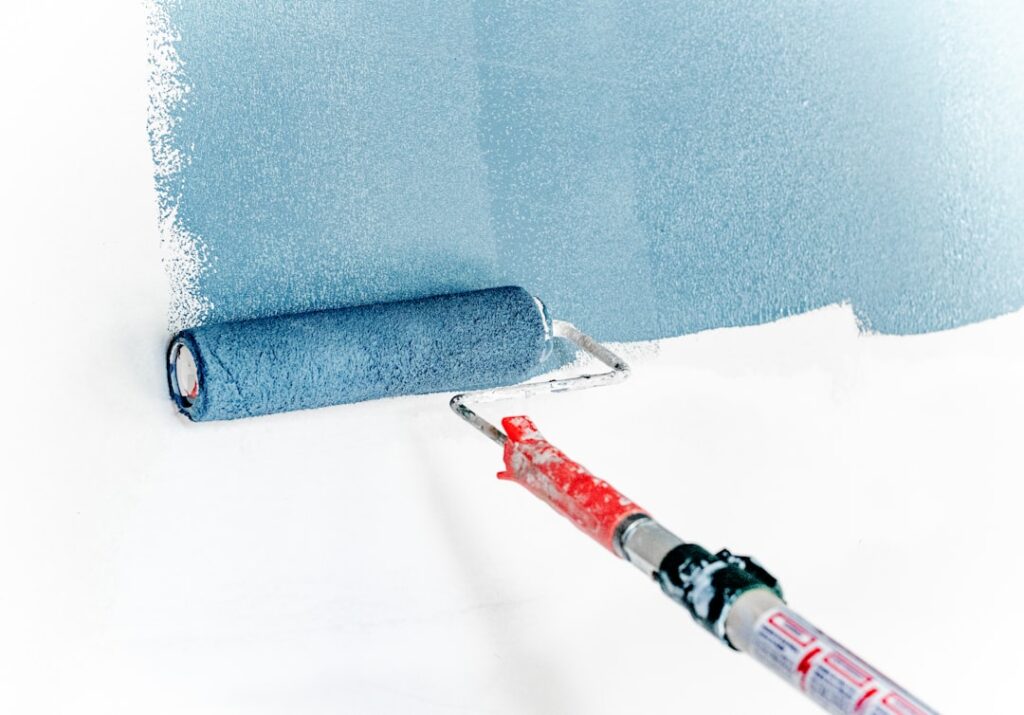
Fresh paint is the highest-return upgrade in any home, but the quote you get can swing wildly depending on room size, ceiling height, and whether you hire out or roll it yourself. The average cost to paint a room and ceiling professionally runs roughly $350 to $900 for a standard bedroom, while doing it yourself typically costs $100 to $300 in materials. Understanding what drives that range helps you budget accurately and spot a fair quote from an inflated one.
Painters price jobs mainly by labor, and labor is driven by square footage of wall and ceiling surface, prep work, and access. A 12-by-12-foot bedroom with 8-foot ceilings is a fundamentally different job than a two-story foyer with 18-foot walls, even though both are just paint. Here is how the numbers break down so you know what you are paying for.
Professional Painting Costs
Most professional painters charge either by the square foot or by the room. Expect roughly $2 to $6 per square foot of floor area for a standard room, or $1.50 to $4 per square foot of actual wall and ceiling surface, with the room-based rate for a typical bedroom landing around $350 to $900 including the ceiling. Adding the ceiling to a wall job usually increases the price by $150 to $350, since ceilings are slower and more awkward to cut in and roll.
Labor makes up the majority of a pro quote, often 70 to 85 percent of the total. Painters generally bill $25 to $75 per hour, or bundle it into the flat room rate. A simple repaint in the same color goes fast, while color changes, dark-to-light transitions, and heavy prep add hours. Always get the ceiling explicitly itemized, since some quotes assume walls only and surprise you later.
DIY Costs Broken Down
Doing the work yourself trades your weekend for real savings, since you pay only for materials. For a standard bedroom and ceiling, budget roughly $100 to $300 depending on paint quality. A gallon of quality interior wall paint runs $30 to $70 and covers about 350 to 400 square feet per coat, so a typical room needs 1 to 2 gallons for the walls plus another gallon for the ceiling.
Beyond paint, factor in supplies: rollers, brushes, a tray, painter’s tape, drop cloths, a paint can opener, and sandpaper, which together add $40 to $80 if you are starting from scratch, though most of it is reusable. Primer is an extra $25 to $40 per gallon when you need it. If you already own the basic tools, a single-room repaint can cost as little as $60 to $120 in paint alone, a fraction of the pro price.
What Drives the Price Up or Down
Several factors move the final number significantly, and knowing them lets you predict your quote. Room size is the obvious one, but ceiling height matters just as much, since walls above the standard 8 feet require ladders or scaffolding, slowing the work and raising labor. A vaulted or two-story space can double the per-room cost compared to a same-footprint room with normal ceilings.
Condition and prep are the hidden variables. Patching nail holes, filling cracks, sanding, and priming stained or previously dark walls add labor and materials. Other cost drivers include:
- Number of coats needed (dark or drastic color changes often require primer plus two coats).
- Trim, doors, and window casings, which are detailed hand-work and often priced separately.
- Paint grade, from builder-basic to premium washable finishes at $60 to $80 a gallon.
- Repairs to drywall, water stains, or peeling paint before coating can begin.
A smooth, freshly-drywalled room in a light repaint sits at the low end; a damaged, dark, high-ceilinged room with lots of trim lands at the top.
Cost by Room Type
Different rooms carry different price tags mostly because of size and complexity. A small bedroom or home office, around 100 to 120 square feet of floor, typically runs $300 to $600 professionally for walls and ceiling. An average bedroom or dining room lands near $400 to $800, while a large living room or open great room can reach $900 to $2,000 given the wall area and often taller ceilings.
Bathrooms and kitchens are smaller but fiddlier, with lots of cutting around fixtures, cabinets, and tile, so they can cost as much as a bedroom despite less square footage. Stairwells and entryways command a premium because of their height and the specialized ladders required. When budgeting a whole-house repaint, expect roughly $2 to $6 per square foot of the home’s floor area as a rough planning figure.
Where to Save Without Cutting Corners
The biggest lever is doing your own prep and letting a pro handle only the finish coats, though many painters prefer to control prep for warranty reasons. A cleaner path to savings is bundling rooms: painters give better per-room rates when they mobilize once for several rooms rather than returning for one at a time. Painting during a contractor’s slower season can also yield a better price.
Do not save by buying the cheapest paint. Premium paint covers in fewer coats, hides better, and lasts years longer, so a $65 gallon often beats a $30 gallon on total cost once you count the extra coat and the earlier repaint. If you DIY, invest in quality rollers and a good angled brush, since cheap tools shed and leave marks that cost you time and a rougher finish.
Timeline and What to Expect During the Job
Knowing how long the work takes helps you plan and judge a quote. A professional crew typically paints a standard bedroom and ceiling in a single day, including prep, two coats, and cleanup, while a DIY homeowner should budget a full weekend for the same room, since prep and dry time between coats cannot be rushed. Most interior latex paints need 2 to 4 hours to dry to the touch and a full 24 hours to cure enough for a second coat to go on cleanly, so a two-coat job with a color change realistically spans two days.
Prep is the phase people underestimate. Moving furniture, laying drop cloths, taping edges, filling holes, sanding, and priming can eat up as much time as the painting itself, and it is exactly this labor that a professional quote is really paying for. A smooth, well-prepped surface is what separates a crisp result from a blotchy one, so whether you hire out or DIY, do not shortcut it. Paint the ceiling first, then the walls, then the trim, so drips from higher surfaces get covered by later coats.
Getting Accurate Quotes
To compare painters fairly, give each one the same scope and get every quote in writing. A proper estimate should specify the number of coats, whether ceiling and trim are included, the paint brand and grade, how much prep and repair is covered, and who moves the furniture. Beware of a bid that comes in dramatically low; it often means single-coat coverage, minimal prep, or cheap paint that will need repainting within a couple of years, erasing the apparent savings.
Ask whether the price includes paint or whether that is billed separately, since a labor-only quote can look cheaper until you add $100 to $200 in materials. Confirm the painter is licensed and insured, and check that they will protect your flooring and fixtures, a drop of ceiling paint on hardwood or carpet is an expensive surprise. Three written, itemized quotes give you a realistic market range and the leverage to negotiate.
Budgeting Your Project
To estimate your own job, measure the room’s wall and ceiling area, decide between DIY and hiring out, and apply the ranges above. For most homeowners, the average cost to paint a room and ceiling means planning around $350 to $900 for professional work or $100 to $300 for a DIY weekend, adjusted up for tall ceilings, heavy prep, and premium paint.
Get at least three written quotes for any pro job, make sure each specifies whether the ceiling and trim are included, and confirm the number of coats. With realistic expectations and a clear scope, fresh paint remains one of the most cost-effective ways to transform a room, delivering a dramatic new look for a modest, predictable investment.