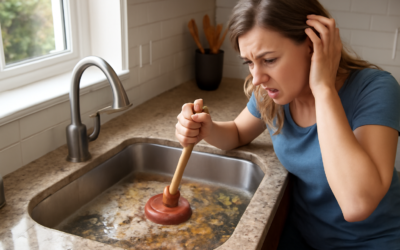
Few household problems escalate as fast as a backed up drain. What starts as a sink that empties a little slow can turn into water rising in a tub, gurgling toilets, or sewage backing up into the lowest fixtures in the house. The cause is always the same in principle, something is blocking water from flowing through the pipes, but the location and severity vary enormously. A single slow bathroom sink is a minor nuisance you can usually clear yourself. Multiple fixtures backing up at once is a red flag for a main line problem that needs a professional. Knowing the difference saves both money and your home from water damage.
Common Causes of a Backed-Up Drain
Drains back up because debris accumulates and narrows or blocks the pipe. The usual offenders depend on which fixture is involved.
- Kitchen sinks: grease, oil, fat, coffee grounds, and food scraps that congeal and harden inside the pipe.
- Bathroom sinks and tubs: hair combined with soap scum, the classic shower and tub clog.
- Toilets: too much toilet paper or non-flushable items (wipes, hygiene products, paper towels).
- Whole-house backups: tree roots invading the sewer line, collapsed or aging pipes, or a clog deep in the main line.
Identifying which fixtures are affected is the fastest way to gauge whether you’re dealing with a local clog or something deeper.
Local Clog vs. Main Line Problem
This distinction matters more than any other. A single fixture draining slowly almost always means a localized clog in that fixture’s branch pipe, which is usually DIY-friendly. But if several fixtures back up at once, especially the lowest ones in the house, or if flushing a toilet causes water to rise in a tub or shower, you likely have a main sewer line blockage.
A backed-up main line is serious. It can send sewage into your home and won’t be fixed by clearing one sink. When the whole system is affected, treat it as a main-line issue and prepare to call a professional rather than attacking individual drains.
Safe DIY Fixes for Minor Clogs
For an isolated slow or stopped drain, try these methods in order, starting with the gentlest.
Boiling Water (Kitchen Sinks)
For grease-related kitchen clogs, slowly pour a pot of boiling water down the drain to melt and flush the buildup. Avoid this on PVC pipes with very hot water if you’re unsure, and skip it entirely on toilets (porcelain can crack).
Plunger
A good plunger creates suction and pressure that can dislodge many clogs in sinks, tubs, and toilets. Use a cup plunger for flat-surfaced sinks and tubs, and a flange plunger for toilets. Seal the overflow opening with a wet rag first so you don’t lose pressure.
Baking Soda and Vinegar
Pour about half a cup of baking soda followed by half a cup of white vinegar, let it fizz for 15 to 30 minutes, then flush with hot water. It’s a gentle, pipe-safe option for light buildup and odors.
Drain Snake or Hand Auger
A drain snake (auger) physically reaches into the pipe to break up or pull out clogs, and it’s especially effective on hair clogs in tubs and sinks. Feed it in, turn to catch the blockage, and pull it back out. A 25-foot hand auger is an inexpensive, reusable tool worth owning.
A Word on Chemical Drain Cleaners
Liquid chemical drain cleaners are tempting but come with real downsides. They can damage older or PVC pipes with repeated use, are hazardous to handle and to mix, and often fail on serious clogs while leaving caustic water sitting in your pipes. They’re also harmful if they splash on skin or eyes.
If you use one at all, reserve it for a fully clogged (not standing-water) drain, follow directions exactly, and never combine products or use one after another. Mechanical methods like plunging and snaking are safer and usually more effective.
Clearing the Sink Trap
For a stubborn sink clog you can tackle yourself, the P-trap (the U-shaped pipe under the sink) is often where debris collects. Place a bucket underneath, unscrew the slip nuts by hand or with channel-lock pliers, remove the trap, and clean out the gunk. Reassemble snugly and run water to check for leaks. This simple step clears a surprising number of bathroom and kitchen clogs.
When to Call a Professional
Some backups are beyond DIY, and pushing harder risks damage. Call a licensed plumber when:
- Multiple fixtures back up at once, or you have a confirmed or suspected main line clog.
- Sewage is backing up into tubs, showers, or floor drains, or you smell sewer gas.
- You’ve tried plunging and snaking with no success, or the clog keeps returning.
- You suspect tree roots, a collapsed pipe, or a problem deep in the sewer line.
Professionals have motorized drain augers, hydro-jetting, and sewer cameras to find and clear blockages you can’t reach. A main line clog in particular is a job for a pro, since it requires specialized equipment and carries a health risk.
Preventing Future Backups
Most clogs are preventable with a few habits. Never pour grease or oil down the kitchen sink; let it solidify and throw it away. Use drain strainers in sinks and tubs to catch food and hair. Flush only toilet paper and human waste, never “flushable” wipes, which are a leading cause of clogs. Run hot water after using the kitchen sink to keep residue moving.
For homes with mature trees over the sewer line, periodic professional inspection or root treatment can head off the worst kind of backup before it happens. A little prevention keeps a backed up drain from becoming a recurring emergency.
Bottom Line
A backed up drain ranges from a five-minute fix to a serious sewer emergency, and the key is reading the signs. Tackle a single slow drain with a plunger, snake, or trap cleaning, skip the harsh chemicals, and watch for the red flags, multiple fixtures, sewage, or recurring clogs, that mean the problem is in the main line and belongs to a professional. Act early, and you’ll keep small clogs from turning into costly water damage.